
Who Actually Decides the Property Value?
Here’s the truth most people don’t realise: in a probate case, no single person “decides” the property value on their own. It’s a two-part process—legal responsibility on one side, professional assessment on the other.
The executor or administrator is accountable for getting the valuation done. But the actual number? That comes from a qualified expert, backed by data—not opinion.
Executor or Administrator: The Person Responsible
If there’s a will, the executor steps in. No will? Then an administrator takes over.
Either way, this person carries the legal weight. They’re responsible for:
- Gathering all assets in the estate
- Arranging for the property to be valued
- Declaring the value in the Schedule of Assets submitted to the court
They don’t get to guess. They don’t get to “pick a number that feels right.” Their role is to ensure the value reported is accurate, supportable, and defensible.
Because once it’s filed, it becomes part of the legal record.
Professional Valuer: The Person Who Determines the Number
This is where the real figure comes from.
A qualified property valuer (or appraiser/surveyor) assesses the home based on:
- Comparable recent sales
- Property condition and attributes
- Location and market demand
- Most importantly, the market value at the date of death
The result isn’t a rough estimate—it’s a formal valuation report. This document is what supports the number declared in probate filings and what the court ultimately relies on.
In other words, the valuer provides the evidence behind the number.
Why the Executor Doesn’t “Set” the Value Alone
It’s a common misconception—and a risky one.
While the executor is in charge of the process, they cannot independently set the property value without justification. Doing so opens the door to:
- Disputes between beneficiaries
- Challenges from the court
- Issues with estate distribution or compliance
That’s why professional valuation isn’t just a formality—it’s protection.
It creates a neutral, evidence-based benchmark that everyone—from beneficiaries to the court—can rely on.
Because in probate, value isn’t about opinion.
It’s about what can be proven.
Understanding the Roles in a Probate Property Valuation
Behind every probate valuation is a quiet chain of responsibility. It’s not chaotic. It’s structured. Each role has a clear lane—and when it works properly, the process is smooth, defensible, and court-ready.
What an Executor Does (If There Is a Will)
The executor is the person named in the will to take control when everything stops.
Their job isn’t just administrative—it’s strategic. They:
- Apply for the Grant of Probate
- Identify and gather all estate assets (including property)
- Arrange for a professional valuation
- Declare the value in the Schedule of Assets
They are the bridge between the deceased’s intentions and the legal system. Every number they submit must stand up to scrutiny—because they are personally responsible for getting it right.
What an Administrator Does (If There Is No Will)
No will changes the title, not the responsibility.
When there’s no executor, one or more beneficiaries step forward to become administrators. They apply for Letters of Administration and take on the same core duties:
- Managing the estate
- Coordinating the property valuation
- Submitting accurate asset values to the court
The difference? There’s often more complexity—more voices, more opinions, and sometimes more friction. Which makes having a clear, professional valuation even more critical.
The Role of a Property Valuer or Appraiser
This is where objectivity enters the room.
The valuer isn’t emotionally tied to the property. They’re not influenced by family expectations or future sale hopes. Their role is simple—but precise:
- Assess the property’s fair market value at the date of death
- Analyse comparable transactions
- Evaluate the property’s condition, features, and location
- Produce a formal written valuation report
This report becomes the backbone of the probate filing. It’s what transforms a number into something the court can trust.
How These Roles Work Together in Practice
Think of it as a relay, not a solo run.
The executor or administrator initiates the process—engaging the valuer and providing property details. The valuer then steps in to determine an evidence-based value. Once completed, the report goes back to the executor, who uses it to:
- Declare the property value in the estate documents
- Submit the Schedule of Assets to the court
- Support the application for probate or administration
When done right, it’s seamless:
Responsibility → Valuation → Declaration → Court acceptance
No guesswork. No loose ends. Just a clean, defensible chain of accountability.
How Property Value Is Determined in a Probate Case
This is where things get precise.
Probate valuation isn’t about what the property could sell for today. It’s about what it was worth at a specific moment in time—measured, justified, and backed by real market evidence.
Market Value vs Fair Market Value Explained
In probate, you’ll often hear both terms used—market value and fair market value. In practice, they point to the same idea:
The price a willing buyer and willing seller would agree on, in an open market, with no pressure on either side.
It’s not inflated. It’s not conservative. It’s realistic.
This is the benchmark valuers use—because it reflects what the property would genuinely transact at under normal conditions.
Why the Date of Death Matters (Not Today’s Price)
Here’s where many people get it wrong.
Probate valuation is anchored to the date of death, not the date the report is prepared, and definitely not the current market.
Why? Because legally, that’s the point when the estate is formed.
So even if:
- Prices have risen since then
- The market has cooled
- The property has been renovated after
None of that changes the valuation basis.
The valuer essentially “rewinds the market” to that specific date and assesses:
What would this property have sold for at that exact point in time?
Key Factors That Affect the Valuation
A probate valuation isn’t guesswork—it’s built on layered analysis. Here’s what drives the final number:
Property condition
Was the home well-maintained, dated, or in need of major repairs? Condition directly impacts buyer perception—and price.
Location
Not just the town, but the micro-details: proximity to MRT, schools, amenities, floor level, facing, noise factors.
Size and layout
Larger units generally command higher values, but layout efficiency matters just as much. Awkward spaces can drag value down.
Comparable recent sales
This is the anchor. Valuers look at actual transaction data of similar properties around the same time period to benchmark a realistic price range.
No comparables, no credible valuation.
What Goes Into a Probate Valuation Report
The final output isn’t a one-line number—it’s a structured document designed to stand up in court.
A typical report includes:
- Property details (type, size, tenure, location)
- Market analysis and comparable sales evidence
- Assessment of condition and features
- Explanation of valuation methodology
- The final assessed value (as of date of death)
This report becomes the foundation of the value declared in probate.
Because in the end, it’s not about what you think the property is worth—
it’s about what you can prove, justify, and defend on paper.
What the Singapore Court Actually Looks At
Strip away the paperwork, and the court is focused on one thing:
Is the estate value accurate, complete, and supported?
It doesn’t rely on opinions. It relies on what’s formally declared—and what can back it up.
The Schedule of Assets Explained
This is the document that anchors everything.
When applying for probate or Letters of Administration, the executor or administrator must submit a Schedule of Assets—a full breakdown of what the deceased owned, including property.
Inside it, you’ll find:
- The property details
- The declared value of the property
- Other assets (bank accounts, investments, etc.)
This isn’t just a formality. The court uses this document to:
- Confirm the total value of the estate
- Assess the application
- Establish the legal baseline for distribution
Get this wrong, and everything downstream becomes shaky.
Why Supporting Valuation Evidence Matters
A number on its own means nothing.
The court expects that the value declared—especially for property—is backed by credible supporting evidence. This is where a formal valuation report carries weight.
It shows:
- How the value was derived
- What data was used (comparable sales, market conditions)
- That the figure isn’t arbitrary or biased
Without this, the valuation can be questioned—by the court, or by beneficiaries.
And once questions start, delays follow.
When a Simple Estimate May Be Accepted
Not every case demands a full valuation report.
In simpler estates—where:
- The property value is relatively clear
- There are no disputes between beneficiaries
- The numbers fall within a reasonable, supportable range
A more informal estimate may sometimes be accepted.
But here’s the catch:
“Accepted” doesn’t mean “risk-free.”
Even in straightforward cases, a weak estimate can come back to bite if:
- Someone later challenges the value
- The property is sold at a very different price
- Questions arise about fairness in distribution
When a Professional Valuation Becomes Necessary
This is where you don’t cut corners.
A formal valuation is strongly recommended—often essential—when:
- The estate includes high-value property
- There are multiple beneficiaries with differing interests
- The valuation could impact distribution outcomes
- There’s any risk of dispute or scrutiny
In these situations, a professional report does more than justify a number.
It protects the executor.
It reduces conflict.
And it gives the court exactly what it wants:
A value that is clear, credible, and defensible from day one.
Can the Property Value Be Challenged or Disputed?
Short answer: yes—and it happens more often than people expect.
Property isn’t just an asset in probate. It’s emotional, it’s high-value, and it directly affects how much each beneficiary walks away with. When the number feels off, people push back.
Situations Where Beneficiaries Disagree
Disputes usually don’t start with legal arguments—they start with perception.
Common triggers include:
- One party believes the property is undervalued (reducing their share)
- Another thinks it’s overvalued (making a buyout more expensive)
- Family members rely on recent listings or hearsay, not actual transaction data
- The property has unique features that are hard to benchmark
And then there’s timing. If the market has moved significantly since the date of death, disagreements tend to surface fast.
Because to one person, it’s “fair value.”
To another, it’s “money left on the table.”
When a Second Valuation Is Needed
When trust breaks, a second opinion usually follows.
A second valuation is typically considered when:
- Beneficiaries formally dispute the initial figure
- The first valuation lacks clear supporting evidence
- There are large differences in perceived value
- The property is being transferred or bought out within the family
In some cases, parties may agree to appoint a joint independent valuer. In others, each side brings their own—setting the stage for negotiation.
The goal isn’t to chase a higher number.
It’s to land on a value that’s defensible from multiple angles.
How Disputes Are Typically Resolved
Most disputes don’t end up in court—but they don’t resolve themselves either.
Common paths include:
- Negotiation between beneficiaries, using valuation reports as reference points
- Agreement on an average or midpoint value between two reports
- Appointment of a third independent valuer to break the deadlock
If things escalate, the court may step in—but that’s usually the last resort due to time and cost.
In practice, resolution comes down to one thing:
Evidence beats opinion.
The stronger, clearer, and more professionally supported the valuation is, the faster disagreements tend to fade.
Common Mistakes People Make in Probate Valuations
Most probate valuation mistakes don’t come from bad intentions.
They come from assumptions—what people think a property is worth versus what can actually be justified.
And in probate, that gap matters.
Using an Estimated Price Instead of a Formal Valuation
This is the most common—and the most dangerous.
Relying on:
- Online estimates
- Agent opinions
- “Nearby units sold for around this price”
might feel sufficient. But these are informal indicators, not defensible valuations.
Without a formal report:
- There’s no clear methodology
- No documented comparables
- No protection if the value is challenged
It turns a legal declaration into a guess—and that’s where problems start.
Valuing Based on Current Market Instead of Date of Death
This mistake quietly distorts everything.
People naturally look at today’s prices—especially if the market has moved. But probate doesn’t care about today.
It cares about value at the date of death.
Using current prices can:
- Overstate or understate the estate value
- Create unfair distribution between beneficiaries
- Lead to disputes when the numbers don’t align with reality at that time
Probate valuation isn’t forward-looking.
It’s a snapshot—locked to a specific moment.
Ignoring Comparable Sales Data
No comparables, no credibility.
A proper valuation is grounded in actual transaction evidence—not asking prices, not listings, not speculation.
Ignoring this means:
- The valuation lacks a benchmark
- The number becomes harder to justify
- The report (or estimate) loses weight with the court and beneficiaries
Comparable sales are the anchor. Without them, the valuation floats—and that’s exactly what you don’t want.
Underestimating the Importance of Documentation
In probate, the number is only half the story.
The documentation is the other half.
Even a reasonable value can be questioned if:
- There’s no written report
- The methodology isn’t explained
- Supporting data isn’t shown
Strong documentation does three things:
- Justifies the value
- Reduces disputes
- Protects the executor or administrator
Because when questions come—and they often do—
it’s not about what you said.
It’s about what you can show on paper.
Why Getting an Accurate Valuation Matters
In probate, valuation isn’t just a number—it’s the foundation everything else is built on.
Get it right, and the process moves cleanly.
Get it wrong, and small gaps turn into real consequences—financial, legal, and emotional.
Impact on Estate Distribution
Every dollar of value affects how the estate is split.
If the property is undervalued:
- One party may receive less than their fair share
- Buyouts become artificially cheap
- Tension builds once the real market value becomes clear
If it’s overvalued:
- Beneficiaries paying for a buyout may overpay
- Expectations become unrealistic
- Disputes surface when the property can’t achieve that price
An accurate valuation keeps things balanced.
It ensures distribution is based on reality—not perception.
Impact on Taxes and Legal Compliance
Even in a system without estate duty, accuracy still matters.
The declared value becomes part of:
- Official court records
- Legal documentation of the estate
- The baseline for any future financial or tax-related decisions
An unsupported or incorrect figure can:
- Trigger questions or delays in the probate process
- Create inconsistencies if reviewed later
- Expose the executor or administrator to unnecessary risk
Accuracy isn’t just good practice—it’s legal protection.
Impact on Future Sale Price Expectations
Here’s where valuation meets the real market.
The probate value often becomes the mental anchor for beneficiaries when deciding whether to sell—and at what price.
If that anchor is wrong:
- Sellers may overprice and stall the sale
- Or underprice and leave money on the table
Worse, it creates confusion:
“Why is the market not matching the valuation?”
A well-done probate valuation sets a realistic baseline—one that aligns expectations with what buyers are actually willing to pay.
Because in the end, the goal isn’t just to assign a value.
It’s to set the estate up for clear decisions, fair outcomes, and smooth execution.
In a probate case, the executor or administrator is responsible for arranging the property valuation, but they do not decide the value on their own.
The actual figure is typically determined by a qualified property valuer, surveyor, or appraiser, who assesses the property’s fair market value as of the date of death. This is done using comparable sales data, the property’s condition, location, and other relevant factors.
The final valuation is then documented in a formal report and submitted as part of the estate’s Schedule of Assets to the court.
In short:
The executor ensures the valuation is done—but the valuer determines the number, and the court relies on the supporting evidence.
What Smart Executors and Beneficiaries Should Do Next
Once you understand how probate valuation works, the next step is execution. This is where good decisions early on can prevent delays, disputes, and value leakage later.
When to Get a Professional Valuation
A professional valuation should be prioritised early—especially when the estate involves property.
It becomes essential when:
- The property is high-value or located in a competitive market
- There are multiple beneficiaries involved
- There is any potential disagreement over value
- The estate needs to be filed with strong, defensible documentation
The earlier it’s done, the smoother the probate process tends to be. It also reduces the risk of having to redo valuations if disputes arise later.
How to Estimate Property Value Before Engaging a Valuer
Before the formal report is prepared, executors and beneficiaries often want a rough idea of value.
A reasonable preliminary estimate can be formed by:
- Looking at recent comparable transactions in the same area
- Checking official resale data for similar property types
- Considering key drivers like size, floor level, and condition
- Avoiding reliance on listing prices or online “instant estimates” alone
This is not a replacement for a valuation—but it helps set expectations early and prevents surprises when the formal figure comes in.
Preparing the Property for Sale After Probate
Once probate is granted, the focus often shifts from valuation to disposal.
Smart preparation includes:
- Clearing and decluttering the property
- Addressing basic repairs that affect first impressions
- Ensuring the unit is presentable for viewings
- Reviewing tenancy or occupancy status if applicable
The goal isn’t to over-renovate—it’s to remove friction for buyers so the property can be transacted efficiently.
When to Sell vs Hold the Inherited Property
This is often the most strategic decision after probate.
Selling may make sense when:
- The estate needs liquidity for distribution
- The property is not generating rental income
- Market conditions are strong and demand is active
Holding may be considered when:
- The property has strong long-term rental yield potential
- Beneficiaries agree on long-term investment strategy
- Market timing suggests better future upside
There is no one-size-fits-all answer. The right decision depends on cash flow needs, market conditions, and family alignment.
Because once probate is complete, the question is no longer just what is it worth—
it becomes what is the smartest move from here.
FAQ: Probate Property Valuation in Singapore
Who pays for the property valuation in probate?
In most cases, the estate itself pays for the valuation, meaning the cost comes out of the deceased’s assets rather than from any single beneficiary or the executor personally.
If the property is eventually sold, this cost is typically treated as part of the administration expenses of the estate. However, beneficiaries may sometimes agree privately to share costs depending on family arrangements.
Can I use an agent’s price opinion instead?
An agent’s price opinion can be useful as a preliminary guide, but it is generally not sufficient for probate filings.
The court typically prefers a valuation prepared by a qualified valuer, surveyor, or appraiser, because it:
- Uses formal valuation methodology
- Is supported by comparable sales data
- Is documented in a structured report
Agent opinions are informal and may lack the evidentiary strength required for legal submission.
How long does a probate valuation take?
A typical probate property valuation is relatively fast.
In most straightforward cases, it can take a few days to about one week, depending on:
- Property accessibility (e.g., tenant-occupied units)
- Complexity of the property
- Availability of comparable transaction data
- Valuer workload and scheduling
More complex estates or disputed cases may take longer if additional review is required.
Is valuation required for HDB properties as well?
Yes.
Even for HDB flats in Singapore, a valuation is commonly required in probate cases to support the declared estate value in the Schedule of Assets.
While HDB resale data provides useful reference points, a formal valuation report is often used to ensure:
- The value is accurate as of the date of death
- The figure is defensible in court
- There is no dispute between beneficiaries
This applies across property types—whether it’s HDB, condo, or landed property.
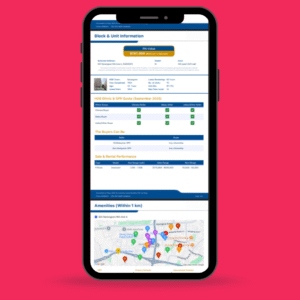
Find Out What Your Home Is Really Worth Today?
Get a data-driven property valuation in minutes, backed by the latest URA & HDB transactions and market trends. Whether you’re planning to sell, buy, or refinance, knowing your home’s true worth gives you the confidence to make smarter decisions.