The Premium Everyone Assumes Exists
In Singapore property circles, few ideas feel as unquestioned as this: corner units are better.
They’re quieter. More private. Flooded with light. And—most importantly—worth more.
It’s the kind of belief that slips easily into conversations and listings alike. “Rare corner unit.” “Premium stack.” “Higher value.” Say it enough times, and it starts to sound like fact rather than marketing.
But here’s the uncomfortable question most buyers don’t stop to ask:
What if that “corner premium” isn’t always real?
Or worse—what if you’re paying extra for something that doesn’t actually translate into better value?
Because beneath the label, the truth is far less straightforward.
A corner unit isn’t automatically superior. It isn’t automatically worth more. And in some cases, it might even be the weaker deal.
In reality, value in property doesn’t come from a label—it comes from the fundamentals: layout, orientation, efficiency, and price per square foot.
And once you start looking at those instead of the marketing… the idea of the “corner premium” begins to unravel.
The Myth of the Corner Unit Premium
Ask almost any buyer why a corner unit should cost more, and the answers come quickly—almost instinctively.
Scarcity. There are fewer corner units in any block, so they must be more valuable.
Privacy. Fewer shared walls, less foot traffic, a sense of separation from the corridor crowd.
More windows. More light, more airflow, more “luxury” in the way the space feels.
On paper, it sounds convincing. Stack enough of these advantages together, and a premium feels justified—expected, even.
But here’s where perception quietly drifts away from reality.
Scarcity doesn’t automatically create value if demand isn’t consistent. Privacy depends heavily on layout and surroundings—not just position. And more windows? They can be a benefit… or a liability, depending on heat, orientation, and exposure.
In other words, the features buyers associate with corner units are conditional advantages, not guaranteed ones.
And yet, many listings price in a premium as if these benefits are absolute.
That’s the disconnect.
Because in real transactions, property value isn’t determined by labels or assumptions—it’s grounded in measurable fundamentals. Size. Layout efficiency. Facing. Condition. Price per square foot.
Which leads to a critical distinction most buyers overlook:
An asking price is a story.
Actual value is what the market is willing to pay.
And when you separate the two, the so-called “corner unit premium” starts to look less like a rule… and more like a narrative.
The PSF Truth Most Buyers Miss
Here’s where the conversation shifts from perception to cold, hard numbers.
Most buyers fixate on the total price of a unit.
$600,000 vs $650,000. Cheaper vs more expensive. Simple.
But seasoned investors—and savvy buyers—look at something else entirely:
Price per square foot (PSF).
Because PSF tells you what you’re actually paying for each unit of space. It cuts through the noise of size and reveals the real value underneath.
And this is where things get interesting.
In one analysis of older flats, corner units were indeed selling at higher overall prices—but only because they were larger. When broken down into PSF, those same corner units were actually cheaper per square foot than their corridor counterparts.
Let that sink in.
The “premium” wasn’t for being a corner unit.
It was simply the cost of buying more space.
Which flips the narrative entirely.
Because if you’re paying more in total but less per square foot, you’re not necessarily overpaying—you’re just buying more area, not better value.
And that leads to a crucial insight most buyers miss:
A bigger unit can look more expensive… while actually being better value.
And a “premium” unit can look superior… while delivering less value per dollar.
Which is why relying on total price alone can be dangerously misleading.
Because in property, bigger doesn’t always mean better—only better value does.
When “Bigger” Is Actually Less Useful
On paper, a larger unit feels like an automatic win.
More space. More flexibility. More value.
But step inside certain corner units—especially older layouts—and that extra space doesn’t always show up where it matters.
Instead, it hides in the margins.
Long corridors that stretch like runways but serve no real purpose.
Oversized entrance foyers that inflate square footage but don’t quite function as living space.
Awkward transitions between rooms that look generous on a floor plan… and feel inefficient in real life.
This is the quiet trade-off many buyers overlook.
Because while the headline size goes up, the usable space doesn’t always follow.
A 1,000 sq ft unit with a clean, efficient layout can often feel—and function—better than a 1,100 sq ft corner unit weighed down by dead zones and awkward geometry.
That’s the difference between space you own and space you actually use.
And in property, the market increasingly rewards the latter.
Which brings us to a simple but powerful idea:
Not all square metres are created equal.
Some drive daily living.
Others just sit there—counted in the price, but not in your lifestyle.
The Hidden Trap: Paying More for Less Space
Here’s where the “corner premium” quietly turns into a bad deal.
Imagine this: two units in the same block.
Same stack. Same condition. Same asking price.
But one is a corner unit… and smaller.
This isn’t hypothetical—it happens more often than buyers think. In real cases, corner units have been marketed at the same price (or higher) despite being significantly smaller than nearby corridor units.
At that point, the math becomes brutally simple.
You’re paying the same money…
for less actual space.
And that destroys value instantly.
Because property isn’t evaluated in isolation—it’s always about relative comparison. What are you getting compared to the next best alternative at the same price?
When a non-corner unit offers more size, better layout, or superior efficiency at the same price point, the “corner advantage” starts to look thin. Very thin.
Yet many buyers still fall into the same trap:
They anchor on the label—corner unit—and assume it justifies the price.
But the market doesn’t reward labels. It rewards fundamentals.
And when you prioritise “corner” over size, layout, and price per square foot, you’re not buying a premium.
You’re paying one.
Noise & Privacy: The Marketing vs Reality Gap
The pitch is seductive—and repeated often:
Fewer neighbours. Fewer shared walls.
A corner unit must be quieter… right?
It sounds logical. It sells well. And on the surface, it makes sense.
But step into real living conditions, and that narrative starts to crack.
Because the biggest sources of noise in most homes don’t come from the side.
They come from above—
chairs scraping, kids running, furniture dragging across the floor.
Or from outside—
traffic at nearby junctions, buses braking, the low hum of a busy road that never really sleeps.
And here’s the part most buyers overlook:
Sound doesn’t care about corners.
It travels through floors, ceilings, structural beams, and even air gaps. Which means your actual level of privacy depends far more on building acoustics—wall thickness, slab design, construction quality—than whether your unit sits at the end of a corridor.
In fact, a poorly insulated corner unit facing a main road can feel louder than an inner unit tucked away from noise sources.
That’s the reality behind the marketing.
Because while corner units may reduce one type of neighbour interaction, they don’t eliminate noise—and they certainly don’t guarantee peace.
And once you understand that, the assumption shifts:
Corner unit doesn’t mean quiet.
And it definitely doesn’t mean private by default.
Light vs Heat: The Orientation Trade-Off
One of the biggest selling points of a corner unit is easy to appreciate the moment you step inside.
More windows.
More natural light.
Better cross-ventilation.
The space feels brighter. Airier. More alive.
And in a densely built city, that kind of openness can feel like a luxury.
But here’s the part that doesn’t show up in the brochure.
Light comes with heat.
Especially in a tropical climate, where the direction your windows face matters just as much—if not more—than how many you have.
A corner unit exposed to the west sun can turn into a heat trap by late afternoon. Walls absorb warmth, windows magnify it, and by evening, the entire unit holds onto that heat like a slow-burning oven.
The result?
Higher reliance on air-conditioning.
Higher electricity bills.
Lower day-to-day comfort.
And suddenly, that “bright and airy” advantage starts to feel like a trade-off.
Now contrast that with a well-oriented middle unit—one that avoids direct west sun, faces a quieter direction, and benefits from consistent shading.
It may have fewer windows. Less visual drama.
But it often delivers something far more valuable:
Comfort you don’t have to fight to maintain.
Because in the end, it’s not about how many windows you have—it’s about what those windows are exposed to.
And that leads to a simple but often overlooked truth:
Orientation matters more than unit type.
Maintenance, Exposure & Wear
There’s a quieter cost to corner units—one that doesn’t show up in brochures or viewing appointments.
Exposure.
With more external walls comes greater contact with the elements. And over time, that exposure adds up.
More surface area facing the sun means more heat absorption.
More walls facing outward means more rain impact during storms.
And over the years, that translates into faster wear and tear—from hairline cracks to paint deterioration to subtle ageing that shows up sooner than expected.
It’s not dramatic. It’s gradual.
But it’s real.
Now take it a step further.
For ground-level or road-facing corner units, the exposure isn’t just environmental—it’s situational.
Headlights sweeping into your living room at night.
Dust and debris carried in from nearby roads.
Foot traffic cutting across corners, bringing noise and reduced privacy right to your doorstep.
These are the kinds of factors buyers don’t always think about upfront—but often feel over time.
And here’s where it starts to matter beyond daily living:
Resale.
Because future buyers notice these things too. Units that feel more exposed, require more upkeep, or sit in less favourable positions can face more resistance in the market—or need sharper pricing to move.
Nothing drastic. Nothing immediate.
But enough to quietly erode that supposed “corner premium.”
Because in property, durability and liveability aren’t just lifestyle factors.
They’re value drivers.
Who Actually Pays More for Corner Units?
Corner units don’t have a universal audience—what feels like a premium to one buyer can be irrelevant to another.
Lifestyle buyers are drawn to corners. They value exclusivity, panoramic light, sweeping views, and that sense of being “set apart.” For them, paying extra for a corner unit can feel justified, even aspirational.
On the flip side, practical buyers prioritise fundamentals. Efficient layouts, square footage, orientation, and price per square foot outweigh any corner-side perks. For this segment, the label “corner unit” alone rarely sways their decision.
The key insight: not all buyers value corners equally. What’s a must-have for one group may be a non-factor—or even a drawback—for another.
And the consequence is clear: resale demand for corner units is inconsistent. While some units fly off the market to lifestyle-focused buyers, others linger, particularly if the perceived premium doesn’t match tangible benefits.
In short, being a corner unit does not automatically guarantee desirability or a higher price—it depends entirely on who the buyer is.
Market Reality: Data Beats Marketing
No matter how persuasive the marketing copy, the market speaks in numbers—not slogans.
Actual transactions are driven by fundamentals:
Size: How much usable space does the unit truly offer?
Layout: Is the floor plan practical, or does it waste precious square metres?
Facing: Does it get sun, breeze, or a view that enhances living comfort?
Condition: Is it well-maintained, or will repairs eat into future value?
Location: Proximity to amenities, transport, and quiet streets still rules.
The “corner” label is just one factor in this mix—not the defining one.
And the real-world behaviour reinforces this: savvy buyers will walk away if the corner premium is unjustified, even if the unit is marketed as rare, bright, or exclusive.
In the end, property doesn’t reward perception—it rewards concrete value.
Corners can help, but only when the fundamentals align. Otherwise, the market won’t pay extra.
When Corner Units Do Make Sense
To be clear: corner units aren’t inherently bad—they just aren’t automatically worth more. The value comes from quality, not position.
There are situations where a corner unit truly justifies a premium:
Superior layout: Efficient floor plans that maximise usable space rather than wasting it on long corridors or awkward foyers.
Good orientation: Windows that capture light and breeze without overheating, avoiding harsh west sun or noise-heavy streets.
Unblocked views: Open sightlines that offer privacy, greenery, or skyline panoramas that can’t be replicated in other units.
Quiet surroundings: Minimal traffic, considerate neighbours, or a strategic location within the block that reduces noise and enhances livability.
In these cases, a corner unit becomes more than just a label—it delivers tangible, lived value that buyers can appreciate daily.
The takeaway: it’s about the quality of the corner, not the corner itself. A corner is only worth paying extra for when its advantages are real, functional, and aligned with what matters most to the buyer.
The Label Doesn’t Create Value — The Unit Does
Let’s bring it full circle.
Corner units carry a reputation: brighter, rarer, more private, and supposedly worth a premium. But as we’ve seen, that reputation is conditional—not automatic.
Corner units are not inherently better. Their value depends on layout, orientation, usable space, noise, and context within the block. What matters is the reality of the unit, not the marketing that surrounds it.
The final takeaway for any buyer is simple: smart decisions come from evaluating fundamentals, not labels. Look at size, efficiency, orientation, condition, and price per square foot. Measure the actual experience of living there. Only then can you separate real value from perception—and avoid paying for a corner simply because it’s a corner.
Sources & Further Reading
Seedly – “HDB Corner Units: Do They Really Affect Price?” – analysis comparing PSF of Toa Payoh corner vs corridor units. Seedly
Auro Realty – “Corner Flats 2026: Expert Tips & Ideas” – outlines common claims about corner-unit benefits and typical 5–15% premiums. Auro Realty
Ananda – “5 Reasons to Love Corner Unit City View Condos” – discusses perceived premiums and rental uplift for corner condos. Ananda
Reddit – “HDB dilemmas. All else equal, Corner or corridor unit?” – real buyer discussions highlighting size differences, pricing, and corner unit trade-offs. Reddit
MillionLuxury – “Evaluating the Acoustic Engineering of Luxury Condominiums for Ultimate Noise Privacy” – explains how noise and privacy depend on building design rather than unit position. MillionLuxury
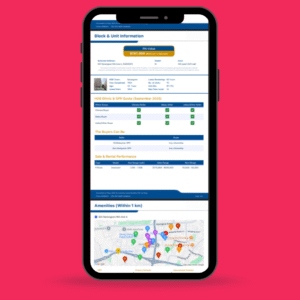
Find Out What Your Home Is Really Worth Today?
Get a data-driven property valuation in minutes, backed by the latest URA & HDB transactions and market trends. Whether you’re planning to sell, buy, or refinance, knowing your home’s true worth gives you the confidence to make smarter decisions.