The 99-Year Illusion
What do you actually own?
It’s a question most HDB owners don’t ask—at least not seriously. The keys are in your hand. Your name is on the papers. You’ve paid hundreds of thousands, maybe more. It feels permanent. It feels like yours.
But here’s the uncomfortable truth: it isn’t. Not in the way most people think.
In Singapore, an HDB flat isn’t a forever asset—it’s a countdown. A 99-year lease that starts ticking the moment the first owner collects their keys. From that point on, time isn’t just passing. It’s quietly eroding ownership.
The perception? You own a home.
The reality? You own time.
And time, by design, runs out.
This is where the tension sits—right at the heart of HDB ownership. You live in it, renovate it, build a life around it… but one day, whether you think about it or not, the lease reaches zero. And when it does, so does your legal claim to the flat.
No dramatic moment. No final negotiation. Just the end of the clock.
That’s the 99-year illusion: it feels like ownership—but it behaves like a lease.
The Core Truth: HDB Flats Are Leasehold, Not Forever Homes
Strip it down to basics, and the structure is simple: an HDB flat is a 99-year leasehold property.
Not ownership in perpetuity. Not something you pass down indefinitely. What you’re buying is the right to live in that space for a fixed period of time—nothing more, nothing less.
In Singapore, this lease begins from the moment the flat is first sold, not when you personally buy it. If you purchase a resale unit with 70 years left, that’s all you own—70 years of use, already partially spent by someone else before you.
Ownership, in this context, is tightly bound to the clock.
No lease left means no ownership left.
There’s no hidden clause that converts it into freehold. No automatic renewal waiting at the end. The terms are clear from day one: when the 99 years are up, the lease expires—and with it, your legal right to the flat.
This isn’t a flaw in the system. It is the system.
And that’s the part many people overlook. Because while 99 years sounds distant—almost abstract—the expiry isn’t theoretical. It’s guaranteed.
What Actually Happens When the Lease Runs Out
When the clock hits zero, everything stops.
The lease expires—and with it, your legal ownership. Not reduced. Not renegotiated. Ended.
At that point, the flat is no longer an asset you can act on. You can’t sell it. You can’t transfer it. You can’t continue living in it as your home. The legal right that once allowed all of that simply no longer exists.
What happens next is straightforward, even if it feels abrupt: the property returns to Housing & Development Board, and by extension, back under state control. The same system that issued the lease takes it back when the lease runs its full course.
There’s no rollover. No automatic extension. No quiet clause that buys you more time.
Because this was never designed to be permanent ownership—it was always a fixed-term arrangement with a clearly defined end.
And when that end arrives, the system doesn’t bend. It closes.
The Big Question: Do Owners Get Paid?
The Default Outcome
This is where expectation collides head-on with reality.
When an HDB lease expires, there is no automatic payout. No cheque. No residual value waiting at the finish line. The system doesn’t compensate you simply because the 99 years have run their course.
Why? Because the value of the flat has been declining the entire time.
From the day the lease begins, the clock isn’t just ticking—it’s depreciating. Each passing year chips away at what’s left. By the time the lease reaches its end, that value has effectively been reduced to zero.
Not suddenly. Not unfairly. Just… completely.
Why There’s No Payout
At expiry, there’s nothing left to compensate.
An HDB flat is a leasehold asset, which means its worth is tied entirely to the time remaining on that lease. Once the lease runs out, so does the ownership interest. There’s no residual stake, no underlying land ownership to fall back on.
You haven’t lost something unexpectedly—you’ve fully consumed what you originally purchased: 99 years of housing.
Think of it less like a disappearing asset, and more like a contract that has been fulfilled in full.
The system doesn’t pay you at the end for the same reason a fully used ticket doesn’t get refunded—its value was realised along the way.
The Exception Layer: When Compensation Can Happen
Government Redevelopment (e.g. SERS)
Now here’s where the narrative shifts—and where many homeowners get it wrong.
Compensation can happen, but not because your lease expired.
It happens when the government steps in.
Under schemes like the Selective En bloc Redevelopment Scheme (SERS), selected HDB estates may be acquired before their lease runs out. In these cases, owners are typically offered compensation, rehousing options, or replacement flats.
Sounds reassuring—until you realise the catch.
Not every flat qualifies. Not even close.
SERS is selective by design. Only a small number of estates are chosen based on redevelopment needs, land use planning, and broader national priorities. Most HDB flats will never be part of it.
So while these stories exist—and get talked about often—they are the exception, not the rule.
Key Distinction
Here’s the line most people blur:
Redevelopment is not the same as lease expiry.
If your flat reaches the end of its 99-year lease naturally, there is no payout. No compensation is triggered just because time ran out.
Any financial return you see in redevelopment cases comes from government intervention, not from an inherent right tied to ownership.
In other words, it’s not something you can rely on—it’s something that may happen under very specific circumstances.
And building your expectations around it? That’s where costly assumptions begin.
What If You Grow Old in the Flat?
The Lease Buyback Scheme (LBS)
This is where the system offers a pressure release.
If you’re an older homeowner sitting on a flat with remaining lease, the Lease Buyback Scheme gives you a way to unlock value—without moving out.
Instead of holding onto the full 99-year lease, you sell part of the remaining years back to the Housing & Development Board. In return, you keep a shorter lease tailored to cover your retirement years, while freeing up cash.
That cash doesn’t just sit idle. It’s channelled into your CPF Retirement Account, which then pays out through CPF LIFE—creating a steady stream of income.
Same home. Smaller lease. More liquidity.
It’s not about squeezing every last year out of the property—it’s about converting time into financial security while you still can.
If You Outlive the Lease
And what if the concern goes deeper—what if you actually outlive the lease?
This is where fear tends to spike. The idea of “running out of home” feels absolute. Final.
But the reality is more measured.
The Housing & Development Board doesn’t simply leave households stranded. Cases are assessed individually, with authorities reviewing the household’s situation and working out appropriate housing arrangements.
There’s no one-size-fits-all answer—but there is a system designed to respond.
So while lease expiry is a hard line on paper, in practice, it isn’t a scenario where someone is simply left homeless overnight.
The real takeaway? The system expects you to plan—but it doesn’t ignore you if life outlasts the plan.
The Strategic Reality: What This Means for Homeowners
This is where the conversation stops being theoretical—and starts becoming personal.
An HDB flat isn’t just a home. It’s a depreciating asset by design.
Not because something went wrong. But because that’s exactly how the system in Singapore was built to function. The 99-year lease isn’t just a timeline—it’s a built-in expiry mechanism that steadily erodes value over time.
And here’s the part most people underestimate:
Lease decay isn’t a distant concept waiting at year 99. It’s happening right now.
Every year that passes shortens the runway. Financing becomes tighter. Buyer demand shifts. Price growth slows, then plateaus, then—quietly—starts to work against you. The impact doesn’t arrive all at once. It creeps in, then compounds.
Which leads to the real shift in thinking:
This isn’t a game of timing the perfect exit.
It’s a game of planning ahead of the decline.
Because by the time lease decay becomes obvious to everyone else, the advantage is already gone.
Smart homeowners don’t just ask, “When should I sell?”
They ask, “What is my plan before the lease starts working against me?”
That’s the difference between riding the value curve—and being caught at the tail end of it.
Common Misconceptions (Debunk Section)
Let’s clear the air before confusion turns into costly mistakes.
Myth #1: “The government will compensate everyone.”
Reality: Compensation only comes under specific schemes—like SERS—or through targeted programmes such as the Lease Buyback Scheme. The average flat reaching its 99-year lease naturally does not trigger a payout. Ownership rights alone don’t earn you money at expiry.
Myth #2: “The lease will be extended automatically.”
Reality: There is no hidden clause, loophole, or secret extension. When the lease ends, ownership ends. Any continuation of tenure is only possible through government intervention—and even then, it’s situational, not guaranteed.
Myth #3: “Old flats will always be en bloc.”
Reality: En bloc or redevelopment is selective. Only certain estates are chosen for government-initiated programmes. Most flats will never qualify, and relying on this as a safety net is a dangerous assumption.
The truth is simple but often overlooked: HDB leases are finite. The clock is real. Planning is everything.
Expectations reset. Decisions clarified. No surprises—only the reality of what you actually own.
It’s Not About Expiry—It’s About Planning Before It
Here’s the central truth: the value of an HDB flat doesn’t magically appear at the end of the lease—it exists during the lease. Every year that passes, every decision you make—or fail to make—shapes how much of that value you capture.
Smart owners don’t wait for year 99 to react. They act before lease decay accelerates, positioning themselves to maximise returns, secure retirement options, or plan exits that make sense financially and personally. Timing is important, but preparation is everything.
Ownership may be temporary, but the decisions you make around it are permanent. Renovations, financial planning, or strategic exits—these choices define the outcome, long before the lease expires.
In short: the clock is real, the expiry is inevitable, but your strategy can make all the difference.
Understanding the mechanics of HDB lease expiry is just the first step. Knowing that value declines with time is important—but what do you do about it?
The next questions every owner should tackle are strategic:
- When to sell before lease decay – timing matters more than emotion.
- How lease affects resale value – the remaining years on your flat can make or break a deal.
- Exit planning for HDB owners – from financial planning to retirement, your next move should be intentional, not reactive.
Because in the world of leasehold property, insight without action is just awareness. The real advantage comes from planning ahead—and that’s exactly what we’ll explore next.
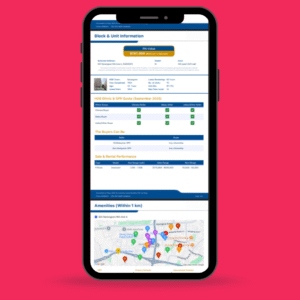
Find Out What Your Home Is Really Worth Today?
Get a data-driven property valuation in minutes, backed by the latest URA & HDB transactions and market trends. Whether you’re planning to sell, buy, or refinance, knowing your home’s true worth gives you the confidence to make smarter decisions.