Why Buying Power Is Not Just About Income
In Singapore’s property market, buying power is often reduced to a single, seductive assumption: “I earn X, so I can afford Y.” It sounds logical. Higher income should mean a bigger home, a better location, a more comfortable life. Yet for many buyers, that logic collapses the moment they speak to a bank—or worse, after they’ve already paid an option fee.
The reality is this: your income alone does not determine what you can buy. Regulatory rules do. Specifically, two ratios—Total Debt Servicing Ratio (TDSR) and Mortgage Servicing Ratio (MSR)—act as the real gatekeepers of affordability in Singapore. They cap how much of your monthly income can be used for loan repayments, and by extension, how large a loan a bank is even allowed to offer you, regardless of how confident you feel about your cash flow.
Layered on top of these ratios are stress-test interest rates and loan-to-value (LTV) limits, which further tighten the net. Banks don’t assess affordability using today’s attractive headline mortgage rates; they use higher, regulator-mandated assumptions. And even if your income passes those tests, LTV rules may still force you to scale back your purchase—or come up with far more cash and CPF upfront than expected.
Understanding how TDSR, MSR, stress tests, and LTV interact is the difference between browsing aspirational listings and setting a realistic, bank-approved budget. Before you decide what you want to buy, it pays to understand what the system will actually let you buy.
What TDSR Is — The Master Cap on Your Borrowing
Definition of TDSR
The Total Debt Servicing Ratio (TDSR) is the broadest and most powerful affordability rule in Singapore’s housing market. At its core, TDSR limits how much of your gross monthly income can be used to service all your debts combined—not just your home loan.
This is the part many buyers underestimate. Under TDSR, “total debt” means exactly that:
Your new housing loan instalment
Existing property loans
Car loans
Personal loans
Credit card balances (converted into a notional monthly repayment)
All of these obligations are stacked together and measured against a single ceiling. That ceiling is 55% of your gross monthly income. If your total monthly repayments exceed this threshold, the bank is not allowed to approve the loan—no matter how confident you are about future bonuses, pay increments, or lifestyle adjustments.
In other words, TDSR doesn’t ask whether you can pay. It asks whether you are allowed to borrow.
The Stress-Test Interest Rate Explained
TDSR is not calculated using today’s market mortgage rates. Instead, banks are required to test affordability using a minimum “stress-test” interest rate of 4% for residential property loans.
This rule exists for a simple reason: interest rates change, and regulators want to ensure borrowers can still cope if rates rise. Even if your actual mortgage ends up priced below 4%, your eligibility is assessed as if you are already paying that higher rate.
The impact on buying power is significant. A higher assumed interest rate means a higher notional monthly instalment for the same loan amount. Since TDSR caps how large that monthly instalment can be, the result is a smaller maximum loan size—and therefore a lower property budget—than what many buyers expect when they run basic affordability calculators using headline rates.
This is why buyers often feel they “should qualify” for more, but don’t.
Who TDSR Applies To
TDSR applies broadly across Singapore’s residential property market:
Private property buyers (condos and landed homes) are fully governed by TDSR, making it the primary constraint on how much they can borrow.
HDB buyers using bank loans are also subject to TDSR, on top of any HDB-specific rules and, in some cases, MSR.
Crucially, TDSR becomes more restrictive the more debts you already have. A car loan, a renovation loan, or large revolving credit card balances all consume part of the same 55% cap. That leaves less room for your housing instalment—even if your income looks strong on paper.
The takeaway is simple: under TDSR, every debt competes with your home for a slice of your income. And the more crowded that pie becomes, the smaller your housing loan has to be.
What MSR Is — A Second Gate for HDB and EC Buyers
Definition of MSR
The Mortgage Servicing Ratio (MSR) is a more targeted affordability rule—and for many buyers, a more unforgiving one. Unlike TDSR, which looks at all your debts combined, MSR focuses only on your property loan instalment.
Under MSR, your monthly mortgage repayment is capped at 30% of your gross monthly income. That’s it. No matter how clean your balance sheet is, no matter how disciplined your spending habits are, the housing instalment itself cannot cross this line.
MSR applies specifically to:
HDB flats, whether financed by HDB or a bank
Executive Condominiums (ECs) bought directly from developers
If you fall into this category, MSR immediately becomes a second gate you must pass before a loan can even be considered.
MSR vs TDSR: How They Work Together
For buyers purchasing an HDB flat or a developer-sold EC with a bank loan, both rules apply simultaneously. Your loan must satisfy:
MSR (30%), which caps the mortgage instalment itself, and
TDSR (55%), which caps all debt obligations combined
This is where many buyers get caught out. Passing TDSR does not mean you automatically pass MSR. In fact, it often works the other way around: MSR tends to bite first.
The practical rule of thumb is simple: whichever rule is stricter wins. If MSR allows a smaller monthly instalment than TDSR does, your loan is capped at the MSR level. If TDSR is tighter because of other debts, then TDSR becomes the binding constraint instead.
Either way, the more restrictive rule sets your maximum loan—and therefore your maximum property price.
Why MSR Is Structurally More Restrictive
MSR is stricter by design. A 30% ceiling on mortgage repayments is significantly lower than TDSR’s 55% cap, and it applies regardless of your debt position. Even buyers with zero car loans, zero credit card balances, and strong cash buffers are still confined within the same narrow band.
This is intentional. MSR functions as a public-housing safeguard, ensuring that HDB and EC buyers are not over-committing a large share of their income to housing alone. It prioritises long-term stability over short-term purchasing power.
The trade-off is clear: while MSR protects affordability, it also means that HDB and EC buyers often discover their borrowing capacity is materially lower than private property buyers with the same income. Not because they earn less—but because the rules are simply tighter.
How TDSR and MSR Translate Income Into Loan Size
From Income → Monthly Instalment
TDSR and MSR don’t start with property prices. They start with your income, and more specifically, how much of it regulators are willing to let you commit every month.
Under these rules, your gross monthly income is first converted into a maximum allowable repayment:
Up to 55% under TDSR (shared across all debts), or
Up to 30% under MSR (for the mortgage alone, where applicable).
This step effectively draws a hard line through your finances. Anything above it is off-limits, regardless of personal comfort levels or lifestyle choices. If you earn more, the absolute dollar cap rises. If you earn less—or have other debts—the space available for your housing instalment shrinks accordingly.
Only after this ceiling is established does the bank even begin to consider how large a loan you can take.
From Instalment → Maximum Loan
Once the maximum monthly instalment is fixed, the bank works backwards to calculate your loan size. Two assumptions matter most here:
Loan tenure, and
Interest rate used for assessment.
A longer tenure spreads repayments over more years, lowering the monthly instalment for any given loan amount. That makes it easier to fit under TDSR or MSR, and therefore supports a larger loan. Conversely, a shorter tenure raises the monthly burden and reduces what you can borrow.
The interest rate used in this calculation is not your actual mortgage rate, but the regulatory stress-test rate. Even small changes in this assumed rate can translate into large differences in loan size, especially over long tenures. The result is a maximum loan that is mathematically sound—but often emotionally surprising.
Why Buyers Feel a “Reality Shock”
This is where expectations collide with regulation. Many buyers estimate affordability using headline mortgage rates or online calculators that assume today’s pricing conditions. On paper, the numbers look comfortable. In practice, banks assess affordability using more conservative assumptions designed to withstand future rate hikes.
The irony is that your actual monthly mortgage payment may end up lower than the stress-tested amount once the loan is disbursed. Yet your loan size is still capped by the higher, hypothetical instalment used during assessment.
That gap—between what buyers expect to pay and what banks are allowed to approve—is the source of the “reality shock.” It’s not that the math is wrong. It’s that the rules are deliberately cautious, and unless you understand how TDSR and MSR convert income into loan size, your perceived buying power will almost always feel larger than your approved one.
The Silent Partner: How LTV and Downpayment Shape Buying Power
TDSR and MSR may decide how much you are allowed to repay each month, but they don’t operate alone. Lurking quietly in the background is another rule that can make or break a purchase: the Loan-to-Value (LTV) limit. While TDSR and MSR are income-based constraints, LTV is an asset-based constraint—and when it bites, it bites hard.
What LTV Limits Do
LTV limits cap the maximum percentage of a property’s price that can be financed with a loan. For most buyers taking their first housing loan from a bank, the typical maximum LTV is up to 75%, provided certain conditions are met—most notably that the loan tenure stays within regulatory limits and does not extend too far into retirement age.
If those conditions aren’t met, the allowable LTV drops sharply. The consequence is straightforward: the lower the LTV, the higher your required downpayment, funded by a combination of cash and CPF. Even if your income comfortably supports a large loan instalment, LTV rules may simply prevent you from borrowing that amount against the property price you want.
When LTV Becomes the Binding Constraint
Many buyers assume that once they pass TDSR or MSR, the hardest part is over. In reality, this is often where the second problem appears.
It’s entirely possible to pass all income-based checks yet still fall short because you lack enough cash or CPF to meet the downpayment imposed by LTV limits. This is especially common for younger buyers with strong incomes but limited accumulated CPF, or for upgraders who are asset-rich on paper but temporarily cash-tight.
LTV can also tighten unexpectedly when:
Loan tenures are shortened, which reduces the allowable LTV tier, or
Borrowers are older, causing the loan to extend beyond age thresholds and triggering a lower LTV cap.
In these cases, the issue isn’t affordability—it’s structure. The rules simply demand more equity upfront.
Buying Power = Lowest of All Constraints
This is the principle that catches most buyers off guard: your true buying power is not set by the most generous rule, but by the most restrictive one.
TDSR and MSR determine how much you can borrow based on income. LTV determines how much you’re allowed to borrow based on the property price and your available funds. Whichever produces the lower number becomes your effective limit.
In practice, buying power is the intersection of:
Income-based limits (TDSR and MSR), and
Asset-based limits (LTV and downpayment).
Until both sides align, the property you want remains just out of reach—not because you can’t afford it, but because one rule somewhere in the system says you can’t finance it that way.
HDB vs Condo: How Buying Power Differs in Practice
On paper, affordability rules look uniform. In practice, what you can buy depends heavily on what you’re buying. HDB flats, ECs, and private condos sit under different regulatory umbrellas, and those differences translate directly into buying power.
HDB Buyers
For HDB buyers, MSR is usually the dominant constraint. With mortgage repayments capped at 30% of gross monthly income, this single rule often determines the maximum loan size long before TDSR becomes an issue.
This cap interacts with HDB-specific rules in ways that further shape affordability. Income ceilings, HDB loan limits, and prescribed LTV ratios all work alongside MSR to narrow the range of flats that are realistically within reach. Even for buyers with stable incomes and minimal debts, the structure ensures that housing costs remain a relatively modest slice of monthly earnings.
The result is a system that prioritises long-term affordability and stability—but one that can feel restrictive, especially in higher-priced towns or for buyers hoping to stretch into larger flat types.
EC Buyers
Executive Condominiums occupy a unique middle ground—and often experience the tightest squeeze.
Like HDB buyers, EC purchasers are subject to MSR, meaning only 30% of income can go toward the mortgage. But unlike HDB flats, ECs come with higher price points, particularly for new launches. This combination—public-housing-style affordability rules applied to near-private pricing—can significantly compress buying power.
For many middle-income households, this creates a paradox. They may earn too much to comfortably qualify for larger HDB flats in prime locations, yet find their EC borrowing capacity constrained by MSR just as prices escalate. As a result, buyers often have to compromise on unit size, location, or timing, even when their incomes appear healthy by conventional standards.
Private Condo Buyers
Private condo buyers operate under a looser framework. MSR does not apply. Instead, affordability is governed by TDSR and LTV alone.
This structural difference matters. Without the 30% mortgage cap, buyers can allocate up to 55% of gross monthly income—after accounting for other debts—toward housing repayments. That higher ceiling typically translates into larger maximum loan sizes and, by extension, higher potential property prices.
Of course, this doesn’t mean private buyers face no constraints. Existing debts, stress-tested interest rates, and downpayment requirements still play a major role. But compared to HDB and EC buyers with the same income, private condo buyers are often able to stretch further—not because they are riskier borrowers, but because the rules governing their purchases allow it.
Case Study Comparison: Same Income, Different Outcomes
To illustrate how TDSR, MSR, and LTV interact in real life, let’s consider a conceptual comparison: four households with the same gross monthly income but different debt profiles and property choices.
Even with identical earnings, their maximum loan sizes—and therefore potential property budgets—can differ dramatically because of how regulatory rules apply. The numbers below are illustrative; actual figures vary by bank, tenure, and interest rate.
| Scenario | Key Rules Binding | Conceptual Effect on Loan / Buying Power |
|---|---|---|
| HDB buyer, no other debts | 30% MSR + HDB/Banks’ LTV rules | Maximum loan is capped by MSR; lower than what a private property buyer with the same income could obtain. |
| HDB buyer with car and personal loans | 30% MSR + 55% TDSR + LTV | Non-housing debts reduce TDSR headroom; MSR still caps mortgage at 30% of income, potentially limiting flat size. |
| Private condo buyer, no other debts | 55% TDSR + bank LTV | Higher allowable monthly instalment (up to 55% of income) supports a larger loan and higher property price, provided downpayment is sufficient. |
| Private condo buyer with multiple debts | 55% TDSR + bank LTV | Other debts shrink the income available for the mortgage, lowering loan size and affordable property price. |
Purpose:
This conceptual table underscores a key lesson: income alone does not determine buying power. Even with identical earnings, the combination of TDSR, MSR, existing debts, and LTV rules produces very different outcomes. Understanding these nuances is essential before committing to any property, especially in a market where regulatory constraints are as important as cash flow.
Practical Ways Buyers Can Improve Buying Power (Within the Rules)
While TDSR, MSR, and LTV set the guardrails, buyers still have levers they can pull to maximise borrowing potential without breaking the rules. Here are the most practical strategies:
Income Optimisation
Your borrowing ceiling is directly tied to income. Ways to expand it include:
Co-borrowers: Adding a spouse, parent, or adult child as a co-borrower increases the combined gross income, raising the absolute dollar cap under TDSR and MSR.
Proper documentation of variable income: Rental income, freelance earnings, or commission-based income can count if properly documented for IRAS purposes. Ensuring all verifiable sources are included can meaningfully increase your allowable monthly instalment.
Debt Management
Existing debts eat into TDSR headroom, but you can regain space:
Paying down high-interest or large loans reduces your monthly obligations, freeing up more of the 55% TDSR allowance for housing.
Restructuring or consolidating debt can lower monthly repayments without necessarily reducing total debt, giving you greater flexibility under the ratio caps.
Effectively, managing your debts is like clearing a path through a crowded borrowing ceiling.
Tenure Strategy (and Its Trade-Offs)
Loan tenure plays a key role in converting ratios into loan size:
Longer tenure spreads monthly repayments over more years, lowering the instalment and making it easier to fit under TDSR/MSR.
Trade-off: While a longer loan may increase your maximum borrowing power, it also increases total interest paid over the life of the loan. Buyers must balance short-term affordability with long-term cost.
Why Bank Choice Still Matters
Even with identical income and debt profiles, your borrowing power can vary between banks. The reason: internal stress-test assumptions.
Some banks apply rates slightly higher than the MAS-mandated minimum, while others may be more conservative or flexible in interpreting income and debt. Comparing lenders can make a meaningful difference in maximum loan approval—and therefore the property price you can realistically target.
By combining income optimisation, smart debt management, tenure strategy, and careful lender selection, buyers can stretch their purchasing power without violating regulatory rules—effectively getting the most home for their income.
Key Takeaways: What Actually Determines What You Can Buy
When it comes to property in Singapore, your income is only part of the story. TDSR, MSR, and LTV together define the real limits of what you can afford. Here’s what to remember:
TDSR and MSR cap repayment, not price. These ratios determine the maximum monthly instalment you are allowed to commit—not the property price itself. Your borrowing potential flows from your income, existing debts, and which ratio is stricter.
Stress tests matter more than market rates. Banks calculate your affordability using higher, regulator-mandated interest rates. Even if market mortgage rates are low, your loan eligibility is based on the more conservative, stress-tested assumption.
LTV can override income-based eligibility. Passing TDSR and MSR does not guarantee you can borrow the full property price. LTV rules and downpayment requirements may still force a smaller loan or require more cash upfront.
Buying power is a multi-rule intersection, not a single number. Your true affordability is determined by the most restrictive constraint at any given time—whether it’s income ratios, debt obligations, or asset-based limits.
Understanding this intersection is essential for planning your property purchase realistically. It separates wishful thinking from what banks will actually approve.
Further Reading & References
For readers who want to dive deeper into TDSR, MSR, and related property financing rules in Singapore, the following resources provide authoritative explanations, examples, and updates:
Monetary Authority of Singapore (MAS) – New Housing Loan Rules
Comprehensive guidance on TDSR and MSR, including stress-test requirements and regulatory limits.
MAS Housing Loan ExplainersCNA Coverage on Cooling Measures
Articles detailing how stress-test floors, LTV adjustments, and other policy changes impact maximum loan sizes and property affordability.
CNA Property Cooling Measures AnalysisDollarBack Mortgage – TDSR and MSR Guides
Practical explanations for retail buyers on how TDSR and MSR are calculated, including worked examples and tips to maximise borrowing potential.
TDSR Guide | MSR GuideDBS “All About Home Loans”
Simplified breakdown of TDSR, MSR, and mortgage calculations for everyday readers, including case studies.
DBS Home Loans GuideMoneySmart LTV Guide
Explains how LTV tiers interact with TDSR and MSR, including how downpayment and loan tenure affect maximum loan size.
MoneySmart LTV GuidePropertyGuru MSR Explainer
Historical context of MSR rules and how they impact HDB and EC buyers today.
PropertyGuru MSR Overview
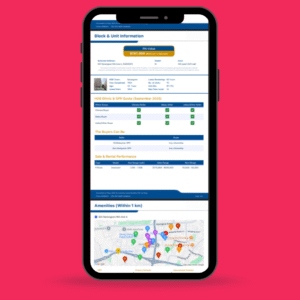
Find Out What Your Home Is Really Worth Today?
Get a data-driven property valuation in minutes, backed by the latest URA & HDB transactions and market trends. Whether you’re planning to sell, buy, or refinance, knowing your home’s true worth gives you the confidence to make smarter decisions.