

The Hidden Link Between Your Car and Your Condo
“That $1,200 monthly car instalment might be costing you a $200,000 property upgrade.”
It sounds dramatic — until you run the numbers.
In Singapore, we tend to compartmentalise our finances. The car loan is for mobility. The home loan is for stability. One gets you from Tanjong Pagar to Tampines. The other anchors you in Bishan, Bedok, or a new launch condo near an MRT. Two different goals. Two different banks, sometimes. Two different mental boxes.
But here’s the uncomfortable truth: lenders don’t see two boxes. They see one financial profile.
Whether you’re applying for a bank loan or financing an HDB flat, every dollar of fixed monthly debt — including your car instalment — is counted against you. Under Singapore’s Total Debt Servicing Ratio (TDSR) and, where applicable, the Mortgage Servicing Ratio (MSR) framework set by the Monetary Authority of Singapore, your car loan is not “separate.” It is mathematically fused into your home loan assessment.
That means:
A higher car instalment reduces how much you can borrow for property.
A new car loan taken at the wrong time can shrink or even derail your mortgage approval.
In tighter cases, it can affect the interest rate and risk assessment the bank assigns to you.
So yes — having a car loan directly affects your home loan approval, your maximum loan quantum, and sometimes even the pricing you’re offered.
In this article, we’ll break down exactly how that happens — step by step — with a focus on how Singapore’s TDSR and MSR rules make the link between your car and your condo far more powerful than most buyers realise.
The Short Answer: Yes — And Here’s Why
If you’re looking for the direct answer: yes, a car loan affects your home loan — and sometimes more than you expect.
Here’s the quick breakdown before we go deeper:
Car loans count as monthly debt obligations.
Banks include your car instalment when calculating your Debt-to-Income (DTI) ratio or, in Singapore, your Total Debt Servicing Ratio (TDSR).They reduce your borrowing capacity.
Because Singapore caps total debt at 55% of gross monthly income under rules set by the Monetary Authority of Singapore, every dollar committed to your car reduces the amount available for your home loan instalment.They can cause rejection.
If your combined debts (car loan + credit cards + personal loans + projected mortgage) exceed lender or regulatory caps, the bank may either:Approve a smaller loan, or
Reject the application outright.
Timing matters — a lot.
Taking a car loan:Before applying for a mortgage raises your starting debt ratio.
After pre-approval but before completion can trigger a reassessment — and potentially reduce or cancel your approved loan amount.
In short: your car instalment is not just a lifestyle expense. It directly competes with your housing loan for space inside the same debt ceiling.
Now let’s unpack exactly how lenders calculate this — and why the numbers can shift more dramatically than most buyers realise.
How Banks Actually Assess Your Debts
Before a bank decides how much it will lend you, it asks one fundamental question:
Can you realistically afford this — on top of everything else you’re already paying?
That’s where debt ratios come in.
The Global Concept: Debt-to-Income Ratio (DTI)
What Is DTI?
Debt-to-Income Ratio (DTI) measures how much of your gross monthly income is already committed to debt repayments.
The formula is simple:

It’s about how much breathing room you have left.
What Counts as “Monthly Debt Obligations”?
Banks typically include:
Car loans
Credit card minimum payments
Personal loans
Student loans
Existing property loans
Notice what’s missing:
Groceries. Insurance. Utilities. Dining out.
DTI focuses strictly on debt commitments — the obligations you cannot skip.
And yes, your car instalment sits squarely in that calculation.
Typical DTI Thresholds
In many countries, lenders prefer:
36%–43% as a comfortable range
Some may stretch to 50%, depending on policy and borrower profile
Cross the line, and the loan either shrinks — or disappears.
Simple DTI Example
Let’s say:
Gross monthly income: $6,000
Car loan: $800
Credit card minimums: $400
No other debt
Total monthly debt = $1,200
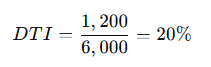
If a lender caps DTI at 43%, your maximum total debt allowed would be:

So your maximum housing instalment becomes $1,380.
Without the car loan?
Your ceiling would be dramatically higher.
The Singapore Context: TDSR and MSR
Singapore takes this concept — and tightens it.
Under rules set by the Monetary Authority of Singapore, banks must follow structured debt caps when granting property loans.
And this is where car loans become especially powerful.
A. Total Debt Servicing Ratio (TDSR)
What Is TDSR?
TDSR is Singapore’s version of DTI — but applied specifically to property loans.
Formula:

What Is Included?
Everything debt-related:
Car loans
Credit cards
Personal loans
All existing property loans
The new housing loan you’re applying for
Nothing escapes the calculation.
The Current Cap
The TDSR limit is:
55% of your gross monthly income
That means if you earn $10,000 per month, your total monthly debt — including your future mortgage — cannot exceed $5,500.
Every dollar of car instalment eats into that 55% ceiling.
The Stress-Test Rule (Why It Gets Tighter)
Banks don’t calculate your home loan using today’s promotional interest rate.
They must “stress test” your mortgage at a minimum interest rate floor (e.g., around 3.5% for residential properties).
This means:
Even if your actual loan rate is lower,
Your TDSR is calculated using a higher assumed repayment.
Result?
Your borrowing power is already compressed.
Add a car loan — and the squeeze intensifies.
This is why car loans are especially impactful in Singapore compared to markets with looser DTI flexibility.
B. Mortgage Servicing Ratio (MSR)
TDSR isn’t the only rule.
If you’re buying:
An HDB flat, or
An Executive Condominium (EC) from a developer
You must also pass the Mortgage Servicing Ratio (MSR).
What Is MSR?
MSR caps your property loan repayment alone at:
30% of gross monthly income
So if you earn $6,000:

Your monthly housing instalment cannot exceed $1,800 — regardless of TDSR.
Order of Assessment
For HDB and new EC purchases:
MSR is assessed first (property instalment capped at 30%)
Then TDSR is assessed (total debt capped at 55%)
You must pass both.
Why Car Loans Can Still Block Approval
Even if your property instalment fits within the 30% MSR cap…
Your car loan still counts under TDSR.
So you could:
Pass MSR,
But fail TDSR because total debts exceed 55%.
This is where many buyers get caught off guard.
They focus on whether the property instalment looks affordable —
but forget that the bank is measuring the entire debt ecosystem.
And inside that ecosystem, your car loan isn’t just transport.
It’s leverage against your borrowing power.
4 Direct Ways a Car Loan Affects Your Home Loan
You don’t feel it when you sign the car loan papers.
You feel it later — when the bank tells you your dream condo is suddenly out of budget.
Here’s exactly how that happens.
It Reduces Your Borrowing Power
This is the most immediate impact.
Under DTI or Singapore’s TDSR framework regulated by the Monetary Authority of Singapore, your total debt is capped at 55% of gross monthly income.
That cap doesn’t expand just because you bought a car.
It stays fixed.
Which means:
Every dollar you commit to your car instalment is one dollar less available for your housing loan.
A Simple Affordability Illustration
Let’s assume your income allows a maximum housing instalment of $2,500 per month under TDSR.
Add a $400/month car loan → Your housing capacity drops to $2,100.
Over a 25–30 year tenure, that could mean a six-figure reduction in approved property value.Add a $600/month car loan → Housing capacity falls to $1,900.
The shrinkage in loan quantum becomes even more significant.
The math compounds over decades.
The higher the instalment, the larger the contraction in maximum loan amount.
A bigger car often equals a smaller condo.
It Can Push You Over the Regulatory Limit
Sometimes it’s not about “reduced borrowing power.”
It’s about crossing a hard line.
If your total monthly debt exceeds:
The lender’s DTI threshold, or
Singapore’s 55% TDSR cap
the bank cannot approve the loan as structured.
Two things can happen:
Loan rejected, OR
Smaller loan approved to bring you back within limits.
A Singapore Scenario
Imagine your existing debts already place you at 50% TDSR.
You apply for a housing loan that would bring you to 56%.
Even though it’s “just” 1% over the cap, the bank must cut the loan size until total debt falls back to 55% or below.
If there isn’t enough headroom to support your desired instalment, the property becomes unaffordable — on paper.
And in lending, paper rules everything.
It Affects Your Credit Score
Your car loan doesn’t just affect ratios.
It affects your risk profile.
Positive Impact
Consistent, on-time car loan payments build strong repayment history.
A solid credit track record can:
Improve approval odds
Help you qualify for better mortgage rates
Used correctly, a car loan can strengthen your credit profile.
Negative Impact
But the reverse is equally powerful:
Late or missed payments lower your credit score.
Applying for a new car loan triggers a hard credit inquiry.
Multiple recent credit applications increase perceived risk.
To a mortgage underwriter, this can signal financial stress or over-leverage.
Weaker credit can mean:
Lower loan approval probability
Higher mortgage interest rates
Stricter documentation and underwriting requirements
In other words, the car loan doesn’t just change your math — it changes how the bank sees you.
Timing Matters More Than You Think
When you take the car loan can be just as important as whether you have one.
Scenario A: Car Loan Before Home Loan Application
If you take the car loan first:
Your debt ratios start higher.
Your borrowing power is already constrained.
The maximum housing loan you qualify for shrinks immediately.
There’s no “undo” button during mortgage assessment.
The bank calculates based on what exists at the point of application.
Scenario B: Car Loan After Pre-Approval but Before Completion
This is where things get dangerous.
Many buyers assume once they receive home loan pre-approval, they’re safe.
They are not.
Banks typically re-check your credit profile and debt obligations before final approval or loan disbursement.
If you take a car loan during this period:
Your TDSR is recalculated.
Your risk profile changes.
The bank may reassess the entire file.
Possible outcomes:
Reduced loan amount
Delayed completion
In extreme cases, withdrawal of approval
Why Banks Tell You: Don’t Take New Debt After Pre-Approval
This warning isn’t casual advice.
It’s risk management.
When you take on new debt, you alter the financial picture the bank originally approved. Even a single new instalment can tip your ratios or affect your credit score enough to change the underwriting decision.
Until your home purchase is fully completed, your financial profile needs to stay stable.
Because in the eyes of the bank, stability equals approval — and new debt equals uncertainty.
Worked Example: How a Car Loan Changes Your Numbers
Let’s move from theory to reality.
Because this is where the impact becomes uncomfortably clear.
Scenario Assumptions
Gross monthly income: $6,000
Other debts: $400 (credit cards, personal loans)
Car loan: $800 per month
Total fixed debt before taking any home loan = $1,200
Step 1: Calculate Current DTI/TDSR (Without Home Loan)
Total monthly debt = $400 + $800 = $1,200
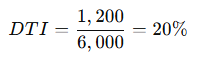
So before you even apply for a mortgage, 20% of your income is already committed.
That may look comfortable.
But the ceiling is what matters.
Step 2: Apply a 43% DTI Cap (Generic Case)
Many lenders globally cap DTI at around 43%.
Maximum allowable total debt:
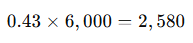
That means your total monthly obligations — including your future mortgage — cannot exceed $2,580.
You’re already at $1,200.
So the remaining room for housing instalment is:

Maximum housing instalment allowed: $1,380
That’s your borrowing ceiling.
What Does That Mean in Property Terms?
Mortgage affordability compounds over 25–30 years.
A difference of $500–$800 per month in instalment capacity can translate into:
A smaller condo instead of a larger one
OCR instead of RCR
Or resale instead of new launch
The car loan doesn’t look dramatic in isolation.
But over decades, it compresses purchasing power significantly.
Step 3: Compare Against “No Car Loan” Scenario
Now remove the $800 car instalment.
New total debt:
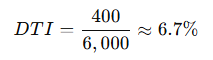
Under the same 43% cap:

Maximum housing instalment allowed: $2,180
Compare the two scenarios:
With car loan → $1,380
Without car loan → $2,180
That’s an $800 monthly difference in mortgage capacity.
Over a long tenure, that can easily translate into a six-figure difference in maximum property price.
The car hasn’t just cost you instalments.
It has cost you leverage.
Optional: Singapore Version (TDSR Framework)
Now let’s apply Singapore’s rules under the Monetary Authority of Singapore.
TDSR Cap: 55%
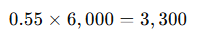
Maximum allowable total monthly debt = $3,300
With car loan:

Maximum housing instalment = $2,100
Without car loan:

Maximum housing instalment = $2,900
Again — an $800 difference.
Why It’s Even Tighter in Singapore
Banks must apply a stress-test interest rate floor (commonly around 3.5% for residential properties) when calculating your housing instalment for TDSR purposes.
This means:
Your instalment is assessed at a higher assumed rate.
Your calculated repayment looks larger.
Your borrowing capacity shrinks further.
So in reality, the gap created by the car loan may feel even wider than this simplified example suggests.
Bottom line:
An $800 car instalment doesn’t just reduce cash flow.
When a Car Loan Doesn’t Hurt as Much
Let’s bring some balance into this.
A car loan is not automatically a deal-breaker.
It becomes a problem only when it meaningfully constrains your ratios or weakens your risk profile.
There are situations where the impact is minimal — sometimes almost negligible.
1. When Income Is High Relative to Debt
Debt ratios are percentages.
So if your income is strong relative to your obligations, a car instalment barely moves the needle.
Example:
Income: $15,000 per month
Car instalment: $800
That’s just 5.3% of income.
Even under Singapore’s 55% TDSR cap set by the Monetary Authority of Singapore, there’s still substantial headroom for a housing loan.
In high-income scenarios, the car doesn’t compete aggressively with the condo.
2. When the Car Instalment Is Small
Not all car loans are equal.
A modest $300–$400 instalment is very different from a $1,200 commitment.
The lower the monthly repayment:
The smaller the reduction in borrowing capacity
The less pressure on DTI/TDSR
The lower the risk of breaching regulatory caps
It’s not the existence of a car loan that matters most — it’s the size of it.
3. When the Car Loan Is Near Completion
Tenure matters.
If your car loan has:
6–12 months left, or
A small outstanding balance
Lenders may view it as temporary strain rather than long-term leverage risk.
In some cases, borrowers choose to fully repay the remaining car loan before applying for a mortgage — instantly improving their ratios.
Short runway debt is far less damaging than a fresh 7-year commitment.
4. When the Borrower Has an Excellent Credit Score
Strong credit softens many edges.
If you have:
A long track record of on-time repayments
Low credit utilisation
Stable income history
Banks may view you as lower risk overall.
That doesn’t remove ratio caps — those are structural — but it can help in:
Smoother approval
Better interest rate offers
Fewer underwriting complications
A well-managed car loan can even demonstrate responsible credit behaviour.
The Real Perspective
The goal isn’t to fear car ownership.
It’s to understand sequencing and proportion.
A car loan hurts most when:
Income is tight,
Ratios are already near limits,
Or timing clashes with a property purchase.
In the right financial position, it’s simply one line item among many.
The key isn’t avoiding car loans entirely.
It’s making sure your car doesn’t unintentionally drive your property plans off course.
Strategic Advice: Planning Both a Car and a Home
If you intend to own both — and most Singaporeans eventually do — the key is sequencing and structure.
Here’s a practical checklist to keep your car from quietly undermining your property plans.
Check Your DTI/TDSR First
Before signing any car loan agreement:
Add up all existing monthly debts
(Car instalments, credit cards, personal loans, existing property loans.)Divide by your gross monthly income.
Compare the result against regulatory caps.
In Singapore, that means measuring yourself against the 55% TDSR cap under rules set by the Monetary Authority of Singapore.
If you’re already close to the ceiling, adding a car loan could meaningfully shrink your home loan options.
Know your ratios before the bank calculates them for you.
Prioritise the Home If Buying Soon
If a property purchase is within the next 6–18 months, strongly consider:
Delaying the car purchase, OR
Choosing a lower monthly instalment
Sometimes buyers stretch car tenure to reduce monthly payments. But this creates a trade-off:
Longer tenure → lower monthly instalment → better TDSR position
But also more total interest paid over time.
If property is the bigger financial milestone, optimise your structure around that first.
Cars depreciate.
Property builds equity.
Sequence accordingly.
Avoid New Debt After Pre-Approval
Once you receive mortgage pre-approval:
Treat your financial profile as “frozen.”
Do not:
Take a new car loan
Increase credit limits aggressively
Apply for multiple financing facilities
Banks often re-check your credit and obligations before final approval or disbursement.
A new debt can:
Reduce your approved loan quantum
Trigger re-assessment
Delay completion
Protect your approval by maintaining financial stability until the keys are in your hand.
Protect Your Credit Score
Your credit profile influences more than approval — it can affect pricing.
To stay in a strong position:
Pay all instalments on time (car loan included)
Avoid multiple loan applications in a short period
Keep credit card balances manageable
Monitor your credit health periodically
A strong repayment track record signals reliability.
Reliability often translates to smoother approvals and better mortgage terms.
Consider Reducing Car Debt
If your ratios are tight, you may have options:
Partial repayment to lower monthly instalment
Refinancing to improve loan structure
Clearing small outstanding balances to immediately reduce total debt
Even modest reductions can create meaningful headroom under DTI/TDSR caps.
Sometimes a strategic $10,000 repayment unlocks significantly more property purchasing power.
Final Strategy Perspective
Owning a car and a home isn’t mutually exclusive.
But when both are financed, they compete within the same debt framework.
The smartest approach isn’t avoidance — it’s planning:
Measure first.
Sequence wisely.
Protect your ratios.
Because when structured intentionally, your car shouldn’t decide the size of your home.
Frequently Asked Questions
Does paying off my car loan improve my home loan chances?
Yes — often significantly.
Paying off your car loan:
Reduces your total monthly debt obligations
Lowers your DTI/TDSR ratio
Increases the amount of housing instalment room available
Under Singapore’s 55% TDSR framework set by the Monetary Authority of Singapore, eliminating an $800 car instalment instantly frees up $800 of monthly borrowing capacity.
That can translate into a higher approved loan quantum — and potentially a better property option.
Just ensure that paying off the car loan doesn’t overly deplete your cash reserves needed for down payment, stamp duties, or emergency buffers.
Should I buy a car before or after buying a house?
If both purchases are close in timeline, buying the house first is usually financially safer.
Why?
Your mortgage approval depends heavily on debt ratios.
A new car loan before applying reduces borrowing capacity.
A car loan after pre-approval can trigger reassessment.
Once your home loan is fully approved and disbursed, adding a car loan becomes less risky from a mortgage perspective.
In short:
If property is the priority, secure the home loan first.
Does a car loan affect HDB loan eligibility?
Yes.
Even for HDB purchases, your car loan counts toward:
TDSR (55% cap)
And, where applicable, interaction with the Mortgage Servicing Ratio (MSR) cap of 30% for HDB and Executive Condominiums bought from developers
You must pass both MSR (property instalment limit) and TDSR (total debt limit).
So even if your HDB instalment fits within 30% of income, your car loan could push total debt beyond 55%, restricting the loan amount or affecting eligibility.
Will refinancing my car loan help my TDSR?
It depends on structure.
Refinancing can help if it:
Lowers your monthly instalment, OR
Reduces your outstanding balance through partial repayment
Since TDSR focuses on monthly debt obligations, a lower instalment directly improves your ratio.
However, extending tenure to reduce monthly payments may increase total interest paid over time. Always weigh short-term ratio benefits against long-term cost.
Can I still get a home loan if my TDSR is close to 55%?
Possibly — but you’re operating with very little margin for error.
If your projected TDSR is:
53–55%, approval may still be possible, depending on income stability and credit strength.
Above 55%, the bank must reduce your loan amount to comply with regulatory caps.
Also remember:
Banks stress-test your housing loan at a higher assumed interest rate.
Even a small rate adjustment can push your calculated TDSR above the threshold.
When you’re near 55%, even a modest car instalment can become the tipping point.
If you’re close to the ceiling, consider reducing debt or increasing income documentation before applying.
Your Car Instalment Is Part of Your Property Strategy
A car is more than transport — it’s a financial commitment that directly competes with your home loan. Treat it as part of your property strategy, not just a monthly expense.
Key Takeaways
Yes, a car loan affects your home loan.
The impact depends on income, timing, and instalment size.
Even a modest car loan can shrink borrowing power, influence approval, or affect interest rates under DTI/TDSR limits.
Next Steps
Calculate your TDSR before committing to a car purchase.
Consult a mortgage advisor if you plan to take on new debt near a property purchase.
By planning carefully, your car and your condo can coexist — without one jeopardising the other.
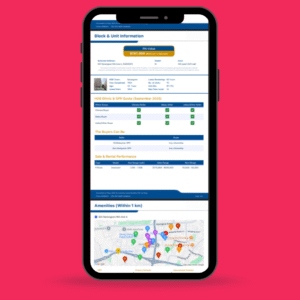
Find Out What Your Home Is Really Worth Today?
Get a data-driven property valuation in minutes, backed by the latest URA & HDB transactions and market trends. Whether you’re planning to sell, buy, or refinance, knowing your home’s true worth gives you the confidence to make smarter decisions.