

Why Buying a BTO Is No Longer “Just Apply and Pray”
There was a time when applying for a BTO felt like buying a lottery ticket: pick a project, cross your fingers, and hope your queue number smiled upon you. That era is over.
Today’s BTO landscape is more structured, more scrutinised—and far less forgiving of guesswork. While the framework is still familiar, the rules shaping who can buy, how much you can afford, and whether you should even apply have quietly but decisively tightened. Eligibility is no longer assumed. Affordability is no longer intuitive. And luck, frankly, is no longer enough.
At the heart of this shift are three pillars that now define every BTO decision. First, the HDB Flat Eligibility (HFE) letter, which determines upfront whether you’re even allowed into the game—and on what financial terms. Second, income ceilings, which don’t just gatekeep eligibility but directly influence flat types, grants, and long-term affordability. Third, CPF housing grants, which can meaningfully reduce your purchase price—or disappear entirely if you misstep.
This guide is designed to cut through the noise. We’ll move deliberately and logically from eligibility, to affordability, to process, so you can pressure-test your plans before you click “apply.” Because in today’s BTO market, preparation beats prayer every time.
What Is a BTO?
(The Basics Haven’t Changed — The Rules Have)
What “Build-to-Order” Means Today
At its core, the BTO concept is still recognisable. You apply for a flat before it’s built, wait it out, and move in years later. But beneath that familiar surface, the mechanics—and consequences—have evolved.
First, pricing. BTO flats are subsidised by the government, which is why their launch prices are typically lower than comparable resale units in the same town. That discount is real, but it’s not free money—it comes bundled with conditions you’ll live with for years, sometimes decades.
Second, allocation. BTOs are assigned via a balloting system, where queue numbers determine whether you even get to choose a unit. Priority schemes—such as first-timer status, married couples, or living near parents—can improve your odds, but they are advantages, not guarantees. Even with multiple ballots under your belt, there is no certainty.
Third, project classification. Today’s launches are no longer one-size-fits-all. BTO projects are now categorised into Standard, Plus, and Prime, each carrying different levels of subsidy—and different strings attached. The more attractive the location and subsidy, the tighter the resale and occupation conditions that follow.
In short: the product looks the same, but the fine print is doing a lot more work.
Key Characteristics Every Buyer Must Accept
Before applying, there are non-negotiables every BTO buyer needs to be comfortable with.
Most BTO flats come with a 99-year lease. Shorter-lease options exist, but they are largely limited to 2-room Flexi flats for seniors, designed around specific age and housing needs rather than long-term asset growth.
Next, the Minimum Occupation Period (MOP). For Standard flats, this means five years before you can sell the unit or rent out the entire flat. For Plus and Prime projects, expect longer occupation periods, reflecting the heavier subsidies and more desirable locations.
Finally, understand this clearly: subsidies and grants are never neutral. They come with trade-offs—tighter resale conditions, income ceilings that follow you, restrictions on who can buy your flat, and limits on when and how you can exit. These rules don’t just affect your first home; they shape your future housing options.
A BTO is not just a place to live. It’s a long-term contract with conditions—and knowing those conditions upfront is the difference between a smart first step and a costly miscalculation.
Eligibility Comes First: Who Can Buy a BTO?
Before affordability, before grants, before queue numbers—eligibility is the gate you must pass through. Miss one condition, and the rest of the planning becomes academic.
Citizenship Requirements
At least one applicant must be a Singapore Citizen. This is non-negotiable. Depending on the scheme, the other applicant can be either a Singapore Citizen or a Singapore Permanent Resident.
Certain pathways come with extra scrutiny. Schemes involving non-citizen spouses or specific singles arrangements impose additional conditions on the citizenship or residency status of occupiers and spouses. In these cases, who lives in the flat matters just as much as who is buying it.
Age Rules
For most family-based schemes, at least one applicant must be 21 years old or above at the point of application.
Singles face a higher bar. Generally, you must be at least 35 years old to buy a BTO on your own, and even then, your choices are more limited—primarily to 2-room Flexi flats, subject to income ceilings and project-specific rules. Age, in this context, isn’t just a number; it’s a structural filter.
Family Nucleus & Approved Schemes
HDB does not sell BTO flats to individuals in isolation—it sells to approved family units under defined schemes.
Recognised family schemes include the Public Scheme (covering spouses, parents, and children), the Fiancé/Fiancée Scheme, the Orphans Scheme, and the Non-Citizen Spouse Scheme. Each comes with its own eligibility conditions and documentation requirements.
Singles, meanwhile, can apply under the Single Singapore Citizen Scheme or the Joint Singles Scheme. Both options are tightly regulated, with specific income limits, flat-type restrictions, and fewer priority advantages compared to family applicants.
Property Ownership Restrictions
This is where many otherwise-eligible buyers get tripped up.
Applicants and listed occupiers must not own any private residential property, whether in Singapore or overseas. To qualify for BTO subsidies and key housing grants, you also must not have sold any private property within the past 30 months.
There are further limits on how many times you can receive HDB subsidies or take an HDB loan, which directly affects whether you are considered a first-timer or second-timer—and, by extension, your ballot priority.
In the BTO system, your past housing decisions follow you. Eligibility isn’t just about who you are today—it’s about what you’ve owned, sold, and benefited from before.
The HFE Letter: Your Gatekeeper to Any BTO Application
If eligibility is the door, the HFE letter is the bouncer checking your credentials. No letter, no entry—no matter how ready you think you are.
What the HFE Letter Is — and Why It’s Mandatory
The HDB Flat Eligibility (HFE) letter is a compulsory pre-assessment that determines whether you are allowed to buy an HDB flat, what type of flat you can buy, and under which schemes. Without an approved HFE letter, you simply cannot apply for a BTO.
More than a checkbox, the HFE letter consolidates several critical assessments into one outcome. It tells you whether you’re eligible for an HDB loan or need to explore bank financing, provides an indicative loan amount, and gives a preliminary view of the CPF housing grants you may qualify for. In other words, it defines the financial sandbox you’re allowed to play in—before you commit to anything.
What the HFE Letter Covers (and What It Doesn’t)
The HFE letter offers clarity where it matters most at the start. It confirms your flat eligibility, checks income ceilings, verifies citizenship status, and flags property ownership restrictions—so you know exactly which flat types are open to you and which are off the table.
What it does not do is make decisions for you. While it sets clear financing boundaries and gives early visibility on grants, it doesn’t replace detailed budgeting, bank In-Principle Approvals (IPAs), or long-term thinking around affordability. Treat it as a framework, not a financial safety net.
How to Apply for an HFE Letter
Applying for an HFE letter is done online via the HDB Flat Portal, using Singpass. You’ll need to submit details for all applicants and occupiers, because HDB assesses the household as a unit—not individuals in isolation.
Supporting documents typically include income proof, CPF contribution history, and declarations of existing loans or property ownership. These inputs feed directly into your loan eligibility and grant assessment, shaping the outcome you receive.
Once approved, the HFE letter becomes your starting line. Everything else—balloting, flat selection, financing—flows from it.
Income Ceilings: The Line You Cannot Cross
Income ceilings are not guidelines. They are hard boundaries—and crossing them, even slightly, can shut doors entirely.
How HDB Calculates Income
HDB assesses income based on your household’s average gross monthly income over the last 12 months. This includes basic salary and most regular allowances, regardless of whether they feel “guaranteed” or not.
Not all income is treated equally. One-off bonuses, irregular payouts, or variable income may be assessed differently depending on frequency and structure. This is where many applicants get caught out by assumptions. The fine print in HDB and CPF guidelines matters, and buyers should always verify how their specific income components are classified before banking on eligibility.
BTO Income Ceilings by Buyer Profile
For families, most BTO flat types fall under a core household income ceiling, with higher limits available for extended or multi-generation households applying together. These thresholds are designed to channel subsidies toward households that still need them—without excluding larger family units outright.
Singles operate under a stricter framework. Those applying for 2-room Flexi flats are subject to a lower income ceiling, intentionally calibrated to support lower- to middle-income applicants rather than high earners looking for a subsidised entry point.
Income Ceilings by Flat Type
Income ceilings also vary by flat type, not just buyer profile.
2-room Flexi flats, whether short-lease or 99-year variants, come with their own income thresholds—especially when targeted at seniors or singles. These caps are tighter by design, reflecting the social intent behind these units.
Larger flats—3-room, 4-room and above, including 3Gen units—generally allow for higher income ceilings, but they remain firmly capped. The objective is clear: new BTO flats are meant to serve non-affluent households, even as incomes rise over time.
Why Income Ceilings Matter More Than You Think
Income ceilings don’t just influence grants—they determine whether you can apply for a BTO at all. Unlike the resale market, which has no income ceiling for eligibility, BTO access is tightly income-gated from the outset.
A higher income can quietly disqualify you mid-process—either by wiping out grant eligibility or pushing you beyond the ceiling entirely. That’s why timing matters. Career progression, bonuses, and job changes are no longer just professional milestones; they are housing variables.
In today’s BTO landscape, earning more isn’t always an advantage. Planning when—and how—you apply can make all the difference.
Grants: The Real Affordability Lever
If price is what you see, grants are what you feel. They don’t just reduce numbers on paper—they determine whether a flat is genuinely affordable or quietly out of reach.
Enhanced CPF Housing Grant (EHG) for BTO Buyers
The Enhanced CPF Housing Grant (EHG) is the cornerstone grant for first-timer households buying either a BTO or resale flat. Depending on your income tier, the grant can reach six figures, making it one of the most powerful affordability levers in the system.
Grant amounts are means-tested. As household income rises, the EHG steps down in structured tiers. There are also separate grant frameworks for families and eligible singles, each with its own caps and thresholds. The message is clear: the more you earn, the less support you receive—and eventually, none at all.
How Grants Interact with Income Ceilings
Here’s the nuance many buyers miss: grant eligibility has its own income ceiling, and it can be lower than the ceiling to buy the flat itself. Qualifying for a BTO does not automatically mean qualifying for the maximum—or any—grant.
Once approved, the EHG is credited directly into your CPF Ordinary Account. It is used to offset the purchase price or downpayment, reducing how much CPF or cash you need upfront. It cannot be withdrawn as cash, nor repurposed for non-housing needs. Grants ease the burden—but only within the housing ecosystem.
Grants in Context (BTO vs Resale Comparison)
In the resale market, grants can be layered. Buyers may stack the EHG, Family Grant, and Proximity Housing Grant, sometimes receiving a higher total subsidy than a BTO buyer—especially when living near parents.
BTO buyers, by contrast, rely primarily on the EHG and the embedded subsidy of a new flat priced below market value. The trade-off is deliberate: fewer grants to stack, but a lower entry price and a fresh 99-year lease.
Choosing between BTO and resale isn’t just about waiting time or location. It’s about how—and where—the subsidies show up.
Financing a BTO: Loans, Downpayments, Reality Checks
This is where ideals meet arithmetic. A BTO may be subsidised, but financing it still demands discipline, trade-offs, and a clear-eyed look at your cash flow.
HDB Loan vs Bank Loan — Structural Differences
An HDB loan is often the default choice for first-time buyers. It offers a stable interest structure, allows a higher proportion of CPF usage, and comes with more forgiving eligibility criteria. The trade-off? A defined Loan-to-Value (LTV) limit and conditions that are tightly regulated by HDB.
Bank loans, on the other hand, can look attractive on paper. Promotional rates and flexible packages may lower repayments in the short term, but they come with stricter credit assessments, a different LTV cap, and—critically—a mandatory cash portion for the downpayment. Volatility and refinancing risk are part of the package.
Choosing between the two isn’t about which is cheaper today; it’s about which structure you can live with over time.
Using CPF and Grants for Downpayment
For most BTO buyers, CPF Ordinary Account (OA) savings do the heavy lifting. Together with CPF housing grants, they can cover a significant portion—sometimes nearly all—of the BTO downpayment, sharply reducing the need for upfront cash.
But “nearly all” is not “all.” Certain minimum cash components, especially under bank loans, cannot be substituted with CPF or grants. This is where many buyers get squeezed. Liquidity still matters, and having assets locked inside CPF doesn’t help if you need cash at a specific milestone.
How the HFE Letter Shapes Your Financing Options
The loan quantum stated in your HFE letter is not a suggestion—it’s a ceiling. It defines how much you can responsibly borrow and should directly inform your choice of flat type, size, and location.
Treat the HFE outcome as the first filter, not the final answer. Sensible buyers go further, stress-testing affordability using tools like MSR and TDSR, and applying conservative repayment ratios that leave room for life—job changes, kids, interest rate shifts.
A BTO is affordable not when the numbers barely pass, but when they still work on your worst month—not your best.
Step-by-Step: How to Buy a BTO in Singapore
The BTO process rewards those who move in sequence. Skip a step, rush a decision, and the system has a way of pushing back.
Step 1: Check Eligibility & Secure Your HFE Letter
Start by confirming that you meet the scheme, income, property-ownership, age, and citizenship requirements. Once clear, apply for your HFE letter online. This is your prerequisite—without it, nothing else moves.
Step 2: Plan Budget and Choose Loan Type
Use your HFE loan outcome as your baseline. If you’re considering bank financing, secure a bank In-Principle Approval (IPA) for comparison. Decide between an HDB loan or bank loan, then set a realistic budget that accounts for downpayment, grants, and long-term monthly commitments—not just headline prices.
Step 3: Track Upcoming BTO Launches
Monitor upcoming launches and shortlist projects by town, flat type, and classification—Standard, Plus, or Prime. Balance budget, MOP length, location desirability, and lifestyle needs. A more central flat may cost you years of flexibility later.
Step 4: Submit Your BTO Application
Apply during the official launch window through the HDB portal. Ensure your HFE letter is valid, submit your application, and pay the required application fee. From this point, patience becomes part of the process.
Step 5: Balloting and Queue Allocation
Wait for your queue number. Priority schemes may improve your position, but outcomes are never guaranteed. If your number is close to—or beyond—the available flat supply, manage expectations early and prepare alternative plans.
Step 6: Flat Booking Appointment
If your number is called, attend the flat booking appointment to select your unit. Pay the option fee, confirm your housing loan choice, and factor in grants and long-term affordability before locking anything in. This is where decisions become binding.
Step 7: Agreement for Lease & Downpayment
Sign the Agreement for Lease, pay the first portion of your downpayment using a mix of CPF, grants, and/or cash, and settle stamp duties and legal fees. The paperwork is dense—but every signature carries financial weight.
Step 8: Construction, Key Collection & MOP Begins
Wait out the construction period. When the flat is ready, collect your keys, pay any remaining sums, and move in. From that moment, your Minimum Occupation Period (MOP) clock starts ticking—marking the true beginning of your ownership journey.
A BTO isn’t won at the ballot. It’s won by navigating every step without losing control of the numbers.
Common Mistakes First-Time BTO Buyers Make
Most BTO mistakes aren’t dramatic. They’re quiet, logical-sounding decisions that only reveal their cost years later.
Assuming eligibility equals affordability.
Passing HDB’s eligibility checks does not mean your finances will comfortably carry the flat over 25 to 30 years of repayments. Many buyers plan to “just manage,” forgetting that life rarely stays static—income dips, expenses rise, and interest rates change.
Overestimating grants.
Grants feel generous at the start, but they taper quickly as income rises. First-time buyers often budget around the maximum grant, only to discover later that their actual subsidy is far lower—or gone entirely. Counting on grants before locking them in is a classic planning error.
Choosing the flat before the numbers.
Location, flat type, and project classification should follow your loan limits and cashflow reality, not the other way around. Falling in love with a Prime project or larger unit before understanding your financing is how budgets get quietly stretched beyond comfort.
Fearing the ballot more than the commitment.
Many buyers fixate on getting a queue number, treating the ballot as the biggest hurdle. In truth, the greater risk isn’t losing the ballot—it’s winning it and committing to a flat that strains your finances for decades.
A failed ballot costs time. A poorly planned BTO costs flexibility, sleep, and options.
Buying a BTO Is a Planning Exercise, Not a Lottery
Buying a BTO is no longer a matter of luck—it’s a structured exercise in planning, numbers, and timing. Eligibility, income ceilings, loans, and grants form a framework that can be understood, modelled, and acted on well before you submit an application.
The real levers aren’t your dream location or the largest flat you can imagine—they are the HFE letter, income ceilings, and CPF grants. These are the variables that dictate what you can afford, which flats you can apply for, and how comfortably you can carry ownership for the long term.
Approach BTO buying like a strategist: run the numbers, consult official HDB and CPF resources, and stress-test your budget and repayment plan. Apply only when you are confident—not just that you’re eligible, but that you can sustainably manage the flat over its lifetime. In today’s BTO landscape, preparation beats prayer every time.
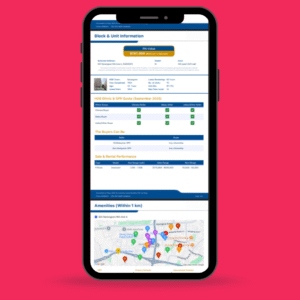
Find Out What Your Home Is Really Worth Today?
Get a data-driven property valuation in minutes, backed by the latest URA & HDB transactions and market trends. Whether you’re planning to sell, buy, or refinance, knowing your home’s true worth gives you the confidence to make smarter decisions.