The Timing Trap Nobody Warns You About
Here’s the part no glossy property brochure tells you.
You can sell your home.
You can sign the Option to Purchase.
You can shake hands, celebrate, mentally move into your new place —
…and still not have the money.
Because in Singapore property, “sold” doesn’t mean settled. Until legal completion happens, your sale proceeds and CPF refunds are still floating in paperwork purgatory. They exist on contracts. They exist in spreadsheets. They do not exist in your bank account.
And yet your next purchase doesn’t care.
Once you exercise the OTP on your new home, the clock starts ticking. Downpayments must be paid. Completion dates are fixed. Banks disburse according to schedule, not sentiment. If your current property completes after your new one, you’re suddenly caught in a timing gap — committed on both sides, liquid on neither.
This is the trap.
Not poor planning. Not over-leveraging. Not recklessness.
Just timing.
A bridging loan is designed for this exact friction point. It is not an upgrade hack. It is not a wealth accelerator. It is not a way to stretch your affordability. It exists for one reason only: to temporarily replace money that is legally yours but not yet physically accessible.
Used correctly, it’s a sequencing tool.
Used unnecessarily, it’s just extra interest.
So the real question isn’t “Should I take a bridging loan?”
It’s this:
Do I actually have a timing problem — or am I about to pay for one I don’t have?
What Is a Bridging Loan — Really? (Beyond the Buzzword)
Strip away the jargon and the sales brochures, and a bridging loan is not some exotic financial weapon. It is a very specific tool built for a very specific gap.
Nothing more. Nothing less.
The Core Definition
A bridging loan is a short-term loan secured against property. Its sole purpose is to “bridge” the time gap between two legal events:
The purchase of your next property
The completion (and cash disbursement) of your current property’s sale
That’s it.
In Singapore, these facilities are typically capped at around six months. The assumption baked into the structure is simple: your existing property will complete soon, the sale proceeds will be released, and the bridging loan will be cleared in full.
It is not meant to sit on your books for years. It is a temporary patch over a temporary timing mismatch.
How It Sits Beside Your Main Housing Loan
This is where many buyers get confused.
Your main housing loan still follows the usual Loan-to-Value (LTV) rules — up to 75% for bank loans, up to 80% for HDB loans, depending on eligibility.
That leaves 20–25% of the purchase price to be funded through cash and/or CPF.
If your funds are currently trapped in your existing home — waiting for sale completion — the bridging loan steps in to temporarily cover part of that required equity.
So structurally, you now have:
A long-term housing loan (your main mortgage)
A short-term bridging loan (to be cleared once sale proceeds arrive)
It is liquidity support.
Not affordability expansion.
Not extra leverage for lifestyle upgrades.
It doesn’t make a property cheaper. It simply advances money that is already expected to come to you.
A Simple Illustration (Numbers Make It Real)
Let’s ground this.
You’re buying a condo for S$1.5 million.
Assume a 75% bank loan:
75% loan = S$1.125M
25% equity required = S$375K
But your current property is still completing.
You’re expecting S$500K in net sale proceeds and CPF refunds — just not yet.
You need S$375K now.
Your S$500K arrives later.
A bridging loan temporarily covers that S$375K. When your sale completes and the S$500K is released, you use part of it to repay the bridging loan in one lump sum.
Gap closed.
Facility extinguished.
Sequence restored.
That’s the entire logic.
A bridging loan isn’t about buying more house.
It’s about aligning two clocks that refuse to tick in sync.
The Only Reason You Actually “Need” a Bridging Loan
Let’s simplify this.
You don’t “need” a bridging loan because you’re upgrading.
You don’t “need” it because everyone else seems to use one.
You don’t “need” it because the bank offered it.
You need it for one reason only: your timelines don’t align.
That’s the whole story.
The Timing Mismatch Problem
Property transactions in Singapore are rigid creatures. Once you exercise an Option to Purchase (OTP), the dates are real. Lawyers coordinate. Banks schedule disbursements. Completion is locked in.
But your sale and your purchase are two separate legal events.
If:
Your purchase completes in March
Your sale completes in April
You have a 30-day gap where you are contractually obligated to pay… without having received your money.
This is where the friction appears.
You may have already sold your home.
You may even know the exact proceeds you’re receiving.
But until completion happens:
Sale proceeds are not credited
CPF refunds are not restored to your OA
You cannot legally deploy those funds for your new purchase
And once you’ve exercised the OTP on your new home, the countdown doesn’t pause.
This is the mismatch a bridging loan is designed to solve.
Common Real-Life Scenarios
A. Buying First, Selling Later (HDB → Condo)
This is the classic upgrader move.
You secure a private condo while still owning your HDB flat. The upgrade makes sense on paper. Your flat has built equity. The numbers work.
But that equity is trapped.
Until the HDB sale completes, your funds are illiquid. The 20–25% downpayment for the condo must be paid before your HDB proceeds are released.
The bridging loan steps in to temporarily unlock what is technically already yours.
B. Completion Dates Cross Over
Sometimes both sides are already transacted — but the timing is off.
You’ve sold.
You’ve bought.
But your buyer’s completion date is after your own purchase completion date.
Your cash and CPF refunds arrive too late.
No one has defaulted. No one has miscalculated. It’s simply sequencing.
Without bridging, you must find alternative liquidity — savings, family support, or rushed financing.
With bridging, the timing gap is smoothed over.
C. Upgrading or Rightsizing Strategically
Not every move is about upgrading.
Some homeowners are rightsizing — condo to landed, landed to condo, HDB to EC, or vice versa.
In these situations, a bridging loan can prevent a fire-sale mentality.
Without it, you may feel pressured to:
Accept a lower offer just to speed up completion
Compress timelines to uncomfortable levels
Negotiate from a position of urgency
Liquidity buys time.
Time buys leverage.
And leverage protects price.
What a Bridging Loan Actually Gives You
Let’s be precise about what it provides.
It does not increase your wealth.
It does not reduce your property price.
It does not magically improve affordability.
What it gives you is:
Temporary liquidity — money now, because yours is arriving later.
Negotiation leverage — the ability to avoid desperation pricing.
Emotional breathing room — because timing stress is real, and clarity beats panic.
Used correctly, a bridging loan is not a shortcut.
It’s a stabiliser.
And if your timelines already align?
You don’t need one at all.
When You Do Not Need a Bridging Loan
Here’s the uncomfortable truth:
Many homeowners ask about bridging loans not because they need one — but because they assume they should have one.
Liquidity anxiety is common. Actual liquidity problems are not.
A bridging loan is a precision instrument. If there is no timing gap, introducing one is like wearing a seatbelt while standing still.
Your Sale Completes First (Or Simultaneously)
If your existing property completes before — or on the same day as — your new purchase, the equation is clean.
Your sale proceeds are credited.
Your CPF refunds are restored.
Your funds are available for deployment.
There is no gap to bridge.
In fact, some transactions are deliberately structured this way. Lawyers and agents coordinate completion dates to avoid overlap, precisely so you don’t incur short-term financing costs.
If the money arrives before it’s needed, bridging is redundant.
You Have Sufficient Liquidity
Not every homeowner is fully dependent on sale proceeds.
If you have:
Adequate cash reserves
Liquid investments
CPF balances that already meet requirements
And you can comfortably fund:
The 20–25% downpayment
Buyer’s Stamp Duty (BSD)
Additional Buyer’s Stamp Duty (ABSD), if applicable
— without relying on future sale proceeds, then a bridging loan adds complexity without necessity.
Liquidity is not just about having assets. It’s about having deployable assets.
If your downpayment does not depend on your current home being sold, you do not have a timing problem.
You’re Downgrading With Excess Equity
Sometimes the move is smaller, not bigger.
If you’re selling a higher-value property and purchasing a significantly cheaper one, the numbers may work in your favour even before the sale completes.
For example:
Selling at a substantial gain
Buying at a much lower price point
Holding enough CPF/cash to meet equity requirements upfront
In such cases, your future sale proceeds are upside — not necessity.
There’s no structural reliance on the incoming funds to complete your purchase.
Bridging, then, becomes optional at best — inefficient at worst.
Why Taking It Anyway Can Be a Mistake
This is where discipline matters.
A bridging loan carries:
Higher interest than a typical housing loan
Administrative paperwork
Short-term debt obligations that must be cleared quickly
Even if the tenure is brief, interest accrues daily. And while the numbers may seem manageable, you are still stacking temporary debt on top of your main mortgage.
More importantly, you introduce psychological pressure:
“What if completion is delayed?”
“What if the sale price changes?”
“What if timelines shift?”
If there is no confirmed timing gap, taking a bridging loan “just in case” is not prudence.
It’s unnecessary cost.
The principle is simple:
If the clocks are already aligned, don’t pay to synchronise them again.
How Banks Size and Structure Bridging Loans
Bridging loans feel flexible. In reality, they are tightly engineered.
Banks don’t treat them as casual add-ons. They are structured, capped, secured, and aligned to regulatory guardrails — including guidelines issued by the Monetary Authority of Singapore (MAS).
Here’s how the mechanics actually work.
Eligibility Criteria
Before numbers are discussed, banks look at fundamentals.
Most lenders require:
Minimum age of 21
Acceptable credit standing
Evidence of an actual property sale — usually an exercised OTP for your existing home
That last point matters.
A bridging loan is not granted based on “I plan to sell.” It is granted based on “I have sold, and completion is pending.”
Without proof of an exercised sale OTP, there is no confirmed incoming liquidity — and therefore no bridge to finance.
Loan Quantum
This is where discipline shows up.
Banks size the bridging loan based on your expected net sale proceeds and CPF refunds — not your optimism.
They will:
Assess the agreed sale price
Deduct outstanding mortgage
Estimate CPF refund amounts
Factor in legal and transactional costs
The bridging amount is typically capped at or below those net proceeds.
In practice, it often aligns with the 20–25% equity requirement of your new property purchase — because that’s the gap it is designed to fill.
It is not an open credit line.
It is advance funding against confirmed incoming money.
Tenure and Repayment
Bridging loans are short by design.
Maximum tenure is usually around six months.
Why? Because the expectation is clear: your sale will complete within that window.
Repayment is typically structured as:
Lump sum upon completion of your sale
Once proceeds are disbursed, the bridging facility is cleared in full.
There is no gradual amortisation schedule. No 20-year runway. It is a temporary overlay — then it disappears.
Interest Rates
Because it is short-term and risk-priced, the interest rate is higher than a standard housing loan.
While your main mortgage might be pegged to SORA or a bank board rate at relatively lower margins, bridging facilities are commonly cited around:
~5–6% p.a. for mainstream bank facilities
Higher (often ~7% or more) for specialised or private lenders
The rate reflects:
Short tenure
Administrative complexity
Execution risk tied to sale completion
Even if the loan runs only for a few months, the interest cost is real. Precision matters.
Security & MAS Requirements
Regulation is not optional here.
Under MAS guidelines, unsecured bridging is restricted, particularly where borrower income or unsecured credit limits fall below thresholds.
In practice, most consumer-facing bridging loans are:
Fully secured against property and/or confirmed sale proceeds
Structured conservatively relative to expected inflows
Banks will also assess:
Total debt obligations
Overall unsecured exposure
Income stability
This is not a free-floating facility.
It is anchored — to your property, to your sale contract, and to regulatory compliance.
The takeaway?
Banks do not issue bridging loans casually. They size them to what is coming in, cap them to short tenures, secure them tightly, and price them for risk.
Which is exactly why you should only take one if the timing gap is real.
Pros and Cons: Strategic Tool or Expensive Convenience?
A bridging loan is neither hero nor villain.
It is leverage over time.
And like all leverage, it amplifies whatever position you’re already in — disciplined or desperate.
Let’s separate the advantage from the illusion.
The Upside
Buy before you sell.
This is the headline benefit. You secure the property you want without waiting for your current home to legally complete. In tight markets, that flexibility matters.
Avoid distress pricing.
When liquidity is tight, urgency creeps in. Urgency weakens negotiation. Without bridging, some sellers feel pressured to accept lower offers just to align completion dates. Bridging buys time — and time protects price.
Usually no lock-in or early repayment penalty.
Because it’s structured as a short-term facility, most bank-issued bridging loans are designed to be cleared once your sale completes. You’re not trapped in a multi-year commitment. The loan exists for the gap — then it disappears.
Protects deal momentum.
Property transactions are delicate chains. One delayed payment can stall the entire sequence. A bridging loan ensures your purchase proceeds smoothly, even if your sale timeline lags behind.
It keeps the machine moving.
The Downside
Higher interest cost.
Bridging facilities are priced above standard housing loans. Even over a few months, interest accrues daily. You are paying a premium for immediacy.
Short-term debt stacking.
For that interim window, you carry two obligations:
Your main mortgage
Your bridging loan
Even if temporary, it increases your debt load and financial exposure.
Risk if sale delays or underperforms.
Everything assumes your existing property completes on time and at the agreed price.
If completion is delayed, your stress window widens.
If proceeds are lower than expected, your repayment buffer shrinks.
The bridge works — but only if the other side exists as planned.
Regulatory eligibility constraints.
Not every borrower qualifies for every structure. Security requirements, income thresholds, and credit assessments limit access. It is a controlled facility, not an open tap.
So is a bridging loan strategic — or expensive convenience?
It depends on one variable:
Is there a real timing gap?
If yes, it can be a calculated tool.
If not, it’s simply paying interest for comfort you didn’t need.
7. How the Application Process Works (Practically Speaking)
A bridging loan may sound complex, but in practice, the process is straightforward — if you know what banks expect and coordinate properly.
It’s less about paperwork chaos and more about timing precision.
Applied Together With Main Loan
Most bridging loans are applied together with your main housing loan, either:
Directly through the same bank
Via a mortgage broker who coordinates both facilities
This ensures the lender sees the full financial picture: your long-term mortgage, your temporary bridging requirement, and the expected sale proceeds. It also speeds up approval since the bank can validate both purchase and sale details simultaneously.
Documents Required
Banks will typically ask for:
Purchase OTP – proves you are committed to the new property
Sale OTP – shows that proceeds from your current property are legally on the way
Estimated proceeds breakdown – confirms how much cash and CPF will be available to repay the bridging loan
These documents are non-negotiable. Without them, the bank cannot confirm that a bridge is needed or secure the facility appropriately.
Timeline Coordination
The practical magic happens in coordination:
Lawyers, banks, and property agents must align completion dates carefully
Bridging funds are disbursed only when the gap actually exists
The goal: smooth, risk-free transition from one property to the next
If timelines shift — for instance, if your sale completes earlier than expected — the bridging loan may be reduced or not drawn at all. It is designed as just-in-time financing, not a permanent fixture.
The principle is simple: plan, coordinate, document, disburse.
When done correctly, a bridging loan functions like clockwork — filling the gap for the exact period it is needed, then disappearing without fuss.
Key Regulatory & Practical Considerations
Bridging loans may feel like a free pass to stretch timelines, but in Singapore, they operate within tight regulatory guardrails. Understanding these rules is critical before even thinking about applying.
MAS Rules on Secured vs Unsecured Facilities
The Monetary Authority of Singapore (MAS) sets clear boundaries:
Secured bridging loans — backed by your property or expected sale proceeds — are the standard.
Unsecured bridging — not tied to collateral — is restricted and subject to strict limits on borrower income and exposure.
The MAS framework exists to prevent over-leveraging and protect both consumers and financial institutions.
Merchant Bank Compliance Requirements
Local merchant banks must ensure any bridging facility:
Complies with MAS lending limits
Properly assesses borrower income and creditworthiness
Is fully documented and transparent
Banks cannot grant unsecured or oversized bridging loans indiscriminately. Non-compliance carries penalties and regulatory scrutiny.
Why Most Retail Products Are Secured, Short-Tenure Loans
For the average homeowner, most bridging loans offered by banks are:
Secured — against property or sale proceeds
Short-term — typically capped at six months
This ensures:
Limited risk exposure for the bank
Quick turnover of the facility once your sale completes
Minimal long-term debt stacking for the borrower
Why Not Everyone Qualifies for Every Package
Even if you think you need a bridging loan, eligibility is not automatic. Banks will assess:
Age, income, and credit history
Property value and sale proceeds
Overall debt exposure
If any of these criteria fail to meet regulatory or internal bank thresholds, you may be offered a reduced facility, a secured-only option, or in some cases, no bridging loan at all.
The takeaway: bridging loans are precision tools, not universal safety nets. They exist to solve timing gaps — and only borrowers who meet regulatory and bank requirements can access them safely and legally.
Decision Framework: Should You Take One?
By now, it’s clear: a bridging loan is not a default step in upgrading or buying property. It is a tool for a specific problem — a timing mismatch between sale and purchase.
Before you commit, ask yourself the right questions.
Three Questions to Ask Yourself
Is there a confirmed timing gap?
Only if your sale completes after your purchase do you truly need a bridge.
Hypotheticals or “just in case” scenarios are not sufficient justification.
Do I have sufficient liquidity without relying on sale proceeds?
Cash reserves, CPF balances, or other liquid assets can negate the need entirely.
If you can fund the downpayment and duties comfortably, a bridging loan is unnecessary.
Can I absorb short-term interest without stress?
Bridging loans carry higher rates than standard mortgages.
Ensure that even a worst-case scenario — small delays or interest accumulation — won’t strain your finances.
Risk Assessment Checklist
Even if the timing gap exists, don’t take a bridging loan blindly. Verify:
Sale price certainty — Are the proceeds guaranteed, or is the deal conditional?
Completion date reliability — Will your buyer’s timeline and your lawyers’ coordination hold?
Buffer for delays — Do you have contingency funds if your sale or purchase slips by a few weeks?
A bridging loan is only as safe as the underlying assumptions it relies on.
Think of it as a calculated bridge, not a gamble. Cross it only when the structural supports — price, timing, liquidity — are solid.
Bridging Loans Are a Timing Tool — Not a Shortcut
Here’s the final takeaway: a bridging loan is not a magic key to upgrade faster. It doesn’t increase affordability, improve property pricing, or grant special privileges in the market.
Its sole purpose is to manage sequencing risk — the friction between when your current property completes and when your new purchase requires payment.
Used correctly, a bridging loan is strategic liquidity: a temporary, controlled facility that keeps transactions smooth, protects negotiation power, and allows you to move confidently without rushing or compromising.
Used unnecessarily, it is simply avoidable cost: extra interest, added paperwork, and short-term debt stress for a problem that doesn’t exist.
The smart approach: take a bridging loan only when timing demands it, and let the numbers — not assumptions or hype — guide the decision.
Further Reading & Data Sources
For those who want to dig deeper, verify numbers, or explore practical examples, these resources are invaluable:
Homejourney – Comprehensive guides on bridging loans in Singapore, including tenure, rates, and FAQs. homejourney
Redbrick – “Bridging Loans 101”: a clear, concise guide to temporary home financing. redbrick
The Best Singapore – Focused insights for HDB upgraders navigating bridging loans and timing challenges. thebestsingapore
IQRATE – Detailed explanation of bridging loans, with practical illustrations and step-by-step scenarios. iqrate
Global Mortgage Group (GMG) – Market overview on rates and bridging loan structures in Singapore. gmg
MAS Notices – Regulatory framework governing bridging loans and unsecured credit for merchant banks. mas.gov
These references provide both practical guidance and the regulatory context, allowing homeowners to make informed, confident decisions about bridging loans.
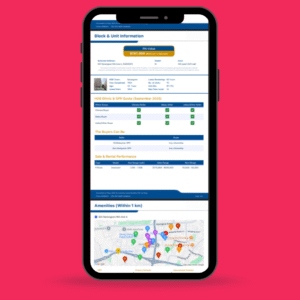
Find Out What Your Home Is Really Worth Today?
Get a data-driven property valuation in minutes, backed by the latest URA & HDB transactions and market trends. Whether you’re planning to sell, buy, or refinance, knowing your home’s true worth gives you the confidence to make smarter decisions.