
The mood has shifted.
Not long ago, the Housing & Development Board resale market felt like a moving train—fast, crowded, and unforgiving. Buyers chased listings with urgency, afraid the next unit would cost $20,000 more. Sellers? They named their price and waited. And more often than not, the market said yes.
But 2026 doesn’t feel like that anymore.
Today, buyers hesitate. They pause at listings. They compare. They negotiate. The fear of missing out is quietly being replaced by something unfamiliar: choice.
Sellers, on the other hand, are holding their ground—but with a little less certainty. The question is no longer “how high can I go?” but “will the next buyer still meet me there?”
Which brings us to the question sitting in every WhatsApp chat, every viewing, every late-night property scroll:
Are we too late… or just in time?
Because 2026 doesn’t look like another chapter of runaway growth. It looks like something else entirely—a pivot point. A year where the market stops sprinting and starts thinking.
Not the peak. Not the crash.
But the moment right before the story changes.
The Short Answer (TL;DR for Skimmers)
If you’re looking for a clean, no-nonsense answer—here it is:
This isn’t a crash. Prices aren’t falling off a cliff, and demand hasn’t disappeared.
This isn’t a surge. The days of rapid, across-the-board price jumps are fading.
This is a transition.
After years of sharp growth in the Housing & Development Board resale market, 2026 marks a shift into something more measured—more selective, more grounded.
Think of it less like a peak… and more like a plateau.
The market has climbed fast. Now it’s catching its breath.
Prices may still edge up in certain pockets. Some quarters may even dip slightly. But the bigger picture is clear: the explosive phase is behind us, and what comes next is slower, steadier, and far more nuanced.
What the Data Is Quietly Telling Us
Beneath the headlines—and far from the noise of property forums—the numbers are starting to whisper a different story. Not dramatic. Not alarming. But unmistakable.
The First Signs of a Slowdown
For the first time in years, the Housing & Development Board resale market paused.
Prices in 4Q 2025 came in flat. No growth. No spike. Just… stillness.
Then came 1Q 2026—a slight dip. Small enough to miss if you blink, but significant enough to matter. Because it marked the first quarterly decline in nearly seven years.
This isn’t just about numbers. It’s about momentum.
Markets don’t turn overnight—they hesitate first. And that hesitation changes behaviour:
- Buyers stop rushing
- Sellers stop pushing
- Negotiations start reappearing
Psychologically, the shift is subtle but powerful. The fear of missing out begins to fade. Structurally, it signals that the market is no longer being driven purely by urgency—but by fundamentals.
Growth Has Already Decelerated
The slowdown didn’t start in 2026. It started earlier—quietly, in the background.
Price growth in 2025 came in sharply lower than 2024. From a near double-digit surge… to low single digits.
That kind of deceleration matters.
In any property cycle, rapid growth phases don’t just stop—they lose speed first. And when they do, it usually means one thing: the market is moving out of its expansion phase and into a more mature stage.
Not falling. Just… no longer sprinting.
Transactions: Active, But Not Explosive
Here’s where it gets interesting.
Transaction volumes remain healthy. Homes are still changing hands. Buyers are still in the market.
But what’s missing is the acceleration.
We’re no longer seeing the kind of volume spikes that typically fuel aggressive price growth. Instead, activity looks stable—consistent, but not frantic.
And that’s the key distinction:
- Healthy demand means buyers are present, but selective
- Overheated demand means buyers are competing, rushing, overbidding
Right now, the Housing & Development Board resale market is leaning toward the former.
And when demand is steady—but no longer aggressive—prices don’t surge.
They settle.
The Real Reason Prices Are Cooling (It’s Not Just Demand)
It’s easy to blame demand. Fewer buyers, tighter budgets, cautious sentiment.
But that’s only half the story.
What’s really happening in the Housing & Development Board resale market is deeper, more structural—and far more important:
Supply is coming back. At scale.
Supply Is Finally Catching Up
For years, prices surged because supply couldn’t keep pace. Too many buyers. Not enough homes. Simple.
2026 begins to change that.
With a fresh pipeline of BTO launches and a broader wave of flats scheduled between 2025 and 2027, the market is no longer running on scarcity alone. It’s gradually being rebalanced.
And when supply increases, something subtle but powerful happens:
- Buyers feel less pressure to rush
- Sellers face more competition
- Pricing power starts to level out
This doesn’t push prices down overnight—but it slows the momentum that once pushed them up aggressively.
In other words, the market is no longer being squeezed. It’s being… stabilised.
The MOP Wave Is Coming
Then there’s the second layer of supply—one that doesn’t get as much attention, but matters just as much.
The MOP wave.
As more flats reach their Minimum Occupation Period, a growing number of owners can finally sell. And when they do, they add to the resale pool all at once.
This creates something the market hasn’t had in a while: options.
More listings. More comparisons. More substitutes.
And when buyers have options, urgency fades.
They don’t need to overbid. They don’t need to commit on the first viewing. They can walk away—and often do.
That shift alone is enough to soften price growth, even if demand remains steady.
Affordability Is Biting Harder
At the same time, the ceiling is getting lower.
Recent loan tightening measures—particularly the reduction in loan-to-value limits—have quietly reduced how much buyers can borrow. Not dramatically, but enough to change behaviour.
Because in property, borrowing power is buying power.
When budgets shrink:
- Buyers become more price-sensitive
- Aggressive bidding becomes harder to sustain
- Negotiation starts creeping back into the process
The result?
Not a drop in demand—but a cooling in intensity.
And when intensity fades, so does upward pressure on prices.
Put it all together—more supply, more options, tighter budgets—and the direction becomes clear:
This isn’t a demand collapse.
It’s a market that’s finally breathing again.
So… Are We Near the Peak?
Let’s reframe the question—because the way most people imagine a “peak” is wrong.
It’s not a sharp вершion where prices spike… and then suddenly fall off a cliff.
What we’re seeing in the Housing & Development Board resale market looks more like a flattening ridge—a stretch where prices stop climbing aggressively, move sideways, and only shift gradually.
So yes… we may be near a peak.
But not the kind that signals a crash.
This is where the distinction matters:
- A local peak is where the market pauses after rapid growth
- A cycle peak is where the entire market tops out before a major decline
Right now, the data leans toward the first—not the second.
Prices have likely moved past their fastest growth phase. Momentum is easing. Buyers are becoming more selective. Sellers are adjusting expectations.
But none of this points to a breakdown.
It points to something far more normal—and far less dramatic:
A market that’s cooling, not collapsing.
The kind of shift that doesn’t make headlines… but quietly changes how every deal gets done.
What Happens Next: The 2026 Outlook
If 2025 was the slowdown… 2026 is the sorting.
The Housing & Development Board resale market isn’t heading into a downturn—it’s entering a phase where not all homes move the same way anymore.
Price Direction: Slower, Selective Growth
The era of blanket price jumps is over—for now.
What replaces it is quieter, more uneven:
- Low single-digit growth becomes the baseline
- Some quarters may even show slight dips
- Gains, when they happen, will be targeted—not universal
This is what a maturing market looks like. Prices don’t surge across the board—they inch forward, pause, and sometimes pull back.
And that unpredictability matters.
Because once prices stop moving in one clear direction, strategy starts to matter more than timing.
A Market That Starts to Split
Here’s the real shift: the market is no longer moving as one.
It’s splitting.
On one side:
- Homes with strong attributes
- Locations with enduring demand
- Units that feel “easy” to buy
On the other:
- Average units in high-supply areas
- Listings that rely purely on past momentum
- Homes that buyers see as replaceable
In a rising market, almost everything gets lifted.
In a plateau market, only the best stays resilient.
That’s the transition happening now—from broad-based growth to selective resilience.
And in 2026, that gap will only become more obvious.
Winners and Losers in This Market
In a rising market, almost everything looks like a good decision.
In a plateau market like this, the truth gets exposed.
The Housing & Development Board resale landscape is no longer lifting all boats. It’s separating them.
What Still Holds Value
Not everything slows down equally. Some properties continue to attract attention—sometimes even competition.
These are the homes that still feel “worth it” to buyers, even in a more cautious market:
- Central locations
Proximity still commands a premium. Accessibility, amenities, and long-term desirability don’t go out of style. - Larger units
Space has become a priority—and limited supply keeps demand resilient. Bigger flats offer flexibility, and buyers know it. - Move-in-ready homes
In a market where buyers are more selective (and renovation costs are high), convenience becomes value.
The less a buyer has to fix, the easier it is to say yes.
These properties don’t just rely on market momentum—they have built-in appeal.
Where Pressure Builds
On the flip side, the market is becoming less forgiving.
The types of properties that once rode the wave of rising prices are now facing resistance:
- Standard flats in high-supply areas
When buyers have multiple similar options, pricing power weakens. Choice creates competition—just not among buyers. - Units with weaker attributes
Poor layout, less desirable stacks, or heavy renovation needs—these become harder to overlook when buyers aren’t rushing. - Listings relying purely on market momentum
The “just list high and wait” strategy starts to fail. Without strong fundamentals, these listings sit longer—and eventually adjust.
In short, this is no longer a market that rewards everything.
It rewards clarity, quality, and realism.
What This Means for Buyers
For buyers, 2026 doesn’t feel like the chaotic peak years of the Housing & Development Board resale market.
It feels different. Slower. Softer. More deliberate.
And that shift changes everything.
More negotiation power returning
For the first time in a while, buyers are no longer forced into defensive bidding.
With prices stabilising and supply gradually improving, there’s room to negotiate again—whether it’s price, timing, or conditions.
Sellers are still anchored by past highs, but buyers are no longer automatically meeting those expectations. The gap between asking and transacting is quietly reopening.
Less urgency, more choice
The emotional pressure has eased.
Where buyers once rushed to secure a unit before the next price jump, they are now:
- Comparing multiple listings
- Waiting for the right fit
- Walking away without regret
This is what a cooling phase looks like in practice: not absence of demand, but freedom of choice returning to the buyer.
And choice changes behaviour. It slows decisions—but improves clarity.
Importance of selective buying vs fear-driven buying
The biggest risk in a fast-rising market is overpaying out of fear.
The biggest risk in a cooling market is misreading it as weakness.
In reality, 2026 rewards a different mindset:
- Not “buy quickly before prices rise again”
- But “buy correctly, because pricing power has returned”
Selective buying becomes the strategy—not emotional buying.
Because in a market like this, the best decisions are no longer made under pressure.
They’re made with patience, comparison, and clarity.
What This Means for Sellers
For sellers in the Housing & Development Board resale market, 2026 requires a mindset reset.
The rules haven’t changed—but the conditions have.
Need to reset price expectations
The biggest adjustment is psychological.
Sellers who anchored their expectations to the peak years may find themselves waiting longer, negotiating more, or revising prices multiple times.
The market is no longer consistently rewarding optimism in pricing. Instead, it is rewarding alignment with current demand realities.
In simple terms: yesterday’s “market value” may not be today’s outcome.
Market no longer rewards “just list high and wait”
The passive strategy is fading.
In a rising market, listing high and letting momentum do the work often paid off. In today’s environment, that approach carries risk:
- Longer time on market
- More buyer hesitation
- Increased likelihood of price adjustments
Buyers are more selective, supply is improving, and comparisons are easier than ever. Overpricing upfront no longer creates leverage—it often creates silence.
Strategy > timing in a plateau market
This is where the real shift happens.
In a cooling or plateau phase, success is no longer about catching the “right moment” in the cycle. It’s about execution:
- Pricing correctly from the start
- Positioning the unit clearly
- Understanding buyer psychology
- Responding quickly to market feedback
Timing alone is no longer enough.
Because in a flatter market, the winners aren’t the ones who wait.
They’re the ones who adapt fastest.
This Isn’t the Peak—It’s the Pause
If there’s one idea to take away from everything happening in the Housing & Development Board resale market right now, it’s this:
This isn’t a dramatic peak. It’s a pause.
The fastest, most aggressive phase of price growth is likely behind us. The era where nearly every segment rose in unison, driven by urgency and scarcity, is giving way to something more measured.
Not decline. Not collapse.
But stabilisation.
Prices are no longer running ahead of fundamentals—they are beginning to align with them. Buyers are more cautious. Sellers are more realistic. And the market, as a whole, is finding a new equilibrium.
That’s why 2026 matters.
It is not a year to panic over missed gains or feared corrections. It is a year to make decisions with clearer signals and less noise.
Because in a market that is no longer rushing upward or falling downward, the advantage shifts.
Not to the fastest mover—but to the most thoughtful one.
2026, in that sense, isn’t the end of a cycle.
It’s the moment you finally get to see it clearly.
What Smart Buyers and Sellers Should Do Next
If 2026 is the pause, then the real question becomes: how do you move inside it?
Because in a stabilising Housing & Development Board resale market, the winners aren’t defined by who reacts fastest—but by who reads the signals correctly.
This is where strategy becomes practical.
When to adjust pricing if your home isn’t moving
In a cooling market, silence is information.
Longer listing times, fewer viewings, or repeated low offers aren’t setbacks—they’re feedback. The key is knowing when that feedback is temporary hesitation versus a structural pricing mismatch.
Smart sellers don’t wait indefinitely. They recalibrate early—before momentum is lost completely.
How to read buyer signals in a cooling market
Buyers behave differently when urgency fades.
Instead of bidding wars, you see:
- More questions
- Longer decision cycles
- Increased comparison between similar units
These aren’t signs of no demand—they’re signs of selective demand.
Understanding this shift helps sellers position their units more effectively, and helps buyers recognise when value is being tested rather than dismissed.
When to act vs when to wait
Timing still matters—but not in the old way.
For buyers, waiting can create leverage, but over-waiting risks missing well-priced opportunities.
For sellers, rushing can protect perceived value, but overpricing can cost momentum.
The real skill in 2026 is knowing the difference between:
- A market that is softening temporarily
- And one that has structurally reset
Because once you can read that correctly, you stop reacting to noise—and start making decisions with clarity.
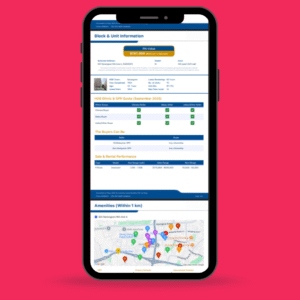
Find Out What Your Home Is Really Worth Today?
Get a data-driven property valuation in minutes, backed by the latest URA & HDB transactions and market trends. Whether you’re planning to sell, buy, or refinance, knowing your home’s true worth gives you the confidence to make smarter decisions.