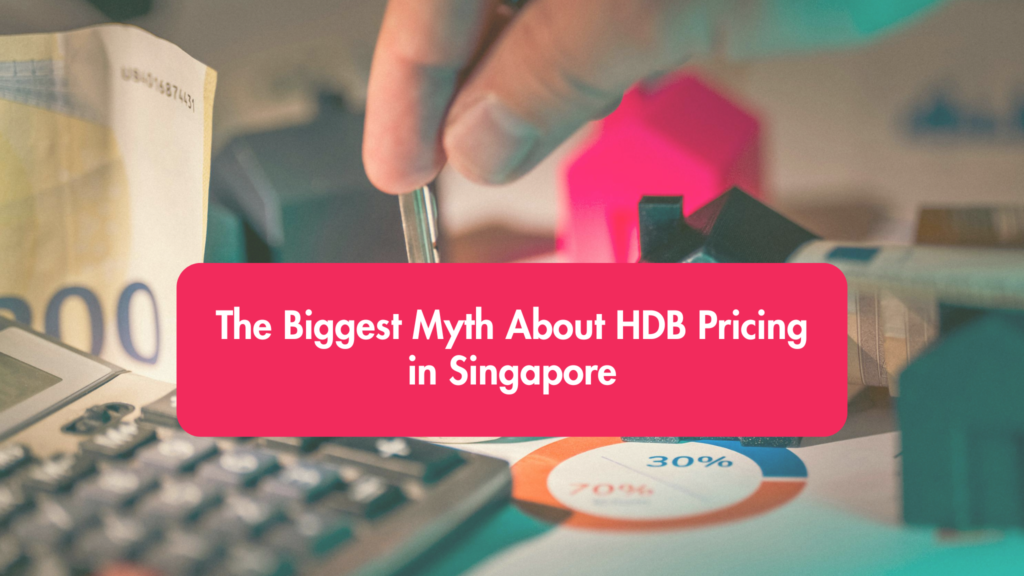
If you’ve spent any time reading property discussions in Singapore, you’ve probably come across the same claim: HDB flats are priced by adding together the cost of land, construction, and a profit margin. It sounds straightforward, and for many people, it seems like the obvious explanation for why new flats cost what they do.
The reality, however, is far more nuanced. HDB does not price new Build-to-Order (BTO) flats the same way a private developer prices a condominium. While land values and construction costs are part of the overall development process, they are not simply totalled up and passed directly to buyers. Instead, HDB follows an affordability-based pricing approach that takes into account market conditions, comparable resale prices, household incomes, and government subsidies.
Believing the “cost-plus-profit” myth can also shape how people view HDB values in general. It can lead buyers and homeowners to draw incorrect conclusions about why flat prices change, how resale values are determined, and what actually influences the long-term value of an HDB property.
In this article, we’ll unpack the biggest myth about HDB pricing in Singapore, explain how new flats are actually priced, clarify why land and construction costs are often misunderstood, and explore what truly matters when evaluating the value of an HDB home.
The Biggest Myth: HDB Prices Flats Like Private Developers
Where This Belief Comes From
One of the most persistent myths in Singapore’s property market is that HDB prices new flats the same way a private developer prices a condominium. The thinking is simple: calculate the cost of the land, add construction expenses, include a profit margin, and arrive at the selling price.
It’s an easy conclusion to reach because that’s how most commercial developments work. Private developers purchase land, build homes, and sell them at prices that cover their costs while generating a return. Applying that same logic to HDB seems reasonable at first glance.
As a result, whenever BTO prices increase, many people assume it’s because land has become more expensive, construction costs have risen, or the government is making more money from selling new flats. This “cost plus profit” explanation has become one of the most widely repeated narratives about HDB pricing.
Why This Assumption Sounds Logical
The misconception persists because there are real costs involved in building every HDB project. Land has value, construction materials and labour cost money, and new launches today are undeniably more expensive in absolute dollar terms than they were years ago.
When people see headlines about rising land values, higher construction costs, or increasing home prices across Singapore, it’s natural to connect these trends and assume BTO prices must simply reflect higher development costs.
The comparison with private residential projects also reinforces this belief. Since both HDB flats and condominiums require land, planning, and construction, many assume both follow the same pricing formula. On the surface, the logic appears consistent—even though the objectives behind each type of housing are fundamentally different.
Why This Is Not How HDB Actually Prices BTO Flats
In reality, HDB does not price new BTO flats by recovering the full cost of land and construction before adding a profit margin. Instead, the Government has consistently explained that HDB’s pricing approach is designed around affordability rather than cost recovery.
Before a new project is launched, HDB first assesses what similar homes would be worth in the open market by considering factors such as nearby resale transactions, location, flat type, and other property attributes. From there, substantial subsidies are applied so that eligible buyers can purchase new flats at prices below comparable market value.
Understanding this distinction is essential because it changes the conversation entirely. Rather than asking whether HDB is charging enough to cover every development cost, the more relevant question is how HDB balances market values with affordability—and that pricing framework is what we’ll explore next.
How HDB Actually Determines BTO Prices
Affordability Comes Before Cost Recovery
To understand HDB pricing, you have to start with one key principle: affordability comes first. Unlike a private developer whose primary goal is to recover costs and earn a profit, HDB’s stated objective is to keep public housing affordable for Singaporeans.
That means BTO prices are not set by simply adding up land cost, construction cost, and a margin. Instead, the Government looks at what households can reasonably afford relative to incomes and financing conditions. This is why official statements on HDB pricing consistently emphasise affordability rather than full cost recovery.
In other words, the question is not, “How much did this project cost to build?” The more relevant question is, “What price allows eligible households to buy a home while keeping public housing broadly affordable?”
Comparable Resale Flats Help Set Market Reference Prices
HDB also does not price new flats in isolation. Before a BTO project is launched, it assesses the market value of similar homes in the surrounding area.
This involves looking at nearby resale transactions and comparing flats with similar characteristics, including:
Location
Flat type and size
Floor level
Proximity to amenities and transport
Other relevant flat attributes
These resale prices provide a market reference point for estimating what the new flats would likely be worth in the open market. The reference value is important because it helps ensure BTO prices remain connected to prevailing market conditions rather than being determined purely by development costs.
Subsidies Reduce Prices Below Market Value
Once the market value is assessed, HDB applies substantial market discounts and subsidies so that buyers can purchase the flats at prices below comparable market value.
This is where the affordability framework becomes most visible. Two projects with similar construction costs may receive different levels of subsidy depending on factors such as:
Location
Market conditions
Resale values in the area
Housing policy objectives
As a result, subsidy amounts are not identical across all BTO launches. They are calibrated to help keep new flats affordable even when property prices or construction costs rise.
This also explains why BTO prices do not always move in tandem with development costs. The Government can increase subsidies to moderate the impact of higher market values or construction expenses, allowing new flats to remain more affordable than comparable homes in the resale market.
Why Land Cost Is Often Misunderstood
HDB Still Pays Market Value for Land
One of the biggest sources of confusion surrounding HDB pricing is land cost. A common argument is that because HDB pays for the land it builds on, that cost must be fully reflected in the price buyers pay for a new flat.
While it’s true that HDB pays market value for state land, this is only part of the picture.
The value of the land is independently assessed by the Chief Valuer, who determines its fair market value based on established valuation principles. This ensures that state land is valued consistently and transparently before it is transferred for development.
Land valuation therefore remains an important part of the development process. It reflects the economic value of the site and ensures proper accounting within the public sector. However, valuing the land is not the same as using that valuation to determine the final selling price of every BTO flat.
Paying for Land Does Not Mean Buyers Pay Every Dollar
This is where many people misunderstand how HDB’s pricing framework works.
There is an important distinction between development costs and selling prices. Land cost is one component of HDB’s overall development expenditure, but the selling price of a new flat is not calculated by simply passing those costs directly to buyers.
Instead, HDB first determines a market reference value based on comparable resale flats before applying subsidies to achieve its affordability objectives. This means buyers are not expected to bear the full land cost or total development cost through the purchase price alone.
In other words, land cost exists within the government’s accounting framework, but it does not automatically dictate the price displayed on a BTO launch brochure.
Why This Is Different From Private Property Development
The confusion often arises because people compare HDB with private residential developers, even though the two serve very different purposes.
Private developers operate as commercial businesses. Their goal is to acquire land, manage development costs, and sell homes at prices that generate a financial return for shareholders. As a result, construction costs, land acquisition costs, financing expenses, and expected profits all influence the final selling price.
HDB, however, exists to provide affordable public housing rather than maximise profits. While it must account for development costs—including land—it prices new flats according to an affordability framework supported by government subsidies.
Understanding this difference is key. A private developer asks, “What price allows us to recover costs and earn a profit?” HDB asks, “What price keeps this flat affordable while reflecting prevailing market conditions?” Although both build homes, their pricing objectives are fundamentally different.
Why Construction Costs Don't Automatically Increase Flat Prices
Construction Costs Have Increased Significantly
There is no doubt that building new homes has become more expensive in recent years. Like developers around the world, HDB has faced rising construction costs driven by higher labour expenses, increasing material prices, and broader inflationary pressures.
The COVID-19 pandemic further disrupted global supply chains, pushing up the cost of essential building materials while creating manpower shortages across the construction sector. These challenges resulted in significantly higher development costs for many housing projects.
From a commercial perspective, higher costs would typically lead to higher selling prices. That’s exactly what many people expect to happen with new HDB flats—but the reality is more complex.
Why BTO Prices Didn’t Rise At The Same Pace
Although construction costs increased substantially, BTO prices did not rise at the same rate.
The reason is that HDB’s pricing framework is not designed to automatically pass higher development costs on to buyers. Instead, the Government has increased subsidies where necessary to help keep new flats affordable, even as construction expenses climbed.
This reflects the core objective of public housing policy. Rather than allowing rising costs to dictate selling prices, affordability remains the primary consideration. By adjusting subsidy levels, the Government can cushion the impact of higher construction costs and ensure that eligible buyers continue to have access to reasonably priced homes.
What This Reveals About HDB’s Pricing Philosophy
The relationship between construction costs and BTO prices highlights an important point: higher costs do not automatically translate into higher selling prices.
If HDB priced flats using a traditional cost-recovery model, every significant increase in labour or material costs would be reflected directly in the purchase price. Instead, HDB follows an affordability-based framework that balances prevailing market conditions with the objective of keeping public housing accessible.
This doesn’t mean construction costs are irrelevant—they still affect the overall cost of delivering new homes. However, they are only one part of a much bigger picture. HDB’s pricing philosophy prioritises affordability over full cost recovery, demonstrating once again that new flats are priced very differently from private residential developments.
Why Many Singaporeans Still Feel HDB Is Becoming Too Expensive
Looking Only At Dollar Prices Can Be Misleading
Despite HDB’s affordability-based pricing framework, many Singaporeans still feel that new flats have become increasingly expensive. It’s an understandable perception. Comparing the launch prices of today’s BTO flats with those from 10 or 20 years ago reveals a significant increase in absolute dollar terms.
However, looking only at headline prices tells only part of the story.
Housing affordability isn’t measured by price alone. It also depends on the broader economic environment, including wage growth, government support, financing options, and inflation. A flat that costs more today isn’t necessarily less affordable if household incomes and housing assistance have also increased over the same period.
This is why comparing launch prices across different decades without considering changing economic conditions can create a misleading picture of affordability.
Income Growth, Grants And CPF Matter Too
When assessing whether a new HDB flat is affordable, it’s important to consider the full financial picture rather than focusing solely on the purchase price.
Household incomes have generally grown over time, increasing buyers’ purchasing power. On top of that, eligible first-time buyers can benefit from various housing grants that reduce the effective cost of purchasing a BTO flat.
Financing also plays a major role. Many buyers use their CPF Ordinary Account savings to service their monthly mortgage repayments, reducing the amount of cash needed each month. Combined with HDB loans or bank financing, this makes home ownership more manageable for many households.
Taken together, income growth, grants, and CPF usage provide a much clearer picture of affordability than simply comparing today’s prices with those of previous generations.
The Better Question Buyers Should Ask
Instead of asking, “Why are HDB flats so much more expensive today?”, buyers should ask a more meaningful question:
“Is this flat affordable relative to my household income and available financial support?”
That question better reflects how HDB’s pricing framework is designed. The objective is not to keep flat prices unchanged over time, but to ensure they remain within reach for eligible buyers after considering incomes, subsidies, grants, and financing options.
Understanding this shift in perspective helps buyers look beyond headline prices and evaluate housing affordability in the way HDB intends—through the lens of overall financial accessibility rather than absolute dollar amounts alone.
What This Means For HDB Buyers, Sellers And Homeowners
BTO Pricing And Resale Valuation Are Not The Same Thing
One of the biggest takeaways from understanding HDB’s pricing framework is recognising that BTO pricing and resale valuation operate under entirely different systems.
New BTO flats are priced by the Government using an affordability-based framework that considers market reference prices before applying subsidies. The objective is to make public housing accessible to eligible buyers, not to maximise returns or fully recover development costs.
Resale HDB flats, however, are valued by the open market. Their prices are determined by what buyers are willing to pay and sellers are willing to accept at a given point in time. Factors such as location, remaining lease, floor level, renovation condition, nearby amenities, market demand, and recent comparable transactions all influence resale values.
This explains why resale prices can rise or fall independently of BTO launch prices. While the two markets influence each other, they are not governed by the same pricing methodology.
Understanding Pricing Helps You Read The Market Better
Knowing how HDB prices new flats gives you a more accurate understanding of the wider property market.
For buyers, it helps set realistic expectations. Rather than assuming every increase in BTO prices reflects higher land costs or government profit, you can better appreciate how affordability measures, subsidies, and market conditions interact.
For sellers, understanding the distinction between BTO pricing and resale valuation prevents unrealistic pricing expectations. A resale flat’s value is determined by current market demand and comparable transactions—not by what HDB spent to build similar flats years earlier.
Even for homeowners who are not planning to move, understanding how HDB pricing works provides valuable context when following property news, interpreting market trends, or estimating their home’s market value.
Knowing How HDB Prices Flats Leads To Smarter Property Decisions
Property decisions are always better when they’re based on facts rather than assumptions.
Believing that HDB simply prices flats based on land cost, construction cost, and profit can lead to misunderstandings about affordability, resale prices, and how the housing market functions. By separating myth from reality, buyers and homeowners gain a clearer understanding of what actually influences property values.
Whether you’re buying your first home, planning to sell, or simply tracking your property’s value over time, understanding HDB’s pricing framework allows you to make more informed decisions based on real market fundamentals—not common misconceptions.
Ultimately, knowing how HDB prices new flats is only one part of the equation. Knowing how the resale market values existing homes is just as important when making confident property decisions.
HDB Pricing Is Built Around Affordability, Not Profit
The Cost-Plus-Profit Myth Doesn’t Reflect Reality
The idea that HDB prices new flats by adding together land cost, construction cost, and a profit margin is one of the most common misconceptions in Singapore’s property market. While it may sound logical, it doesn’t reflect how BTO pricing actually works.
Instead of following a traditional developer model, HDB adopts an affordability-first approach. Market conditions, comparable resale prices, household incomes, and government subsidies all play a far greater role in determining what buyers ultimately pay than simply recovering every dollar spent on development.
Affordability, Subsidies And Market Conditions Work Together
HDB’s pricing framework is best understood as a balance between market realities and public housing objectives.
Comparable resale flats provide a benchmark for market value, while subsidies help reduce prices to levels that remain affordable for eligible buyers. Even when land values or construction costs increase, subsidies can be adjusted to cushion buyers from the full impact.
Rather than asking whether HDB is making a profit on every flat, it’s more useful to understand how affordability, market conditions, and government support work together to keep public housing accessible across different economic cycles.
Understanding HDB Pricing Helps You Better Understand Property Values
Understanding how HDB prices new flats also helps you better understand the wider property market.
It allows buyers to separate facts from common myths, gives sellers a clearer perspective on how resale values are determined, and reminds homeowners that a property’s market value is influenced by supply, demand, location, lease, and comparable sales—not simply by what it cost to build.
The more you understand how HDB’s pricing framework works, the better equipped you’ll be to interpret property news, evaluate market trends, and make informed housing decisions.
Whether you’re buying your first BTO, selling an HDB flat, or simply trying to understand your home’s market value, knowing how HDB prices new flats provides important context. However, the value of a resale HDB flat is ultimately determined by the open market. Understanding the difference between the two gives you greater confidence when making property decisions and helps you evaluate what your home is truly worth.
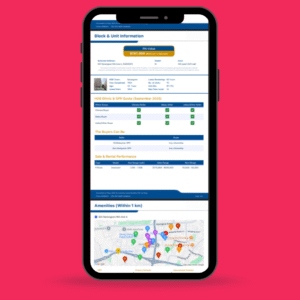
Find Out What Your Home Is Really Worth Today?
Get a data-driven property valuation in minutes, backed by the latest URA & HDB transactions and market trends. Whether youu2019re planning to sell, buy, or refinance, knowing your homeu2019s true worth gives you the confidence to make smarter decisions.