
Why So Many HDB Sellers Get Lease Decay Wrong
The Fear Around “Old Flats”
Few phrases create more panic for HDB owners than “lease decay.”
The moment a flat crosses a certain age—30 years, 40 years, sometimes even earlier—many owners start hearing the same warnings: buyers will disappear, banks will reject loans, CPF cannot be used, and the flat will eventually become worthless.
That fear spreads fast because it sounds logical. HDB flats are leasehold assets. Every year, the remaining lease gets shorter. Naturally, people assume value must fall in a straight line until it hits zero.
But property markets rarely work that neatly.
In reality, some older flats still sell at surprisingly strong prices, while some newer flats struggle to attract serious offers. Age matters—but it is rarely the whole story.
The problem is not lease decay itself. The problem is how people misunderstand it.
What Lease Decay Actually Means for HDB Owners
Understanding Remaining Lease vs Flat Age
One of the biggest mistakes sellers make is treating flat age and remaining lease as the same thing.
They are related—but they are not identical.
Flat age is simply how many years have passed since the flat was built. Remaining lease refers to how many years are left on the original 99-year lease.
This matters because buyers, banks, and CPF rules care far more about remaining lease than they do about the flat’s “birthday.”
For example, a 35-year-old flat still has around 64 years left on its lease. That may still be perfectly acceptable for many buyers, especially if the location is strong and financing remains manageable.
But once the remaining lease gets shorter, especially when it starts affecting CPF usage and loan approval, buyer behaviour changes quickly.
That is when lease decay becomes a real market issue—not simply because the flat feels old, but because ownership becomes harder to finance.
This is why two flats that look similar on paper can perform very differently in the resale market.
It is not just about age.
It is about what the remaining lease allows buyers to do.
Why Lease Decay Affects Value, CPF, and Financing
Lease decay affects value because it directly affects buyer affordability.
When buyers purchase an HDB resale flat, they are not just looking at price—they are looking at how much loan they can get, how much CPF they can use, and how much cash they need upfront.
This is where remaining lease becomes critical.
Under CPF and financing rules, buyers generally need a flat with enough lease to support long-term ownership planning. If the remaining lease does not comfortably cover the youngest buyer until age 95, CPF usage may be reduced or pro-rated instead of fully allowed.
Similarly, financing becomes more restrictive when the lease gets shorter, especially when the flat approaches lower lease thresholds.
This does not mean buyers cannot purchase older flats.
It means fewer buyers qualify easily.
And when fewer buyers qualify, sellers face a smaller buyer pool.
That smaller buyer pool creates weaker competition, slower negotiations, and often stronger price resistance.
The flat itself has not changed overnight.
But the market around it has.
Why Age Alone Does Not Decide Your Flat’s Worth
Some sellers believe once a flat reaches a certain age—30 years, 40 years, 50 years—the value must automatically drop.
That is too simplistic.
The market does not price homes based on age alone.
It prices them based on demand.
A well-located older flat near MRT stations, schools, mature estates, and daily amenities can still command strong resale prices despite lease concerns. Buyers may accept an older lease if the convenience and lifestyle value are strong enough.
On the other hand, a younger flat in a weaker location may struggle to attract offers if buyers feel the value is not there.
Other factors matter too—flat type, size, floor level, renovation quality, layout efficiency, and even surrounding supply in the estate.
This is why some 40-year-old flats outperform newer ones.
Lease matters.
But it competes with everything else buyers care about.
Smart sellers understand this balance.
They do not price based on fear.
They price based on what the market is actually willing to pay.
Myth #1: Older HDB Flats Eventually Become Worthless
Why This Belief Is Too Simplistic
This is probably the most common lease decay myth in Singapore:
“Old HDB flats will eventually become worthless, so selling early is the only safe move.”
It sounds reasonable at first. After all, HDB flats are built on a 99-year lease. If the lease runs out, ownership ends. So many owners assume the value must steadily collapse to zero long before that happens.
But the resale market does not work like a countdown timer.
Value does not disappear in one straight line.
Older flats do not suddenly become undesirable the moment they cross 30, 40, or even 50 years old. In fact, many continue to transact actively because buyers are not purchasing based on theory—they are purchasing based on affordability, location, and practical lifestyle needs.
A flat can be older and still highly desirable.
The real issue is not whether the flat is old.
It is whether buyers can still finance it comfortably and whether the property still solves a real housing need.
That is a much more useful way to think about value.
Why Some Older Flats Still Command Strong Prices
Walk through mature estates like Toa Payoh, Queenstown, Bishan, or Ang Mo Kio, and you will see something interesting:
Many older flats still attract strong demand.
Why?
Because buyers are not just buying lease years—they are buying convenience.
They are paying for MRT access, established schools, mature amenities, larger layouts, stronger transport links, and locations that would be far more expensive in newer projects.
Some older HDB flats also offer sizes that newer flats simply do not. A spacious older resale flat in a central estate can feel far more attractive than a smaller, newer flat further out.
This is why some older units still command surprisingly strong prices despite lease concerns.
Location often beats age.
Convenience often beats theory.
And when buyer demand stays strong, resale value follows.
Lease decay matters—but prime positioning can soften that impact significantly.
What Buyers Actually Look At Beyond Age
Most buyers do not walk into a viewing and ask only one question:
“How old is this flat?”
They ask a much broader set of questions.
Can I get enough loan approval?
Can I use enough CPF for this purchase?
Is the location worth the asking price?
Will this home suit my family for the next 10 to 20 years?
How much renovation will I need?
Is the layout practical?
How difficult will resale be later?
These are the real decision drivers.
Age is only one factor inside a much larger calculation.
A flat with strong transport access, high floor views, good natural light, and family-friendly surroundings may still outperform a younger unit with weaker fundamentals.
This is why sellers who focus only on lease age often underprice their homes.
They assume buyers are judging age alone, when buyers are actually evaluating total value.
And in real estate, total value always wins over a single number on paper.
Myth #2: Lease Decay Only Matters Near Lease Expiry
Why Buyers Think About Lease Much Earlier
A common mistake many HDB sellers make is believing lease decay only becomes a problem when the flat is close to the end of its 99-year lease.
They assume there is plenty of time.
“If my flat still has decades left, buyers won’t care yet.”
That thinking can be expensive.
Buyers start thinking about lease much earlier—not because they are worried about the final year of the lease, but because they are planning around financing, CPF usage, and long-term resale potential.
A buyer in their 30s or 40s is not just asking whether the flat is livable today.
They are asking whether the flat will still make financial sense 10, 15, or 20 years from now.
Will they still be able to sell it later?
Will future buyers face even stricter financing limits?
Will the property still remain attractive when they want to exit?
These questions enter the conversation long before lease expiry becomes visible.
That is why lease decay starts affecting buyer behaviour much earlier than most sellers expect.
The market prices future difficulty before the problem fully arrives.
How Financing and CPF Rules Affect Demand Before Expiry
The real pressure from lease decay comes from financing rules—not from the number 99 itself.
When buyers purchase a resale flat, they need to understand how much CPF they can use and how much financing they can secure.
This depends heavily on remaining lease.
For example, CPF usage is strongest when the flat can comfortably cover the youngest buyer until age 95. If it does not, CPF usage may be reduced or pro-rated, which means buyers may need more cash upfront.
That immediately changes affordability.
Loan approvals can also become tighter when the remaining lease shortens, reducing how much buyers can borrow and increasing financial pressure.
This does not mean the flat becomes unsellable.
It means the number of financially comfortable buyers starts shrinking.
And when fewer buyers can qualify easily, sellers lose pricing power.
The property may still be attractive.
But the buyer pool becomes narrower.
That is where lease decay starts to hurt—not at expiry, but much earlier in the financing stage.
Why Sellers Should Plan Earlier, Not Later
Many owners wait too long because they assume lease concerns are a “future problem.”
By the time they start paying attention, buyer resistance has already grown.
This often leads to rushed selling decisions.
Some panic and underprice their flats.
Others hold unrealistic expectations based on past peak transactions and refuse to adjust until months of weak viewings force them to.
Neither strategy works well.
Smart sellers plan earlier.
They understand how remaining lease affects demand before listing, not after offers disappear.
They study recent transactions for similar flats, assess buyer financing reality, and position pricing based on today’s market—not emotional assumptions.
Sometimes selling earlier protects stronger pricing.
Sometimes holding longer still makes sense because location and demand remain strong.
The key is strategy, not fear.
Because with lease decay, timing matters.
And the best time to understand your resale position is before the market starts telling you for free.
Myth #3: All Older Flats Are Affected the Same Way
Why Two Flats of the Same Age Can Sell Very Differently
One of the biggest misunderstandings about lease decay is the idea that all older flats follow the same resale path.
They do not.
Two HDB flats can be the exact same age—same lease start, same flat type, even the same town—and still sell at very different prices.
Why?
Because buyers do not judge homes using age alone.
They compare overall value.
One flat may attract strong offers because it is near an MRT station, sits on a high floor, has a practical layout, and requires minimal renovation. Another may struggle because it faces a busy road, has poor natural light, awkward layout issues, or weaker surrounding amenities.
The lease may be identical.
The buyer experience is not.
This is why sellers who only focus on age often misunderstand pricing.
They see another older flat selling high and assume theirs should match it—or they see one weak transaction and panic that their own value is collapsing.
But resale outcomes are shaped by much more than the lease clock.
The market prices desirability, not just years remaining.
The Role of Location, Floor Level, and Flat Type
Some factors consistently matter more than sellers expect.
Location is the biggest one.
A flat in a mature estate with MRT access, schools, food centres, and daily convenience often performs better than a younger flat in a less connected area. Buyers pay for lifestyle and accessibility, not just lease years.
Floor level also matters.
Higher-floor units often command stronger prices because of better views, improved privacy, stronger ventilation, and less street-level noise. In some estates, that premium can be significant.
Flat type matters too.
Larger layouts—especially older 4-room, 5-room, and executive flats—can attract buyers who feel newer launches no longer offer the same living space. Families often prioritise size over lease age if the home better fits long-term needs.
Even block orientation, corridor privacy, sun exposure, and lift access can influence demand.
These details may seem small.
But in resale pricing, small details often create large price differences.
Why Convenience and Demand Still Win
At the end of the day, buyers are solving real-life problems.
They want shorter commutes.
They want better schools for their children.
They want parents living nearby.
They want space, comfort, and convenience that fits daily life.
This is why demand often overrides age.
An older flat in a highly desirable location can remain competitive because buyers are willing to trade lease length for lifestyle value. They know the lease is shorter—but they also know the location may be impossible to replace at the same budget.
That demand protects value.
Not perfectly, but powerfully.
This is also why sellers should stop asking only:
“How old is my flat?”
and start asking:
“How badly do buyers want to live here?”
Because in property, convenience creates demand.
And demand is what protects price.
Myth #4: No One Can Get a Loan for an Older Flat
How HDB and Bank Financing Actually Works
One of the fastest ways sellers panic is when they hear this:
“No buyer can get a loan for an older flat.”
That sounds final. It sounds like the market is dead.
But it is not true.
Older HDB flats can still be financed. The real issue is not whether financing exists—it is how much financing buyers can actually get.
Both HDB loans and bank loans look at the remaining lease of the flat because lenders need to manage long-term risk. They want to ensure the property can support the loan over time and that buyers are not overcommitting on a rapidly shortening lease.
This means the loan amount may be reduced as lease shortens, especially when the flat approaches lower lease thresholds.
The buyer may still qualify—but with less borrowing power.
That difference matters.
If a buyer expected strong financing but suddenly needs much more cash upfront, the purchase becomes harder to justify.
So the problem is rarely “no financing.”
It is “less comfortable financing.”
And that changes the resale conversation completely.
The Importance of Remaining Lease and Buyer’s Age
Remaining lease does not exist in isolation.
It interacts directly with the buyer’s age.
This is where many sellers misunderstand CPF and loan rules.
A younger buyer purchasing an older flat may still qualify reasonably well because the remaining lease can support long-term ownership expectations. But if the same flat is being purchased by an older buyer—or if the lease becomes too short—the financing picture changes.
CPF rules generally look at whether the flat can last the youngest buyer until age 95. If it does, CPF usage is usually smoother. If it does not, CPF usage may be reduced or pro-rated, increasing the amount of cash needed.
There is also a general minimum remaining lease threshold for financing consideration, which makes lease length a major factor during resale negotiations.
This is why sellers should stop asking:
“Can buyers get financing?”
and start asking:
“Which buyers can still finance this comfortably?”
Because not all buyers face the same financing reality.
And that directly affects demand.
Why Financing Restrictions Shrink Buyer Pools—Not Eliminate Them
This is the part most sellers miss.
Financing restrictions do not erase buyers.
They reduce the number of buyers who can buy easily.
That difference is huge.
If fewer buyers can secure strong loans or use CPF comfortably, the pool becomes smaller. Buyers who remain are often more price-sensitive, more cautious, and stronger negotiators because they know competition is thinner.
This creates slower sales, longer listing periods, and greater resistance to aggressive asking prices.
But it does not mean the flat is unsellable.
It simply means the strategy must change.
Sellers of older flats need sharper pricing, stronger market positioning, and a realistic understanding of who their likely buyers are.
Maybe the target buyer is a family prioritising location over lease.
Maybe it is someone with stronger cash reserves who values size and convenience.
Maybe it is an upgrader focused on district rather than age.
The goal is not to fear a smaller buyer pool.
It is to understand it.
Because once you know who can still buy your flat, pricing becomes strategy—not guesswork.
Myth #5: CPF Cannot Be Used for Older HDB Flats
The CPF Rule Most Sellers Get Wrong
Many HDB sellers hear one sentence and immediately panic:
“CPF cannot be used for older flats.”
It sounds simple. It is also misleading.
CPF usage is not suddenly banned just because a flat is older.
What actually matters is the remaining lease and whether that lease can support the youngest buyer until age 95.
This is the rule most sellers misunderstand.
They assume once a flat crosses a certain age—30 years, 40 years, or more—buyers will be forced to pay mostly in cash. That assumption often leads owners to underprice their homes before the market even speaks.
But CPF rules are far more nuanced than that.
As long as the flat still meets the minimum lease requirements, buyers can still use CPF. The amount depends on how much lease remains and how it aligns with the buyer’s age profile.
This is why some older flats continue to attract strong resale demand while others face more resistance.
The issue is not whether CPF is allowed.
It is how much CPF can realistically be used.
That difference matters a lot.
Full CPF Usage vs Pro-Rated CPF Usage
Think of CPF usage like a sliding scale—not an on-and-off switch.
When a resale flat has enough remaining lease to cover the youngest buyer until age 95, CPF usage is generally smoother and buyers can use more of their CPF savings for the purchase.
This creates stronger affordability and usually makes the resale process easier.
But when the remaining lease does not fully cover age 95, CPF usage may become pro-rated instead of fully allowed.
That means buyers can still use CPF—but not as much as they originally hoped.
The shortfall often needs to be covered with more cash upfront.
And that is where seller expectations start colliding with buyer reality.
A flat may still be attractive, but if buyers need significantly more cash, negotiations become tougher.
This is why sellers should understand CPF rules before setting their asking price.
Because buyers are not pricing based on emotion.
They are pricing based on affordability.
And affordability is often shaped by CPF access.
Why Older Flats Can Still Attract CPF Buyers
Older does not automatically mean unattractive.
In fact, many buyers actively look for older resale flats because they value what those homes offer—larger layouts, mature estates, central locations, and stronger everyday convenience.
If CPF usage remains workable and financing is still manageable, buyers are often willing to accept a shorter remaining lease in exchange for better lifestyle value.
A spacious older 5-room flat near an MRT station in a mature estate may feel far more practical than a newer but smaller unit in a less connected location.
Buyers make trade-offs.
They do not buy lease years alone.
They buy homes that fit their family plans, commute needs, school priorities, and financial comfort.
This is why sellers should not assume “old flat = no CPF buyer.”
The better question is:
“Can the right buyer still use enough CPF to make this purchase make sense?”
If the answer is yes, demand still exists.
And where demand exists, value follows.
Myth #6: HDB Says Older Flats Should Be Avoided
What HDB Actually Says About Older Flats
A surprisingly persistent belief among sellers is that HDB itself discourages the purchase of older flats.
This usually comes from misreading policy discussions around lease decay, CPF usage, and retirement adequacy.
But HDB does not tell buyers to avoid older flats outright.
Instead, its policies are designed to ensure that housing remains financially sustainable over time—especially in terms of CPF usage and long-term housing security.
That is why rules exist around remaining lease, age considerations, and financing eligibility.
They are safeguards, not warnings.
The intent is not to push people away from older flats, but to ensure buyers understand the trade-offs involved when choosing them.
In other words, HDB regulates risk—it does not declare value.
Risk Management vs “Avoid at All Costs”
A major misunderstanding happens when risk management is interpreted as avoidance.
Because CPF and financing rules become stricter as remaining lease shortens, some sellers assume this means older flats are “bad purchases.”
That is not the case.
It simply means the financial structure of the purchase changes.
Buyers may need more cash. CPF usage may be adjusted. Loan amounts may be more conservative.
These are risk controls, not red flags against older flats themselves.
If older flats were truly “unacceptable,” they would not continue to be transacted in the resale market every single day.
Instead, the system is designed to help buyers make informed decisions based on their age, finances, and long-term housing needs.
The market still functions.
It just functions with clearer guardrails.
Why Older Flats Still Transact Every Day
Despite all the myths, older HDB flats remain an active and significant part of Singapore’s resale market.
Every day, transactions take place for flats with varying remaining leases—from well over 60 years left to those with much shorter horizons.
Why?
Because buyers are not only optimising for lease length.
They are optimising for life fit.
Older flats often sit in mature estates with MRT access, established schools, food options, and strong community infrastructure. Many buyers are willing to accept a shorter lease in exchange for these advantages, especially if financing still works and CPF usage remains viable.
Sellers sometimes forget this reality.
They focus so heavily on lease decay that they overlook demand fundamentals.
But the market tells a different story.
Older flats continue to move because they solve real housing needs for real buyers.
And as long as that demand exists, lease decay is not a shutdown signal.
It is simply one variable in a much larger pricing equation.
What Really Determines Your HDB Resale Value
Remaining Lease Is Only One Part of the Equation
By now, one pattern should be clear: lease decay matters, but it does not operate in isolation.
Remaining lease is only one variable in a much larger pricing equation.
Sellers often treat it as the main driver of value—sometimes even the only driver. But in reality, the resale market is shaped by a combination of structural, financial, and lifestyle factors that interact with lease length rather than being dictated by it.
A flat with 60 years remaining lease in a weak location may struggle to attract attention, while a 40-year-old flat in a prime, well-connected estate may still draw strong interest.
The difference is not the lease alone.
It is how the lease sits within the broader context of demand.
Think of lease as a filter, not a verdict.
It influences the type of buyers who can enter the conversation—but it does not decide the final outcome on its own.
Buyer Affordability, Loan Approval, and CPF Usage
At the heart of every HDB transaction is one simple reality: affordability determines demand.
Buyers are constantly balancing three financial levers—loan approval, CPF usage, and cash requirements.
If a flat allows strong CPF usage and comfortable loan approval, it immediately becomes accessible to a wider group of buyers. That increases competition, supports pricing, and speeds up transactions.
If CPF usage is reduced or financing becomes tighter due to remaining lease constraints, affordability shifts. Buyers may still be interested, but they will need more cash or accept lower loan amounts. That narrows the buyer pool and increases negotiation pressure.
This is why two flats with similar physical attributes can perform very differently in the market.
It is not just about what the home looks like.
It is about what the financial system allows buyers to do with it.
Sellers who ignore this often misread demand and misprice their units.
Why Prime Location Can Outperform Lease Concerns
If there is one factor that consistently softens the impact of lease decay, it is location.
Prime and mature estates—especially those near MRT stations, business districts, reputable schools, and established amenities—can sustain strong demand even as remaining lease decreases.
Why?
Because location is permanent value.
Lease is time-limited. Location is not.
Buyers understand this trade-off. They may accept a shorter remaining lease if it means securing a home in a highly desirable area that would otherwise be out of reach in newer developments.
This is why some older flats in central or highly connected estates continue to achieve strong resale prices despite lease concerns.
The convenience premium offsets part of the lease discount.
That does not mean lease is irrelevant.
It means it competes with stronger forces in the market.
For sellers, this is an important mindset shift.
Instead of asking, “Is my flat too old?” the better question is:
“Does my location create enough demand to outweigh lease concerns?”
Because in Singapore’s HDB market, location often doesn’t just influence value.
It defends it.
The Real Issue: Your Buyer Pool Gets Smaller
Lease Decay Does Not Kill Value Overnight
The biggest misconception about lease decay is that it triggers a sudden drop in value—like a switch being flipped at a certain age.
In reality, it doesn’t work that way.
There is no moment where a flat suddenly becomes “unacceptable” or loses all demand. Older HDB units continue to transact, sometimes at surprisingly strong prices, especially when other fundamentals like location and layout remain strong.
What actually happens is much more gradual.
The impact of lease decay builds over time, not in a single sharp drop. It quietly changes how buyers evaluate the property, especially through financing and CPF considerations.
So instead of a cliff, it behaves more like a narrowing path.
The flat is still walkable—but fewer people are comfortable walking it.
It Reduces the Number of Buyers Who Can Afford It
The real effect of lease decay is not destruction of value—it is restriction of access.
As remaining lease shortens, fewer buyers can comfortably meet the financing conditions required for the purchase. CPF usage may be reduced or capped, loan amounts may be more conservative, and cash requirements may increase.
That immediately filters out certain buyers.
A segment of the market who might have been interested now simply cannot structure the deal comfortably. Others remain interested but hesitate because the financial trade-offs feel heavier.
The result is not a lack of demand—it is a smaller pool of qualified demand.
And that distinction is critical.
Your flat may still be desirable.
But fewer people can actually act on that desire.
Why Smaller Buyer Pools Create Price Pressure
In property, price is not just about how much someone is willing to pay—it is about how many people are willing to compete.
When a flat appeals to a wide buyer pool, competition pushes prices up. Multiple interested parties can create urgency, stronger offers, and faster transactions.
But when lease decay reduces that pool, the dynamic shifts.
Fewer buyers means less competition. Less competition means more negotiation power for the remaining buyers. And more negotiation power often translates into downward pressure on price or longer time on market.
This is where sellers feel the impact most—not as a dramatic collapse, but as slower response, softer offers, and more cautious buyers.
Importantly, this does not mean the property has lost its worth.
It means the market has become more selective.
And in a selective market, strategy matters more than assumption.
Because when buyer pools shrink, pricing stops being about optimism—and starts being about precision.
Common Mistakes Sellers Make Because of Lease Decay Myths
Pricing Too Low Out of Fear
One of the most expensive mistakes HDB sellers make is not overpricing—but underpricing out of fear.
When owners believe lease decay is more damaging than it actually is, they often assume the market will reject their flat outright. So instead of testing real demand, they pre-emptively lower their expectations.
This “defensive pricing” can quietly erase tens of thousands in potential value.
The irony is that many of these flats still have strong underlying demand—especially if they are well-located or still financeable for a broad buyer pool. But once a price is set too low, it becomes very difficult to recover that lost ground in negotiations.
Fear-based pricing doesn’t reflect the market.
It reflects anxiety about the market.
And buyers can sense that imbalance quickly.
Waiting Too Long to Sell
On the opposite end of the spectrum, some sellers do the exact opposite—they wait too long.
They believe that as long as they hold on, the market will eventually “reward” them with a better opportunity or higher price. But with lease decay, time is not neutral.
Every year that passes slightly changes buyer financing conditions, CPF usability, and perceived long-term value.
Waiting too long can quietly shrink your buyer pool without you noticing it in real time.
By the time sellers decide to act, they may find fewer active buyers, slower responses, and more resistance during negotiations.
This delay often leads to frustration that feels sudden—but was actually building gradually over time.
Timing in HDB resale is not just about market cycles.
It is also about how remaining lease interacts with buyer confidence.
Assuming Renovation Can Fully Offset Lease Issues
Another common misconception is that a well-renovated home can fully “cancel out” lease decay.
Renovation absolutely matters. It can improve presentation, increase emotional appeal, and help buyers visualise moving in immediately.
But it does not change the underlying financial framework of the transaction.
A beautifully renovated flat with a short remaining lease still faces the same CPF and financing limitations as a poorly renovated one. Buyers may admire the aesthetics, but they still need the numbers to work.
This is where sellers sometimes overestimate ROI from renovation before selling.
Upgrading finishes may improve interest—but it cannot fully override structural constraints tied to lease length.
In short: renovation helps you compete better, but it does not change the rules of the game.
Ignoring Buyer Financing Reality
Perhaps the most critical mistake is ignoring how buyers actually fund their purchase.
Many sellers price based on recent transactions without considering whether those buyers had different financing profiles—higher CPF availability, younger age profiles, or stronger cash positions.
But today’s buyers are not identical.
If remaining lease affects CPF usage or loan eligibility, the effective affordability of your flat changes—even if headline prices in the area look similar.
This mismatch is where deals often break down.
Sellers assume interest means ability.
But in reality, interest must align with financial capacity.
Understanding buyer financing reality is what separates accurate pricing from hopeful pricing.
Because in the end, a buyer can only offer what their financing structure allows—not what comparable charts suggest.
What Smart HDB Sellers Should Do Next
Check How Your Remaining Lease Affects Buyer Demand
Smart selling starts with understanding where your flat sits in the demand spectrum—not just how many years are left on the lease.
The key question is not “How old is my flat?” but “Who can realistically still buy this?”
Remaining lease influences the size of your buyer pool by shaping affordability, CPF usability, and loan eligibility. That means two flats in the same estate can attract very different levels of interest simply because one is easier to finance than the other.
Before listing, sellers should assess how their remaining lease affects the type of buyers likely to show interest. Is it still broadly financeable for first-time buyers? Does it mainly appeal to cash-rich upgrader segments? Or is it entering a more selective pool where buyers are fewer but more specific?
Understanding this early helps prevent mispricing and unrealistic expectations later.
Understand CPF and Loan Eligibility Before Pricing
Pricing without understanding financing reality is one of the fastest ways sellers misread the market.
CPF usage rules and loan eligibility are not background details—they directly shape what buyers can afford. If CPF usage is reduced or loans become more conservative due to remaining lease, the “effective price ceiling” in the market shifts, even if recent transactions suggest higher figures.
This is where many sellers go wrong: they anchor pricing to past sales without adjusting for the financial conditions of today’s buyers.
A strong listing price is not just based on comparable transactions.
It must also reflect how those transactions were financed, and whether current buyers can replicate the same structure.
If they cannot, pricing expectations need adjustment before the listing goes live—not after weeks of weak interest.
Get a Proper Market-Based Valuation Before Listing
The final step is grounding everything in a real valuation—not assumptions, not hearsay, and not fear-driven estimates.
A proper market-based valuation considers more than just age and lease. It takes into account recent comparable transactions, buyer affordability trends, financing constraints, CPF usability, and micro-location demand.
This gives sellers a clearer picture of what the market is actually willing to pay today—not what it paid in a different financing environment.
The goal is not to guess a number.
It is to understand a realistic range where demand is still active and competitive.
When sellers start with accurate valuation context, everything else becomes easier: pricing strategy, negotiation positioning, and timing decisions.
Because in the HDB resale market, clarity is leverage.
And leverage leads to better outcomes than guesswork ever will.
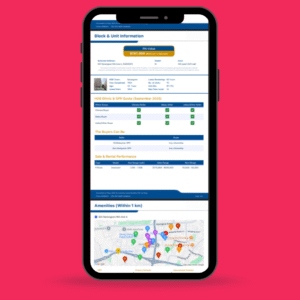
Find Out What Your Home Is Really Worth Today?
Get a data-driven property valuation in minutes, backed by the latest URA & HDB transactions and market trends. Whether youu2019re planning to sell, buy, or refinance, knowing your homeu2019s true worth gives you the confidence to make smarter decisions.