Why “Near MRT” Is the First Filter for Most Condo Buyers
In Singapore’s condo market, few phrases carry as much weight as “near MRT.” Before buyers ask about facing, facilities, or even price, they often start with one question: How far is it from the station? That’s because MRT proximity isn’t just a transport detail — it’s a lifestyle shortcut baked into daily life. Shorter commutes, predictable travel times, and seamless access to business districts, schools, and lifestyle hubs have made MRT-linked homes the default benchmark for convenience.
But that convenience comes at a cost. Condos within walking distance of an MRT station consistently command a clear pricing premium, often 15–20% higher than similar projects just a few blocks further away. Developers price it in, sellers defend it, and buyers quietly debate whether it’s worth paying more per square foot for fewer steps per day.
Which leads to the real question every buyer eventually faces: is buying a condo near an MRT genuinely better value — or just a more expensive comfort? In a market where budgets are tighter and expectations are higher, deciding whether to prioritise MRT proximity is no longer obvious. It’s a trade-off between daily convenience and long-term cost — and the answer depends on how you plan to live in, or profit from, the home.
What Does “Near MRT” Actually Mean in Singapore Property Terms?
In property listings, “near MRT” is one of the most overused — and misunderstood — phrases. To some buyers, it means anywhere within sight of the station. To the market, however, it has a far more specific definition, one that directly affects pricing, demand, and resale performance.
Understanding where that line is drawn — and what lies on either side of it — helps buyers avoid overpaying for convenience they won’t actually enjoy.
The 400–500m Rule (and Why It Matters)
In Singapore, 400 to 500 metres has become the informal but widely accepted benchmark for what qualifies as a condo “near MRT.” This translates to roughly a 5–7 minute walk for the average adult — short enough to feel effortless, but far enough to avoid most of the station’s downsides.
This distance matters because it aligns with real behaviour, not just marketing. Buyers and tenants consistently show stronger preference for homes they can reach on foot without relying on feeder buses, sheltered walkways, or last-mile solutions. As a result, demand — and pricing — tends to peak within this radius.
Once a condo falls beyond 500 metres, the market often treats it very differently. Even an extra 200–300 metres can shift perception from “walkable” to “inconvenient,” triggering a noticeable drop in buyer interest and achievable price per square foot. That’s why ≤500m has become the psychological and financial threshold where MRT proximity truly starts to count.
Near, Not Next To: Distance vs Liveability
Being close to an MRT station is valuable — being right beside it is not always better.
Condos located next to elevated MRT tracks face a different living experience from those near underground lines. Train noise, vibrations, and visual intrusion can affect certain stacks, particularly on lower floors or units facing the tracks directly. While mitigation measures like noise barriers help, they don’t eliminate the issue entirely.
Interchange stations introduce another layer of trade-off. While they offer unmatched connectivity and convenience, they also attract heavier foot traffic, higher crowd density, and more activity throughout the day. For some buyers, this energy is a plus. For others, it compromises privacy and tranquillity.
In contrast, condos near single-line, underground stations often strike the best balance — close enough for daily convenience, yet removed from the intensity that comes with major transport nodes. The key takeaway is simple: when it comes to MRT proximity, optimal distance beats absolute closeness, especially for long-term liveability.
The Lifestyle Upside of Buying a Condo Near MRT
For many buyers, the real value of an MRT-adjacent condo isn’t found in spreadsheets or resale charts — it’s felt in daily life. Over time, proximity to the MRT reshapes routines, reduces friction, and quietly improves how people move through the city.
This is where “near MRT” stops being a selling point and starts becoming a lived advantage.
Time Savings That Add Up Over Years
A shorter commute doesn’t just save minutes — it compounds into hours, days, and eventually years. Living within walking distance of an MRT station removes the need to plan around traffic conditions, peak-hour jams, or unpredictable travel times. Whether it’s getting to work, meeting friends, or heading home late, the journey becomes consistent and stress-free.
Unlike driving, MRT travel in Singapore is largely immune to traffic volatility. Accidents, road works, and weather disruptions rarely affect rail reliability in the same way they do roads. For daily commuters, this predictability matters. It means fewer buffer periods, less rushing, and more control over personal time — a benefit that becomes more valuable as work hours lengthen and schedules tighten.
Over the long term, this reliability translates into better work-life balance. The convenience isn’t dramatic on any single day, but across thousands of trips, it reshapes how people experience their city.
Access to Hubs, Not Just Transport
MRT lines in Singapore aren’t designed merely to move people — they connect lifestyle nodes. Living near a station effectively plugs residents into a network of CBD offices, regional centres, shopping districts, schools, and recreational zones, often without transfers or long travel times.
This connectivity explains why certain MRT lines become lifestyle corridors. Residents naturally gravitate towards malls near stations, dine along well-connected stretches, and choose schools or workplaces based on rail access. Over time, daily habits begin to align with the MRT map rather than road routes.
For condo owners, this means their home isn’t just well-connected — it’s positioned within a predictable flow of activity and convenience. When transport dictates lifestyle patterns, proximity to the MRT quietly shapes how — and how easily — people live, work, and unwind.
The Price Premium: How Much More Are You Really Paying?
Convenience in Singapore real estate is rarely subtle — it’s priced in, upfront. Condos near MRT stations don’t just cost more by coincidence; they carry a clear, measurable premium that buyers knowingly accept in exchange for accessibility, demand strength, and long-term liquidity.
The key is understanding how much more you’re paying, and why the market keeps rewarding it.
Near-MRT vs Far-From-MRT Pricing Explained
Across Singapore, condos within walking distance of an MRT station typically command a 14–20% price premium over comparable projects located just beyond the 500m mark. This gap appears consistently across regions and market cycles, reinforcing the idea that MRT proximity is not a passing preference but a structural demand driver.
Buyers accept — and often compete for — this markup because MRT-adjacent homes solve multiple problems at once. They reduce commuting friction, appeal to a broader pool of future buyers and tenants, and offer better exit liquidity when it’s time to sell. In uncertain markets, these homes also tend to hold value better, making the premium feel less like an indulgence and more like insurance.
As a result, near-MRT units often see faster take-up rates, tighter negotiation margins, and stronger resale performance — reinforcing the cycle where demand sustains the premium year after year.
Price Comparison by Region (CCR, RCR, OCR)
While the MRT premium exists everywhere, how it shows up varies by region.
In the Core Central Region (CCR), near-MRT pricing reflects convenience layered on top of already high base values. The absolute dollar difference per square foot is significant, but the percentage premium tends to be more contained, as buyers are already paying for prestige, proximity to the CBD, and established neighbourhoods.
The Rest of Central Region (RCR) often presents the most pronounced MRT effect. These city-fringe locations balance accessibility with relative affordability, making near-MRT projects especially competitive. As a result, RCR condos near stations frequently show the highest percentage premiums, driven by both owner-occupiers and investors chasing growth and rental demand.
In the Outside Central Region (OCR), MRT proximity plays a different role. While prices remain lower in absolute terms, the premium reflects a trade-off between affordability and yield. Near-MRT OCR condos attract tenants more easily and often deliver stronger rental performance, even if buyers pay more upfront for that advantage.
Investment Performance: Do MRT Condos Actually Perform Better?
Beyond lifestyle appeal, the strongest argument for buying a condo near an MRT station is performance. Over multiple market cycles, MRT-adjacent homes have shown a consistent ability to grow faster, recover quicker, and attract demand even when sentiment turns cautious.
This isn’t coincidence — it’s demand concentration at work.
Capital Appreciation & Downturn Resilience
Condos near MRT stations tend to exhibit faster appreciation over time because they sit at the intersection of limited supply and persistent demand. There are only so many plots within walking distance of a station, and new MRT lines take years — sometimes decades — to materialise. As a result, scarcity supports price growth.
During weaker market phases, this same scarcity becomes a stabiliser. When buyers pull back, they prioritise homes with the strongest fundamentals — and MRT proximity is one of the first boxes they insist on ticking. That keeps transaction volumes moving and prevents steep price corrections, allowing near-MRT condos to hold value better than less-connected alternatives.
In practice, this means owners of MRT-adjacent units often face shallower drawdowns during downturns and stronger rebounds during recoveries, smoothing out long-term returns.
Rental Demand & Yield Reality
On the rental front, MRT proximity is one of the clearest demand drivers. Expats, professionals, and students consistently prioritise rail access, especially those without cars or with daily commuting needs across multiple parts of the island.
This preference translates into shorter vacancy periods and greater pricing power for landlords. In the Outside Central Region (OCR), where entry prices are lower, condos near MRT stations often deliver a 0.4–0.6% yield advantage over similar projects located further away. While the difference may appear modest on paper, it compounds meaningfully over years of ownership.
More importantly, MRT-linked rentals are easier to defend in softer leasing markets. When tenants have options, convenience becomes non-negotiable — and proximity to the MRT keeps these units firmly on the shortlist.
The Downsides Buyers Often Underestimate
While MRT proximity is widely seen as a safe bet, it isn’t a free lunch. Buyers who focus only on convenience and resale upside often overlook the trade-offs that come with paying for a high-demand location — trade-offs that can affect both finances and daily comfort.
Understanding these downsides early helps buyers avoid disappointment later.
Higher Entry Cost and Tougher Competition
The most immediate downside is entry price. Condos near MRT stations don’t just cost more — they attract more buyers, faster. New launches in these locations tend to push average prices higher, which then ripple into resale expectations across the area. Over time, this inflates benchmarks and narrows room for negotiation.
As a result, genuine “value buys” near MRT stations are rare. Sellers know their audience, developers price aggressively, and competition often compresses margins. Buyers may find themselves stretching budgets, compromising on unit size, or settling for less ideal stacks simply to secure a unit within the coveted radius.
For those seeking upside through underpricing, MRT-adjacent projects offer stability — but not many bargains.
Noise, Crowds, and Liveability Trade-Offs
Convenience also brings intensity. Condos located near MRT stations, especially along elevated tracks, can experience train noise reaching up to 66dB, depending on distance, facing, and floor height. While sound barriers and building design help, they don’t eliminate the issue entirely, particularly for units facing the tracks directly.
Beyond noise, crowd activity is another factor buyers underestimate. Stations — especially interchanges — draw constant foot traffic, delivery activity, and peak-hour congestion. This can affect privacy, serenity, and even lift usage during busy periods.
That’s why unit selection becomes critical. Choosing inward-facing stacks, higher floors, or layouts shielded from tracks can dramatically improve liveability. Proximity to the MRT may be non-negotiable for many buyers, but how a unit relates to that proximity often determines whether it feels like a convenience — or a compromise.
Near MRT: Homebuyers vs Investors — Who Benefits More?
MRT proximity isn’t a one-size-fits-all advantage. While both homebuyers and investors value it, they benefit in different ways — and to different extents. The key lies in how the property is used day to day, and how easily it can be exited in the future.
For Own-Stay Buyers
For owner-occupiers, the appeal of living near an MRT is immediate and practical. Daily commutes are shorter, errands are simpler, and mobility remains effortless even without a car. Over time, this convenience reduces stress and adds flexibility to everyday life.
However, own-stay buyers also feel the trade-offs more acutely. Noise, foot traffic, and activity around stations can clash with the desire for peace, especially for families with young children or elderly members. Parents may prioritise quieter internal stacks, safer walking routes, and distance from interchanges, even if it means being slightly further from the station.
For homebuyers, the ideal MRT condo is rarely the closest one — it’s the one that balances walkability with liveability.
For Investors
For investors, MRT proximity is a clear structural advantage. It widens the tenant pool to include expats, professionals, and students, many of whom actively filter for MRT access. This depth of demand reduces vacancy risk and strengthens rental pricing power.
Just as importantly, MRT condos offer superior exit liquidity. When it’s time to sell, these units attract a broader range of buyers, move faster, and face less resistance during weaker market phases. The resale process tends to be quicker, with fewer price concessions, because convenience remains a universal selling point.
For investors, MRT proximity isn’t just about higher rent or price — it’s about speed, flexibility, and certainty at both entry and exit.
Future MRT Lines: Buying Ahead of the Curve
For buyers willing to look beyond what’s already operational, future MRT lines present one of the clearest opportunities to buy before convenience is fully priced in. History shows that accessibility improvements don’t just change commuting patterns — they reshape property values around them.
The key is timing: buying before the line opens, not after.
Thomson–East Coast Line Impact
The Thomson–East Coast Line (TEL) offers a clear case study of how new connectivity translates into value uplift. As stations progress from announcement to construction to completion, surrounding condos typically experience gradual price appreciation, with momentum building as operational certainty increases.
Early-stage buyers often benefit the most, capturing upside as walkability improves and demand broadens. Once stations become fully operational, pricing tends to stabilise at a new, higher baseline — reflecting convenience that is no longer theoretical, but proven. This pattern reinforces a familiar theme: the biggest gains occur before MRT access becomes “obvious.”
Cross Island Line & Emerging Growth Areas
Looking ahead, the Cross Island Line (CRL) is expected to unlock connectivity across under-served regions, placing areas like Punggol, Hougang, and other eastern and north-eastern neighbourhoods firmly on the radar.
These locations stand to benefit not just from new stations, but from improved integration into Singapore’s wider transport network. As accessibility improves, buyer and tenant profiles broaden — often triggering both price and rental growth over time.
This aligns with long-term planning goals, including the target for 80% of residents to live within a 10-minute walk of an MRT station by 2030. For buyers who position early near future stations, the strategy isn’t speculation — it’s aligning with infrastructure that reshapes demand well before the first train arrives.
How to Buy Smart If You’re Targeting an MRT Condo
Buying near an MRT station is less about chasing proximity at all costs — and more about making measured, strategic choices. The difference between a great MRT purchase and an expensive regret often comes down to details buyers overlook in the rush for convenience.
Ideal Distance: 5–10 Minutes, Not Zero
The sweet spot for most buyers lies within a 5–10 minute walk, not right on top of the station. This range preserves walkability while avoiding the intensity that comes with immediate adjacency — higher noise levels, heavier foot traffic, and steeper price premiums.
From a value perspective, stepping slightly further out often delivers better price-to-comfort balance. Buyers still enjoy MRT convenience, but without paying top-dollar for marginal gains in distance. In many cases, that extra two or three minutes of walking translates into quieter living, better unit selection, or meaningful savings per square foot.
Unit Selection Matters More Than Project Name
When it comes to MRT condos, which unit you buy often matters more than which project you choose.
Stacks facing MRT tracks, roads, or station entrances are more exposed to noise and activity, particularly on lower floors. Elevated tracks amplify this effect, while underground lines reduce — but don’t eliminate — it entirely. Choosing inward-facing stacks, higher floors, or units shielded by landscaping or other blocks can dramatically improve liveability.
Orientation also plays a role. Good airflow, reduced heat exposure, and natural light can offset some of the compromises that come with high-density, transit-oriented locations.
Don’t Ignore the Bigger Picture
MRT access is powerful — but it’s only one part of a good purchase. Amenities such as supermarkets, childcare, schools, and dining options often determine daily convenience more than rail access alone.
Tenure also matters. Freehold MRT condos may command a premium, but that premium isn’t always fully recoverable. In many cases, a well-located leasehold project near an MRT outperforms a freehold one that’s less connected.
Finally, buyers must factor in budget resilience, especially in a shifting 2025 market. Paying more for MRT proximity should not come at the expense of financial flexibility. A well-bought MRT condo supports your lifestyle or investment goals — without locking you into unnecessary strain.
Should You Buy a Condo Near MRT in Singapore?
Buying near an MRT station isn’t automatically the right choice — but it can be a smart, strategic decision when approached thoughtfully.
The premium makes sense if you value daily convenience, reliable transport, strong rental demand, and better resale liquidity. For investors, it widens your tenant pool and supports faster, smoother exits. For own-stay buyers, it saves hours over a lifetime of commuting while keeping you connected to lifestyle and work hubs.
Conversely, the premium may not be worth it if it stretches your budget too far, exposes you to noise or crowds you can’t tolerate, or forces compromises in unit selection or amenities. Proximity alone doesn’t guarantee happiness or returns — context, planning, and long-term suitability matter more.
Ultimately, MRT access should be treated as a strategy, not a checkbox. It’s one factor among many — a tool to enhance liveability and investment potential, not a guarantee of success. Choosing wisely means balancing proximity with comfort, price, and future growth — ensuring your condo truly works for you, day in and day out.
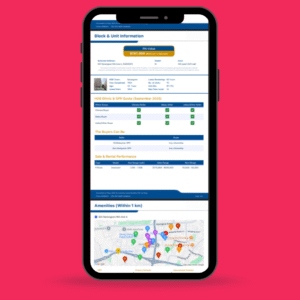
Find Out What Your Home Is Really Worth Today?
Get a data-driven property valuation in minutes, backed by the latest URA & HDB transactions and market trends. Whether you’re planning to sell, buy, or refinance, knowing your home’s true worth gives you the confidence to make smarter decisions.