
CPF Feels Free. It Isn’t.
CPF has a way of feeling painless. No cash leaves your bank account. Your lifestyle stays intact. The monthly instalment quietly deducts itself, and homeownership feels… efficient. For many buyers, especially first-timers, using as much CPF as possible seems like the smartest move you can make.
And that’s exactly where the problem starts.
Because CPF isn’t free money. It’s deferred money — taken from your future self and quietly accumulating a bill in the background.
Most buyers maximise CPF not out of recklessness, but logic. Why part with cash when CPF is sitting there? Why “waste” savings when your Ordinary Account can cover the downpayment, stamp duty, legal fees, and even the monthly mortgage? On the surface, it feels like a financially disciplined choice. In reality, it’s often an incomplete one.
The most common misconception is deceptively simple:
“No cash out means no cost.”
But CPF usage comes with a shadow price. Every dollar you withdraw stops compounding in your CPF account and starts accruing interest against your property. That cost doesn’t show up monthly. It doesn’t hurt today. It reveals itself years later — when you sell, when you upgrade, or when you finally look at your retirement balances and wonder why they’re lighter than expected.
This is where the real trade-offs live.
Using too much CPF can quietly erode your eventual cash proceeds, reduce the growth of your retirement savings, and constrain what you can afford next — even if your property price has gone up. The true cost is hidden in accrued interest, opportunity cost, and how CPF usage compounds over time against your future plans.
This article breaks down those hidden costs — not to scare you off using CPF, but to help you use it deliberately, with your eyes open and your exit planned.
What “Accrued Interest” Really Means (And Why It’s Not a Penalty)
“CPF accrued interest” is one of the most misunderstood phrases in local property conversations. It’s often spoken about as if it were a fine, a trap, or worse — a punishment for using your own money. In reality, it’s none of those things.
Accrued interest is simply the interest your CPF Ordinary Account (OA) savings would have earned if you had not used them for housing. CPF OA earns a base interest rate of 2.5% per year, and that interest compounds. The moment you withdraw CPF to pay for your downpayment, stamp duties, legal fees, or monthly instalments, that money stops earning interest in your account — but the opportunity to earn doesn’t disappear.
Instead, it becomes a future obligation.
From the day you use CPF for housing, accrued interest starts clocking in quietly, year after year. There are no monthly reminders. No bills to pay. Nothing feels different. The calculation continues in the background until one of two things happens: you sell the property, or you voluntarily refund the CPF used while still owning it.
When you eventually sell, CPF takes its refund first. You are required to return:
The principal amount of CPF you used for the property, plus
All the accrued interest on that amount
Only after this refund is made do you see what remains as cash proceeds.
This is why accrued interest isn’t a penalty. You’re not paying CPF extra. You’re paying yourself back — restoring the CPF savings that would have been there if you had left them untouched. Conceptually, CPF housing usage is like taking an interest-bearing loan from your future retirement fund. The interest exists to make sure your future self is not worse off because today’s self chose convenience.
The issue isn’t that accrued interest exists. It’s that many buyers don’t factor it into their long-term planning — until it suddenly shows up, years later, at the point of sale.
Hidden Cost #1 — Your Sale Proceeds Shrink Before You See Them
This is where the CPF reality hits hardest — not when you buy, but when you sell.
When a property is sold, the first claim on your sale proceeds doesn’t belong to you. It belongs to your obligations. The outstanding housing loan is cleared first. Then comes the CPF refund — the full principal you used, plus all the accrued interest. Only after both are settled do you see what’s left as cash.
On paper, many owners believe they’ve made a tidy profit. The resale price is higher than what they paid. Headlines confirm prices are up. Friends congratulate them. But the numbers that matter aren’t the ones at the top of the transaction summary — they’re the ones deducted quietly underneath.
Here’s how the erosion happens.
Suppose you used $200,000 from your CPF Ordinary Account over the years to service your home — covering the downpayment and monthly instalments. At an OA interest rate of 2.5% per year, compounded, that amount doesn’t stay at $200,000. After five years, the accrued interest alone can cross $25,000. Stretch the holding period to 10 or 15 years, and the interest bill grows far more aggressively than most owners expect.
That extra amount doesn’t come from thin air. It comes directly out of your sale proceeds.
This is why accrued interest so often eats into what sellers think is their “profit”. Price appreciation is visible. Accrued interest is not. Many HDB sellers are surprised to discover that 10–20% of their perceived gain disappears before a single dollar reaches their bank account — especially if the property’s price growth has been modest.
The shock isn’t that CPF takes money away. It’s that the money was never really yours to begin with.
What looked like a clean capital gain on paper turns into a much smaller cash outcome in reality. And for some sellers — particularly in flatter markets or shorter holding periods — the final cash proceeds can be underwhelming, or even close to zero, despite selling at a higher price than they bought.
This is the hidden cost of heavy CPF usage: the gap between headline profit and actual cash you walk away with.
Hidden Cost #2 — The Opportunity Cost of Your CPF OA
The most expensive part of using CPF for housing is also the easiest to ignore — because nothing visibly goes wrong while you’re living in the home.
Money in your CPF Ordinary Account earns a steady, government-backed 2.5% per year, compounding quietly in the background. Left untouched, those dollars stack on top of one another year after year, forming the base of your future housing flexibility and retirement adequacy. When you divert that money into property, you don’t just spend it — you interrupt a compounding process.
That interruption has a cost.
Every dollar pulled from OA stops earning interest for you and starts accruing interest against your property instead. Over short periods, the difference feels negligible. Over long holding periods — 10, 15, 20 years — it becomes substantial. The compounding doesn’t disappear; it simply flips direction.
This is where CPF usage quietly compounds against you.
The longer you hold the property, the larger the accrued interest bill grows. When you sell, that bill must be paid back in full, shrinking your cash proceeds. With less cash on hand, many buyers then lean even more heavily on CPF for their next purchase — wiping out OA again to cover the downpayment and instalments.
And so the cycle continues.
Heavy CPF use in the first property leads to a larger refund obligation at exit. A larger refund leaves you with less cash. Less cash forces heavier CPF reliance in the next purchase. Over multiple property moves, this self-reinforcing loop can leave buyers asset-rich on paper, but surprisingly cash-light and CPF-dependent.
The reason this catches people off guard is timing. You don’t feel the cost month to month. There’s no pain point while the mortgage is being serviced. The real impact only surfaces at the exit — when you sell, when you try to upgrade, or when you finally take stock of how much CPF could have been working for you all along.
In CPF planning, the danger isn’t what you see today.
It’s what quietly compounds until the day you need flexibility — and realise you’ve already spent it.
Hidden Cost #3 — Retirement Adequacy and the Downgrade Illusion
CPF was never designed to be a pure housing subsidy. Its primary purpose is retirement security — housing was meant to be one component of that equation, not the entire plan. Yet in practice, many homeowners treat CPF as a bottomless funding source for property, repeatedly maxing it out with the assumption that everything will “even out” later.
That assumption is where the risk lies.
When CPF is heavily used across multiple properties, the consequences often surface in your 50s and 60s. On paper, you may own a valuable home. In reality, a significant portion of your CPF savings is locked inside it, tied up in principal and years of accrued interest. Your OA and SA balances — the ones meant to support retirement income and CPF LIFE payouts — can end up thinner than expected.
This is where the downgrade illusion comes in.
Many owners believe that selling a larger home later and moving into a smaller one will naturally free up cash for retirement. But downgrading only works if there is real surplus after clearing all obligations. In practice, the sale proceeds must first repay the outstanding loan, then fully refund CPF — principal plus accrued interest — before any cash appears.
In softer markets, or during periods of flat price growth, that surplus can shrink dramatically. If your property’s appreciation has merely kept pace with — or worse, lagged behind — your accrued interest, the downgrade may unlock far less cash than expected. In some cases, sellers walk away with minimal cash proceeds. In extreme scenarios, there may be none at all.
This is especially dangerous late in life, when income has peaked or declined, loan tenures are shorter, and financial recovery options are limited. A downgrade that was meant to fund retirement instead becomes a reshuffling of assets — swapping one home for another, with little liquidity gained.
The risk isn’t that property fails to appreciate. It’s that CPF usage compounds steadily, regardless of market conditions. When retirement planning relies too heavily on a future sale to “fix” today’s decisions, the margin for error becomes uncomfortably thin.
By the time many homeowners realise this, the illusion has already done its damage.
Hidden Cost #4 — Reduced Flexibility for Your Next Property
Heavy CPF usage doesn’t just affect how much cash you walk away with — it shapes what you can do next.
When you use CPF extensively for a property, a large portion of your OA becomes effectively trapped. Until you sell the home or make a voluntary refund, those funds are locked into the property, unavailable for your next downpayment, emergency needs, or strategic planning. On paper, you may look asset-rich. In practice, your liquidity is constrained.
This matters most when it’s time to move.
Upgrading or buying your next property requires upfront flexibility: a downpayment, stamp duties, buffers for higher instalments, and room to manoeuvre if timelines don’t align perfectly. If your OA has been wiped out servicing the current home, you’re left with fewer options. You may have to wait longer to sell before buying, compromise on property type, or rely more heavily on bank loans and cash — often at less favourable terms.
CPF usage also interacts quietly with regulatory limits. Monthly instalments funded by CPF still count toward the Mortgage Servicing Ratio (MSR) for HDB and ECs, and the Total Debt Servicing Ratio (TDSR) for all property loans. If your first property was stretched close to these limits, heavy CPF servicing can lock in high repayment commitments that leave little headroom for future borrowing.
The result is a double bind: CPF tied up in the existing home, and borrowing capacity capped by past decisions.
When income rises more slowly than expected, or interest rates move against you, this lack of flexibility becomes even more pronounced. The CPF that could have been redeployed for a larger downpayment, a shorter loan, or strategic retirement top-ups is already spoken for.
This is why high CPF usage today can quietly cap tomorrow’s options. Not because CPF is bad — but because once it’s committed, it reduces your ability to adapt. And in property planning, flexibility is often more valuable than maximisation.
CPF Is Not the Enemy — Misuse Is
By this point, it might sound like CPF is something to fear. It isn’t.
CPF is one of the most powerful financial tools Singaporeans have — stable, structured, and designed to protect long-term outcomes. Used deliberately, it can make homeownership possible without crippling cashflow, reduce reliance on high-interest debt, and provide a disciplined framework for both housing and retirement.
The problem isn’t CPF. It’s how automatically we use it.
There are situations where maximising CPF makes sense. Early in your career, when cash is tight and income is still rising. During periods of uncertainty, when preserving liquidity matters more than optimisation. Or when using CPF allows you to avoid stretching yourself dangerously with bank loans. In these cases, CPF isn’t a crutch — it’s a buffer.
The danger creeps in when CPF usage becomes unconscious. When every downpayment is wiped from OA by default. When every instalment is CPF-funded without a second thought. When decisions are made without considering how much accrued interest is building, how future flexibility is shrinking, or what the exit looks like years down the road.
That’s when CPF stops being a tool and starts becoming a blind spot.
Most buyers don’t overuse CPF because they’re careless. They overuse it because no one forces them to model the long-term trade-offs. And by the time those trade-offs surface — at sale, upgrade, or retirement — the decisions are already locked in.
CPF works best when it’s used with intent, not instinct.
Not maximised blindly, but deployed strategically — with a clear view of where you want to land, not just how to get through the month.
How to Reduce the Hidden CPF Cost (Without Killing Cashflow)
Reducing the hidden cost of CPF doesn’t require extreme moves or financial pain. It’s not about avoiding CPF altogether — it’s about using it with intention, while keeping your cashflow and future options intact.
One of the simplest levers is how you service your monthly instalments. Fully CPF-funded repayments feel effortless, but they accelerate CPF depletion and accrued interest growth. Paying part of the instalment in cash, even modestly, slows this compounding effect over time. You preserve CPF balances, reduce future refund obligations, and still keep your lifestyle largely unchanged. The goal isn’t purity — it’s balance.
Another underused option is making voluntary housing refunds to your CPF while you still own the property. When income stabilises or rises, refunding CPF early can meaningfully reduce future accrued interest and rebuild your OA for retirement or the next purchase. This isn’t something everyone should rush into — but in mid-career years, when cashflow improves and flexibility matters, it can be a powerful reset.
Equally important is resisting the urge to wipe out your OA completely at the point of purchase. Keeping a CPF buffer preserves compounding, provides emergency flexibility, and gives you options later — whether that’s funding a downpayment, reducing loan size, or redirecting CPF toward higher-interest retirement buckets. An empty OA may feel efficient today, but it often proves expensive tomorrow.
Finally, the most overlooked strategy is simply modelling the outcome early. Before committing to a purchase or servicing plan, estimate:
How much CPF principal you’re likely to use over the holding period
How much accrued interest will accumulate
What your realistic cash proceeds could look like on sale
How different timelines or servicing mixes change the result
When buyers run these scenarios upfront, CPF decisions stop being emotional and start becoming strategic. You don’t need to guess — you just need to see the numbers before they surprise you.
The hidden CPF cost isn’t inevitable. It’s manageable — once you stop treating CPF as invisible money and start treating it as what it really is: your future, compounding quietly in the background.
CPF Is a Loan From Your Future Self
CPF isn’t free money. Think of it instead as a loan from your future self — one that comes with guaranteed interest and a clear repayment schedule. Every dollar you pull out today reduces what your future self will have, and every instalment fully funded by CPF compounds that obligation quietly in the background.
The key insight: the cost of CPF isn’t felt month to month. It accumulates over years, growing invisibly through accrued interest, reduced compounding, and lost flexibility. By the time it surfaces — at sale, upgrade, or retirement — it can feel shockingly high.
The good news is that this cost is controllable. A little planning upfront — partial cash instalments, preserving OA buffers, voluntary refunds, and modelling your exit scenarios — can drastically reduce hidden losses. The result? More cash in hand when you sell, greater flexibility for your next property, and stronger retirement balances.
In short: treat CPF as what it really is — a tool, not a crutch. Use it deliberately, plan for the future, and you’ll turn what could have been a hidden drain into a strategic advantage.
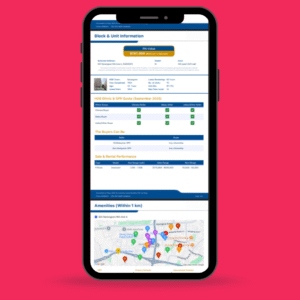
Find Out What Your Home Is Really Worth Today?
Get a data-driven property valuation in minutes, backed by the latest URA & HDB transactions and market trends. Whether you’re planning to sell, buy, or refinance, knowing your home’s true worth gives you the confidence to make smarter decisions.