

The Budget Illusion
Most buyers think they’ve cracked the code the moment the bank says yes. A purchase price that fits. A loan approval that clears. Numbers that look neat enough on paper. Budget sorted — or so it feels. In reality, this is where most people make their first and most expensive mistake: confusing approval with affordability.
The problem isn’t recklessness. It’s framing. Homebuyers are taught to treat budgeting as a single checkpoint — Can I buy this? — instead of a long-term system that stretches across decades of repayments, lifestyle shifts, and financial trade-offs. Once the keys are collected, the thinking often stops. But the costs don’t.
What follows is rarely dramatic at first. It’s quiet pressure. Cash flow tightening. Decisions deferred. Holidays postponed. Emergency funds quietly shrinking. Over time, that “comfortable” mortgage starts shaping daily life in ways no spreadsheet predicted. The stress doesn’t come from one bad decision — it comes from a thousand small ones that were never factored in.
This is why so many buyers feel blindsided after the purchase. Not because they were careless or irresponsible, but because the system they relied on — bank limits, headline prices, online calculators, and well-meaning advice — shows only part of the picture.
In truth, most buyers don’t miscalculate their budget.
They’re simply working with incomplete information, incomplete assumptions, and a framework that was never designed to reflect real life.
Focusing on Price Instead of Total Cost
The narrow definition of “affordable”
For most buyers, “affordable” begins and ends with two numbers: the listing price and the monthly instalment. If both seem manageable — or better yet, bank-approved — the decision feels rational, even responsible. This is where the illusion takes hold.
Anchoring on price is psychologically comfortable. It offers a clean reference point in an otherwise complex process. A S$1.2M home with a monthly repayment that fits the payslip feels safer than grappling with a web of future costs that are harder to visualise and even harder to predict. Monthly instalments become the proxy for affordability, while everything else fades into the background.
But this shortcut fails because homes are not one-off purchases — they’re long-term financial systems. The instalment is only the most visible layer. Beneath it sits a growing stack of obligations that don’t announce themselves upfront and don’t pause when life gets expensive elsewhere. What feels manageable at point of purchase can quietly become restrictive once the full cost picture emerges.
The real cost stack most buyers ignore
Most buyers don’t underestimate one cost — they underestimate how many costs exist.
Upfront transaction costs often land first and hardest. Stamp duties, legal and conveyancing fees, valuation charges, option fees, and administrative costs can add tens of thousands before a single renovation begins. These are rarely factored into the “budget” because they don’t show up in property listings or loan calculators.
Then come the recurring ownership costs — the expenses that quietly reshape monthly cash flow. Property tax. Insurance. MCST or conservancy charges. Sinking funds. Maintenance contracts. Individually, they seem manageable. Collectively, they become a second mortgage that never ends.
Finally, there are long-term lifecycle costs. Homes age. Appliances fail. Air-conditioning systems break down. Waterproofing degrades. Renovations that once felt “optional” become unavoidable. Over a decade or two, these costs compound into five-figure sums that few buyers ever model upfront.
This is where the gap between expectation and reality begins to widen.
The compounding effect of “small” overlooked expenses
The real danger isn’t any single overlooked cost — it’s accumulation.
A few hundred dollars here. A few thousand there. A slightly higher utility bill. A maintenance issue that couldn’t wait. None of these feels catastrophic on its own. But layered over years, they quietly reshape affordability, shrinking buffers and increasing financial stress without a clear moment of failure.
This is why so many homeowners later say they “didn’t realise it would cost this much,” even though no single expense was shocking in isolation. Surveys consistently show that buyers underestimate total ownership costs not because they’re careless, but because they never see the full picture at once.
The problem isn’t miscalculation — it’s incomplete accounting. And once the compounding starts, it’s very hard to reverse.
Overstretching to the “Maximum Loan” Trap
When bank approval becomes a false green light
For many buyers, loan approval feels like validation. If the bank is willing to lend that amount, it must be safe — right? This assumption is one of the most common and costly misreads in the entire home-buying process.
In reality, banks don’t approve loans based on comfort. They approve them based on compliance. Regulatory thresholds like TDSR and MSR are designed to prevent systemic risk, not personal strain. They answer the question, “Can this borrower service the loan under controlled assumptions?” — not “Will this borrower live well with it?”
This creates a dangerous mental shortcut. Buyers treat the maximum approved loan as a recommendation rather than a ceiling. The moment approval comes through, the budget expands to meet it. What’s missed is the gap between institutional safety and lived reality — a gap wide enough to swallow lifestyle flexibility, savings momentum, and peace of mind.
The missing buffer problem
Loan calculations assume stability. Real life rarely complies.
Interest rates move. Incomes fluctuate. Expenses appear without warning — children, caregiving, health costs, career changes, business risks. Yet most affordability calculations are built on a static snapshot: today’s salary, today’s rates, today’s obligations.
What’s missing is buffer — the financial breathing room that absorbs volatility without stress. When buyers stretch to the upper edge of approval, that buffer disappears. Even small changes then carry outsized consequences: a rate hike feels suffocating, a temporary income dip becomes destabilising, and financial decisions start being made reactively rather than strategically.
Banks don’t model these realities because they don’t need to. Their mandate is risk containment, not lifestyle resilience. The result? A loan that is technically “safe” but personally fragile.
Lifestyle compression after purchase
The cost of overstretching often doesn’t announce itself as a crisis. It shows up quietly, in everyday trade-offs.
Dining out becomes rarer. Holidays shrink or disappear. Hobbies are postponed. Emergency funds are raided and slowly rebuilt — if at all. The home becomes an anchor rather than a foundation, shaping choices instead of supporting them.
This is the hidden cost of buying at the edge of one’s borrowing power. The property may appreciate, but day-to-day freedom contracts. Over time, that compression creates friction — not just financially, but emotionally — as the lifestyle envisioned at purchase slowly diverges from lived reality.
Stretching for a home doesn’t just affect numbers on a spreadsheet. It reshapes how life feels inside the walls you worked so hard to own.
Underestimating Hidden and “Optional” Costs
Renovation reality vs renovation fantasy
Renovation budgets rarely survive first contact with reality. What begins as a tidy spreadsheet line item quickly unravels once walls are opened, measurements are taken, and “while we’re at it” decisions start stacking up.
Most buyers underestimate renovation because they price the idea of a home, not the execution of one. Pinterest visuals, showroom quotes, and contractor ballparks create a false sense of control. But real-world builds introduce friction — uneven floors, aging wiring, plumbing limitations, design changes, material upgrades, and coordination costs that weren’t part of the original plan.
Scope creep is almost inevitable. A basic kitchen becomes a custom one. Lighting upgrades lead to rewiring. Storage needs expand. Finishes get “just slightly better.” Each decision feels small in isolation, but together they inflate budgets fast. Renovation isn’t a single expense — it’s a chain reaction.
Cash shocks buyers don’t see coming
Some costs don’t creep in gradually — they hit all at once.
Cash-over-valuation is one of the most common shocks. When the bank’s valuation comes in below the agreed price, buyers must top up the difference in cash. This often happens late in the process, when emotional commitment is already high and negotiating power is low.
CPF shortfalls follow closely behind. Buyers assume their CPF will cover most of the purchase, only to discover usage limits, accrued interest, or valuation caps that require additional cash injection.
Then there are transaction-specific surprises: higher-than-expected legal fees, additional taxes, valuation discrepancies, or administrative charges that were never part of the mental budget. None are catastrophic alone — but together, they can derail liquidity right when it’s needed most.
Lifestyle inflation tied to the property itself
Some costs don’t come from the purchase — they come from the lifestyle the property creates.
A condo often means higher maintenance fees, shared facilities, and management costs that quietly rise over time. Prime locations bring convenience, but also higher daily spending, parking fees, and transport costs. Larger homes demand more utilities, more upkeep, and more time — all of which translate into money.
Even “upgrading” can carry hidden trade-offs. What looks like a lifestyle improvement on paper can tighten monthly cash flow in ways that only become clear after moving in.
The result? A home that feels better, but costs more to live in than expected — not because of extravagance, but because the full lifestyle price tag was never part of the original calculation.
And that’s the pattern running through it all: the biggest costs aren’t hidden because they’re secret — they’re hidden because no one tells buyers to look for them.
Psychological Biases That Distort Budgeting
Anchoring: the dangerous comfort of reference numbers
Most budgeting mistakes don’t start with math — they start with memory. Buyers latch onto familiar numbers: the interest rate their friend locked in two years ago, the price their colleague paid for a similar unit, the “rough estimate” casually mentioned by an agent. These figures become anchors, shaping expectations long before any real calculation begins.
The problem is that anchors age quickly. Interest rate environments shift. Market cycles turn. Regulations evolve. But once a number lodges in the mind, everything else gets adjusted around it — even when reality has moved on. Buyers don’t ask, “Is this still relevant?” They ask, “How close can I get to this?”
Anchoring feels rational because it reduces uncertainty. In truth, it quietly distorts judgment, causing people to underestimate risk and overestimate affordability based on conditions that no longer exist.
Optimism bias: assuming future-you will “handle it”
Optimism bias is the belief that things will work out — not because of evidence, but because they usually have before. In housing decisions, this shows up as faith in stable income, steady career progression, and manageable expenses down the line.
Buyers assume bonuses will continue, promotions will come, and emergencies will stay hypothetical. Rate increases feel temporary. Maintenance feels distant. The future self is imagined as more capable, more resilient, and better equipped to absorb pressure.
This optimism isn’t naïve — it’s human. But it narrows the margin for error. When reality deviates even slightly from the plan, what once felt manageable begins to strain. The budget wasn’t wrong on paper; it was simply built on best-case assumptions.
Social proof and selective storytelling
Most people don’t benchmark their decisions against data — they benchmark against stories.
Friends who “made it work.” Online posts celebrating upgrades. Agents highlighting success cases. These narratives travel faster and louder than cautionary ones, creating a distorted sense of normalcy. Struggle rarely gets shared; success is curated.
As a result, buyers absorb a filtered version of reality. They see the outcome, not the trade-offs. The renovations without the debt stress. The upgrade without the months of financial tightening. Over time, these stories reset expectations and make overextension feel standard rather than risky.
When everyone else seems to be managing just fine, it’s easy to believe you will too — even if the numbers quietly say otherwise.
Poor Planning and Financial Literacy Gaps
Surface-level understanding of loan mechanics
Most buyers know their interest rate — few truly understand it.
Loan mechanics are often reduced to a single monthly figure, creating the illusion that affordability is static. But mortgages are dynamic instruments. Interest compounds. Rates reset. Tenures stretch. Small percentage changes quietly snowball into five- or six-figure differences over time.
What feels manageable today can become expensive tomorrow, not because anything went wrong, but because the structure of the loan was never fully understood. Monthly comfort masks long-term cost. Buyers optimise for what they can pay now, without seeing what that choice demands over 20 or 30 years.
The danger isn’t ignorance — it’s partial understanding. Enough knowledge to feel confident, but not enough to see the full financial arc.
Lack of scenario planning
Most buyers plan for one future: the one they hope for.
They rarely map out best-case, base-case, and worst-case scenarios side by side. What happens if income dips for six months? If interest rates stay elevated longer than expected? If a major expense hits sooner than planned? These questions are uncomfortable, so they’re often skipped.
Without stress-testing affordability, budgets become fragile. They work only under ideal conditions — and real life rarely cooperates. A resilient plan isn’t pessimistic; it’s flexible. It assumes change and builds room for it.
When buyers skip this step, they don’t just risk financial strain — they lose optionality. Choices narrow. Pressure builds. And small shocks start carrying outsized consequences.
Information overload without structure
Today’s buyers aren’t under-informed — they’re overwhelmed.
Between social media threads, online calculators, agent advice, and anecdotal stories, information is everywhere. The problem is that it’s fragmented. Tips are consumed in isolation, without context or prioritisation, giving the illusion of knowledge without coherence.
One post says “stretch early, grow into it.” Another warns against overleveraging. Both sound reasonable. Without a framework to reconcile them, buyers cherry-pick what feels reassuring and ignore what feels restrictive.
This is how confidence forms without clarity. Not because the information is wrong, but because it isn’t integrated. And when planning is built on fragments instead of structure, the result is a budget that looks informed — but isn’t equipped for reality.
It’s Not Miscalculation — It’s Miseducation
Most buyers don’t misjudge their budgets because they’re careless or impulsive. They misjudge them because they were never taught how to see the full picture. The system trains people to focus on approval, price, and monthly repayments — not on long-term resilience, trade-offs, or the true cost of ownership over time.
Affordability isn’t a single number you pass or fail. It’s a system — one made up of cash flow, risk tolerance, lifestyle priorities, future uncertainty, and emotional bandwidth. When any one of these is ignored, the entire structure weakens. What looks affordable on paper can quietly become restrictive in real life.
The way forward isn’t fear or hesitation. It’s better framing. Better questions. Better planning. Buyers who build in buffers, test different scenarios, and understand how costs evolve over time don’t just buy more safely — they buy with confidence and control.
Because the real risk isn’t paying too much for a home.
It’s entering a long-term commitment without seeing the whole picture.
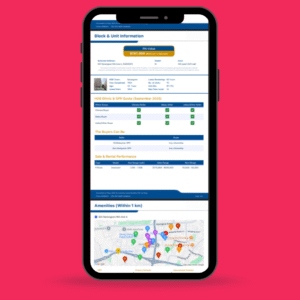
Find Out What Your Home Is Really Worth Today?
Get a data-driven property valuation in minutes, backed by the latest URA & HDB transactions and market trends. Whether you’re planning to sell, buy, or refinance, knowing your home’s true worth gives you the confidence to make smarter decisions.